
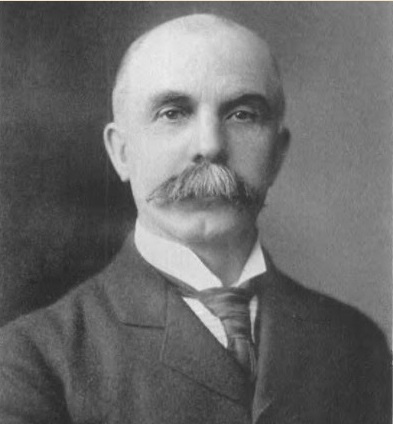
Historical · U.S. House · Michigan · District 7
Justin Whiting
Former U.S. Representative · Michigan District 7 · 1887–1895 · Democratic
Justin Whiting represented Michigan's District 7 in the United States House of Representatives (1887–1895) for the Democratic party. The page below collects sourced biographical facts, term history, committee roles, and provenance for Whiting.
Bioguide ID: W000415
Key facts
- Full name
- Justin Whiting
- State
- Michigan
- District
- District 7
- Party
- Democratic
- House service
- 1887–1895
- First House term
- 1887
- Status
- Left office
- Current term ends
- —
- Born
- 1847
- Bioguide ID
- W000415
- Committee assignments
- —
- Dataset version
- 1.20260606
Biographical narrative
995 words · sourced from the Wikipedia REST extract
Justin Whiting was a notable American politician and businessman who served as a U.S. Representative for Michigan's 7th congressional district during the late 19th century. A member of the Democratic Party, Whiting's political career spanned four terms in the U.S. House of Representatives from 1887 to 1895. His background as a merchant and manufacturer, along with his involvement in local government, shaped his approach to public service and legislative priorities. After his congressional tenure, he continued to engage in business pursuits and sought higher office, although he faced electoral challenges in his later years.
Early life and career
Justin Rice Whiting was born on February 18, 1847, in Bath, New York. In 1849, when he was just two years old, his family relocated to Michigan, settling in St. Clair. This move marked the beginning of Whiting's lifelong connection to the state. He received his education in the local public schools, which laid the foundation for his future endeavors. Between 1863 and 1865, he attended the University of Michigan at Ann Arbor, where he likely developed the skills and knowledge that would later inform his career in business and politics.
Following his education, Whiting entered the business world, where he found success as a merchant and manufacturer. His entrepreneurial spirit led him to establish several businesses, including a power company, which indicates his involvement in the burgeoning industrial sector of the time. His business acumen and community involvement helped him gain recognition in St. Clair, where he would eventually pursue a political career.
Whiting's entry into politics began at the local level, where he served as the mayor of St. Clair in 1879. This role provided him with valuable experience in governance and public administration. His leadership in local government likely contributed to his subsequent election to the Michigan State Senate, where he represented the 17th District in 1882. His tenure in the state legislature allowed him to further develop his political skills and establish connections that would be beneficial in his future congressional campaigns.
House tenure
Whiting's congressional career began when he was elected as a Democrat to the 50th United States Congress, representing Michigan's 7th congressional district. He took office on March 4, 1887, and was subsequently reelected to the 51st, 52nd, and 53rd Congresses, serving until March 3, 1895. His four terms in the House of Representatives reflect a significant commitment to public service during a transformative period in American history.
During his time in Congress, Whiting participated in various legislative activities and discussions that shaped national policy. The late 19th century was marked by significant economic changes, including the rise of industrialization, urbanization, and labor movements. While specific details about his legislative contributions are not provided, it can be inferred that Whiting's background in business and manufacturing informed his perspectives on economic issues and labor relations.
As a member of the Democratic Party, Whiting would have aligned himself with the party's platform, which during this era often focused on issues such as tariff reform, labor rights, and the regulation of monopolies. His experiences as a businessman likely influenced his views on these matters, as he would have been directly affected by the economic policies of the time.
Whiting's congressional career coincided with a period of significant political realignment in the United States. The Democratic Party was working to establish itself as a viable alternative to the Republican Party, which had dominated national politics since the Civil War. Whiting's electoral success in a competitive political landscape suggests that he was able to connect with constituents and address their concerns effectively.
Legislative focus and committees
While specific details regarding Whiting's committee assignments and legislative focus during his time in Congress are not explicitly mentioned, it is reasonable to assume that his background in business and local governance played a significant role in shaping his legislative priorities. Members of Congress often serve on committees that align with their expertise and the interests of their constituents, and Whiting's experience as a merchant and manufacturer would likely have guided his involvement in economic and trade-related issues.
The late 19th century was a time of considerable change in the United States, with rapid industrial growth leading to new challenges and opportunities. Issues such as labor rights, economic regulation, and infrastructure development were at the forefront of national discourse. As a representative from Michigan, a state known for its manufacturing and industrial base, Whiting may have been particularly attuned to the needs and challenges faced by workers and businesses in his district.
After leaving Congress in 1895, Whiting returned to St. Clair, where he resumed his business activities. His experience in public service and his understanding of the business landscape likely continued to inform his work in the private sector. In 1898, he sought to further his political career by running as a Fusion candidate for the governorship of Michigan. However, he was unsuccessful in this endeavor, losing to the incumbent Republican governor, Hazen S. Pingree.
Whiting's political aspirations did not end there; he also attempted to return to Congress in 1900, running for election to the 57th Congress. This bid was also unsuccessful, as he faced defeat against the incumbent Republican, Edgar Weeks. These electoral challenges marked the end of his formal political career, but his contributions to his community and the state of Michigan remained significant.
In his personal life, Whiting married Emily F. Owen, and together they had ten children. Their son, also named Justin Rice Whiting, would go on to have a notable career as president of the Consumers Power Company from 1949 to 1959. This connection to the business world continued through his family, reflecting the legacy of entrepreneurship that characterized Whiting's own life.
Justin Whiting passed away on January 31, 1903, in St. Clair, where he was interred at Hillside Cemetery. His life and career exemplify the intersection of business and politics during a pivotal era in American history, highlighting the contributions of local leaders to the broader national landscape.
Notable legislation
Sponsored and co-sponsored legislation for Justin Whiting is pending operator curation. The biographical narrative above carries the same provenance trail until per-bill rows are written.
Sources
- [1]https://en.wikipedia.org/wiki/Justin_R._WhitingWikipedia · retrieved 2026-06-06
Notable quotes
Sourced quotes for Justin Whiting are pending operator curation. Narrative-scope provenance remains attached below.
Sources
- [1]https://en.wikipedia.org/wiki/Justin_R._WhitingWikipedia · retrieved 2026-06-06
Key positions
Curated policy positions for Justin Whiting are pending operator review. The biographical narrative above carries the same provenance trail until per-topic positions are written.
Sources
- [1]https://en.wikipedia.org/wiki/Justin_R._WhitingWikipedia · retrieved 2026-06-06
Terms served
- 1887–1889U.S. House · Term 1 · Democratic
- 1889–1891U.S. House · Term 2 · Democratic
- 1891–1893U.S. House · Term 3 · Democratic
- 1893–1895U.S. House · Term 4 · Democratic
Sources & provenance
Every attributable claim above carries a per-section [N] marker that resolves to the corresponding URL below. Each entry records the upstream provider, the canonical URL, and the timestamp at which the source was retrieved by the ingest pipeline.
Key facts
- https://bioguide.congress.gov/search/bio/W000415bioguide · retrieved 2026-06-06
- https://www.govtrack.us/congress/members/411574govtrack · retrieved 2026-06-06
Biographical narrative
- https://en.wikipedia.org/wiki/Justin_R._Whitingwikipedia · retrieved 2026-06-06
Find your representative
Every U.S. state elects representatives by district. Browse Michigan’s delegation, the full former-representative roster, or explore the role and term length.
Related on The Candidate
- Preceded by Ezra CarletonEarlier holder of the Michigan District 7 House seat · Democratic.Open
- Succeeded by Horace SnoverLater holder of the Michigan District 7 House seat · Republican.Open
- Alexander BuelFormer U.S. Representative · Michigan District 1 · DemocraticOpen
- Alfred LuckingFormer U.S. Representative · Michigan District 1 · DemocraticOpen
- Alpheus WilliamsFormer U.S. Representative · Michigan District 1 · DemocraticOpen
- Bart StupakFormer U.S. Representative · Michigan District 1 · DemocraticOpen