
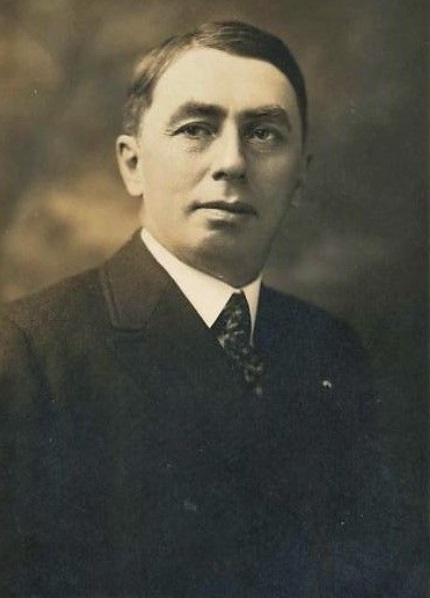
Historical · U.S. House · Michigan · District 9
Harry Musselwhite
Former U.S. Representative · Michigan District 9 · 1933–1935 · Democratic
Harry Musselwhite represented Michigan's District 9 in the United States House of Representatives (1933–1935) for the Democratic party. The page below collects sourced biographical facts, term history, committee roles, and provenance for Musselwhite.
Bioguide ID: M001122
Key facts
- Full name
- Harry Musselwhite
- State
- Michigan
- District
- District 9
- Party
- Democratic
- House service
- 1933–1935
- First House term
- 1933
- Status
- Left office
- Current term ends
- —
- Born
- 1868
- Bioguide ID
- M001122
- Committee assignments
- —
- Dataset version
- 1.20260606
Biographical narrative
894 words · sourced from the Wikipedia REST extract
Harry Musselwhite was a U.S. Representative from Michigan, serving in the 73rd Congress as a member of the Democratic Party. His political career was marked by his election to represent Michigan's 9th congressional district, where he served from 1933 until early 1935. Musselwhite's background as a journalist and newspaper publisher informed his approach to public service, and he played a role in local governance before his tenure in Congress. After leaving office, he continued to be involved in the management of newspaper properties until his retirement.
Early life and career
Harry Webster Musselwhite was born on May 23, 1868, on a farm near Coldwater, Michigan. His early education took place in local district schools, where he laid the foundation for his future pursuits. Following his schooling, Musselwhite began an apprenticeship in printing, which he completed between 1886 and 1888. This experience in the printing industry would later influence his career trajectory, as he transitioned into journalism.
In 1888, Musselwhite moved to Detroit, where he began working as a newspaper reporter. His career in journalism spanned several years, from 1888 to 1905, during which he honed his skills in writing and reporting. His work in Detroit provided him with valuable experience and connections that would serve him well in his later endeavors. After his time in Detroit, he took on the role of city editor and sports writer for the Grand Rapids Herald from 1905 to 1914. This position further established him as a prominent figure in the field of journalism in Michigan.
In 1915, Musselwhite relocated to Manistee, Michigan, where he became the owner, editor, and publisher of the Manistee Daily News-Advocate. His leadership in this role lasted until 1928, during which he was instrumental in shaping the newspaper's editorial direction and community engagement. Musselwhite's involvement in the newspaper industry not only solidified his reputation as a journalist but also deepened his understanding of the issues facing his community and the state of Michigan.
In addition to his work in journalism, Musselwhite took on significant roles in public service. He served as the supervisor of census for Michigan's 9th congressional district in 1920 and later for the fourth district in 1930. These positions allowed him to gain insights into demographic trends and the needs of the constituents he would eventually represent. Furthermore, he was a member and vice chairman of the Michigan Hospital Commission from 1927 to 1932, where he contributed to the oversight and improvement of healthcare facilities in the state.
House tenure
Musselwhite's entry into politics culminated in his election to the U.S. House of Representatives in 1932. Running as a Democratic candidate, he successfully defeated the incumbent Republican U.S. Representative James C. McLaughlin to represent Michigan's 9th congressional district. His election was part of a broader Democratic wave during the early years of the Great Depression, as voters sought change in response to the economic challenges facing the nation.
Musselwhite's congressional term began on March 4, 1933, and lasted until January 3, 1935. During this period, he participated in the legislative process at a time when the country was grappling with significant economic and social issues. His tenure coincided with the early years of President Franklin D. Roosevelt's New Deal, a series of programs and policies aimed at addressing the economic crisis and providing relief to struggling Americans.
Despite his initial success in the 1932 election, Musselwhite faced challenges in his bid for reelection in 1934. He ran for a second term in the 74th Congress but was ultimately unsuccessful, losing to Republican candidate Albert J. Engel. This defeat marked the end of his congressional career, as he did not return to public office after his term concluded.
Legislative focus and committees
During his time in the House of Representatives, Musselwhite was involved in various legislative matters, although specific details about his committee assignments and the bills he supported are not extensively documented. Nevertheless, his background in journalism and local governance likely influenced his legislative priorities and approach to constituent services. As a representative from Michigan, he would have been particularly attuned to the needs and concerns of his district, especially in the context of the economic difficulties of the era.
Musselwhite's experience as a newspaper publisher may have provided him with a unique perspective on issues related to media, communication, and public information. His understanding of the importance of media in shaping public opinion and informing citizens could have informed his approach to legislation and constituent engagement.
After leaving Congress, Musselwhite returned to the newspaper industry, where he continued to manage newspaper properties until his retirement. His ongoing involvement in journalism reflects his commitment to communication and public discourse, even after his formal political career had ended.
In addition to his professional pursuits, Musselwhite was active in various civic and fraternal organizations. He was a member of the Congregational Church and participated in organizations such as the Freemasons, Shriners, Eagles, and Elks. These affiliations suggest a commitment to community service and social engagement beyond his political career.
Harry Musselwhite passed away on December 14, 1955, in San Lorenzo, California. His contributions to journalism and public service, particularly during his time in the U.S. House of Representatives, remain a part of Michigan's political history. He is interred at Cypress Lawn Cemetery in Coloma, California, where his legacy as a public servant and community leader continues to be remembered.
Notable legislation
Sponsored and co-sponsored legislation for Harry Musselwhite is pending operator curation. The biographical narrative above carries the same provenance trail until per-bill rows are written.
Sources
- [1]https://en.wikipedia.org/wiki/Harry_W._MusselwhiteWikipedia · retrieved 2026-06-06
Notable quotes
Sourced quotes for Harry Musselwhite are pending operator curation. Narrative-scope provenance remains attached below.
Sources
- [1]https://en.wikipedia.org/wiki/Harry_W._MusselwhiteWikipedia · retrieved 2026-06-06
Key positions
Curated policy positions for Harry Musselwhite are pending operator review. The biographical narrative above carries the same provenance trail until per-topic positions are written.
Sources
- [1]https://en.wikipedia.org/wiki/Harry_W._MusselwhiteWikipedia · retrieved 2026-06-06
Terms served
- 1933–1935U.S. House · Term 1 · Democratic
Sources & provenance
Every attributable claim above carries a per-section [N] marker that resolves to the corresponding URL below. Each entry records the upstream provider, the canonical URL, and the timestamp at which the source was retrieved by the ingest pipeline.
Key facts
- https://bioguide.congress.gov/search/bio/M001122bioguide · retrieved 2026-06-06
- https://www.govtrack.us/congress/members/408084govtrack · retrieved 2026-06-06
Biographical narrative
- https://en.wikipedia.org/wiki/Harry_W._Musselwhitewikipedia · retrieved 2026-06-06
Find your representative
Every U.S. state elects representatives by district. Browse Michigan’s delegation, the full former-representative roster, or explore the role and term length.
Related on The Candidate
- Preceded by James McLaughlinEarlier holder of the Michigan District 9 House seat · Republican.Open
- Succeeded by Albert EngelLater holder of the Michigan District 9 House seat · Republican.Open
- Alexander BuelFormer U.S. Representative · Michigan District 1 · DemocraticOpen
- Alfred LuckingFormer U.S. Representative · Michigan District 1 · DemocraticOpen
- Alpheus WilliamsFormer U.S. Representative · Michigan District 1 · DemocraticOpen
- Bart StupakFormer U.S. Representative · Michigan District 1 · DemocraticOpen