
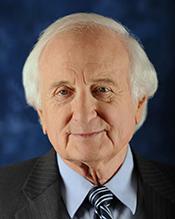
Historical · U.S. House · Michigan · District 9
Sander Levin
Former U.S. Representative · Michigan District 9 · 1983–2019 · Democratic
Sander Levin represented Michigan's District 9 in the United States House of Representatives (1983–2019) for the Democratic party. The page below collects sourced biographical facts, term history, committee roles, and provenance for Levin.
Bioguide ID: L000263
Key facts
- Full name
- Sander Levin
- State
- Michigan
- District
- District 9
- Party
- Democratic
- House service
- 1983–2019
- First House term
- 1983
- Status
- Left office
- Current term ends
- —
- Born
- 1931
- Bioguide ID
- L000263
- Committee assignments
- —
- Dataset version
- 1.20260605
Biographical narrative
929 words · sourced from the Wikipedia REST extract
Sander M. Levin is a former American politician who served as a U.S. Representative for Michigan's 9th congressional district from 1983 until 2019. A member of the Democratic Party, Levin's lengthy congressional career spanned 18 terms, during which he held significant positions, including serving as the chair and ranking member of the House Ways and Means Committee. Levin is also known for his familial connections in politics, being the brother of former U.S. Senator Carl Levin and the father of former Congressman Andy Levin, who succeeded him in office.
Early life and career
Sander Martin Levin was born on September 6, 1931, in Detroit, Michigan, to Jewish parents Bess Rachel Levinson and Saul R. Levin. Growing up in a politically active family, Levin was influenced by his surroundings and pursued a path in public service. He completed his secondary education at Central High School in Detroit before advancing to higher education. Levin earned a bachelor's degree from the University of Chicago in 1952, followed by a Master's degree in international relations from Columbia University in 1954. He then attended Harvard Law School, where he obtained his law degree in 1957. After completing his education, Levin established a private law practice in Detroit, which laid the groundwork for his future political career.
Levin's entry into politics began in the early 1960s when he was appointed chairman of the Oakland County Democratic Party in 1962. His political career progressed when he was elected as a State Senator for Michigan's 15th district in 1964, defeating the Republican incumbent George W. Kuhn. During his tenure in the Michigan State Senate, Levin served until 1970 and held various leadership roles, including Senate minority leader from January 1969 until January 1970. His political ambitions led him to run for governor of Michigan in both 1970 and 1974, although he was unsuccessful in both attempts, losing to Republican William Milliken.
In addition to his state-level political work, Levin was a Fellow at the Harvard Kennedy School in 1975. He also served as the assistant administrator of the Agency for International Development from 1977 to 1981, where he gained valuable experience in federal governance and international relations.
House tenure
Levin's congressional career began in 1983 when he won a seat in the U.S. House of Representatives for Michigan's 17th congressional district. This district included parts of northwestern Detroit, Macomb, and Oakland counties. Levin entered the House after incumbent Congressman William Brodhead chose not to seek re-election, instead pursuing an unsuccessful gubernatorial campaign. Levin secured the Democratic primary with a significant portion of the vote and subsequently won the general election with a commanding majority.
Throughout his 18 terms in Congress, Levin consistently demonstrated electoral strength, typically winning re-election with at least 56% of the vote. His electoral history includes notable contests, particularly in the 1992 and 1994 elections against businessman John Pappageorge. Levin's district underwent changes following the 1990 United States census, leading to its renumbering as the 12th district, which lost its share of Detroit but gained other areas. Despite the challenges posed by redistricting and the political climate, Levin maintained his seat, often winning by comfortable margins.
In 2012, Levin's district was merged with the 9th District, previously held by fellow Democrat Gary Peters. Levin effectively secured the Democratic nomination for the newly drawn district after Peters opted to run in a different district. Levin's re-election in this new configuration was successful, as he garnered a significant percentage of the vote, reinforcing his position in Congress.
Legislative focus and committees
During his tenure in the House, Levin was known for his involvement in key legislative committees, particularly the Committee on Ways and Means, where he served as both chair and ranking member. He became chair of the committee in March 2010, following the departure of Charles B. Rangel due to ethics violations. Levin's leadership in this influential committee allowed him to play a crucial role in shaping economic policy and tax legislation. He served as chair until January 2011 and continued as ranking member until the end of 2016.
Levin's work on the Ways and Means Committee included oversight of various subcommittees, such as the Subcommittee on Trade, where he held the position of ranking member. He was also involved in the Subcommittee on Income Security, contributing to discussions on social welfare and economic security for American families. Levin's legislative focus extended beyond domestic issues; he was a member of the House Baltic Caucus and the Congressional Arts Caucus, indicating a broad interest in both international relations and cultural matters.
In terms of political positions, Levin was a staunch supporter of Israel and advocated for the Iran nuclear deal, emphasizing the importance of regional security. His views on foreign policy reflected a commitment to international cooperation and diplomacy, aligning with the Democratic Party's broader platform on these issues.
Levin's personal life also intersected with his political career. He was married to Vicki Schlafer for 50 years until her passing in 2008. Together, they had four children, including Andy Levin, who later succeeded him in Congress. In 2012, Levin remarried Pamela Cole, a psychology professor, and they collaborated on initiatives to support early childhood development, honoring the legacy of his late wife.
Levin's retirement from Congress was announced in December 2017, marking the end of a lengthy and impactful career in public service. His son, Andy Levin, was elected to succeed him in the 116th Congress, continuing the family's political legacy. Throughout his career, Sander M. Levin's contributions to American politics, particularly in Michigan, have left a lasting imprint on the legislative landscape.
Notable legislation
Sponsored and co-sponsored legislation for Sander Levin is pending operator curation. The biographical narrative above carries the same provenance trail until per-bill rows are written.
Sources
- [1]https://en.wikipedia.org/wiki/Sander_LevinWikipedia · retrieved 2026-06-05
Notable quotes
Sourced quotes for Sander Levin are pending operator curation. Narrative-scope provenance remains attached below.
Sources
- [1]https://en.wikipedia.org/wiki/Sander_LevinWikipedia · retrieved 2026-06-05
Key positions
Curated policy positions for Sander Levin are pending operator review. The biographical narrative above carries the same provenance trail until per-topic positions are written.
Sources
- [1]https://en.wikipedia.org/wiki/Sander_LevinWikipedia · retrieved 2026-06-05
Terms served
- 1983–1985U.S. House · Term 1 · Democratic
- 1985–1987U.S. House · Term 2 · Democratic
- 1987–1989U.S. House · Term 3 · Democratic
- 1989–1991U.S. House · Term 4 · Democratic
- 1991–1993U.S. House · Term 5 · Democratic
- 1993–1995U.S. House · Term 6 · Democratic
- 1995–1997U.S. House · Term 7 · Democratic
- 1997–1999U.S. House · Term 8 · Democratic
- 1999–2001U.S. House · Term 9 · Democratic
- 2001–2003U.S. House · Term 10 · Democratic
- 2003–2005U.S. House · Term 11 · Democratic
- 2005–2007U.S. House · Term 12 · Democratic
- 2007–2009U.S. House · Term 13 · Democratic
- 2009–2011U.S. House · Term 14 · Democratic
- 2011–2013U.S. House · Term 15 · Democratic
- 2013–2015U.S. House · Term 16 · Democratic
- 2015–2017U.S. House · Term 17 · Democratic
- 2017–2019U.S. House · Term 18 · Democratic
Sources & provenance
Every attributable claim above carries a per-section [N] marker that resolves to the corresponding URL below. Each entry records the upstream provider, the canonical URL, and the timestamp at which the source was retrieved by the ingest pipeline.
Key facts
- https://bioguide.congress.gov/search/bio/L000263bioguide · retrieved 2026-06-05
- https://levin.house.govhouse.gov · retrieved 2026-06-05
Biographical narrative
- https://en.wikipedia.org/wiki/Sander_Levinwikipedia · retrieved 2026-06-05
Find your representative
Every U.S. state elects representatives by district. Browse Michigan’s delegation, the full former-representative roster, or explore the role and term length.
Related on The Candidate
- Preceded by Ruth ThompsonEarlier holder of the Michigan District 9 House seat · Republican.Open
- Succeeded by Andy LevinLater holder of the Michigan District 9 House seat · Democratic.Open
- Alexander BuelFormer U.S. Representative · Michigan District 1 · DemocraticOpen
- Alfred LuckingFormer U.S. Representative · Michigan District 1 · DemocraticOpen
- Alpheus WilliamsFormer U.S. Representative · Michigan District 1 · DemocraticOpen
- Bart StupakFormer U.S. Representative · Michigan District 1 · DemocraticOpen