
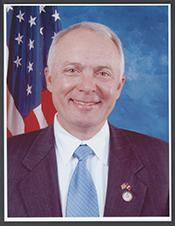
Historical · U.S. House · Minnesota · District 2
John Kline
Former U.S. Representative · Minnesota District 2 · 2003–2017 · Republican
John Kline represented Minnesota's District 2 in the United States House of Representatives (2003–2017) for the Republican party. The page below collects sourced biographical facts, term history, committee roles, and provenance for Kline.
Bioguide ID: K000363
Key facts
- Full name
- John Kline
- State
- Minnesota
- District
- District 2
- Party
- Republican
- House service
- 2003–2017
- First House term
- 2003
- Status
- Left office
- Current term ends
- —
- Born
- 1947
- Bioguide ID
- K000363
- Committee assignments
- —
- Dataset version
- 1.20260605
Biographical narrative
903 words · sourced from the Wikipedia REST extract
John Kline is a former American politician who served as a member of the United States House of Representatives for Minnesota's 2nd congressional district from 2003 until 2017. A member of the Republican Party, Kline represented a district that encompassed much of the southern suburbs of the Twin Cities. Throughout his tenure, he held significant leadership roles, including serving as the Chairman of the House Committee on Education and the Workforce from 2011 to 2017. Kline's legislative focus primarily revolved around education reform, workforce development, and military issues, reflecting his background as a career officer in the U.S. Marine Corps.
Early life and career
John Kline was born on September 6, 1947, in Allentown, Pennsylvania, to Litta Belle Rodman and John Paul Kline, Sr. He graduated from W. B. Ray High School in Corpus Christi, Texas, in 1965. Kline pursued higher education at Rice University, where he earned a Bachelor of Arts degree in biology in 1969. Later, he obtained a Master of Public Administration from Shippensburg University of Pennsylvania in 1988.
Before entering politics, Kline had a distinguished military career spanning 25 years in the U.S. Marine Corps. He held various significant positions, including serving as a senior military aide to Presidents Jimmy Carter and Ronald Reagan. His responsibilities included managing the President's football, a term that refers to the briefcase containing nuclear launch codes. Kline was a Naval Aviator and helicopter pilot during the Vietnam War and commanded all Marine aviation forces during Operation Restore Hope in Somalia. He also served in HMX-1, the unit responsible for flying the Presidential helicopter, Marine One. Kline's military service earned him numerous accolades, including the Defense Superior Service Medal, four awards of the Legion of Merit, the Meritorious Service Medal, and the Navy Commendation Medal, among others. He retired from the Marine Corps with the rank of colonel.
In his personal life, Kline resides in Burnsville, Minnesota, with his second wife, Vicky. He has two children and four grandchildren. Kline was previously married to Christine Lewis.
House tenure
Kline's political career in the U.S. House of Representatives began when he was elected in 2002, representing Minnesota's 2nd congressional district. His first term commenced in 2003, and he served a total of seven terms in Congress, concluding his service on January 3, 2017. Kline's election to the House followed a series of unsuccessful campaigns, including attempts to unseat Democratic incumbent Bill Luther in 1998 and 2000. After the 2000 census, Minnesota's congressional districts were redrawn, creating a new 2nd District that Kline was well-positioned to contest. He successfully secured the Republican nomination and subsequently won the general election.
During his time in Congress, Kline was a member of several key committees. He served on the Committee on Armed Services, where he was involved in issues related to national defense and military policy. Additionally, he was the Chairman of the Committee on Education and the Workforce, a position he held from 2011 until the end of his congressional career. In this role, he oversaw various subcommittees focused on early childhood education, elementary and secondary education, workforce protections, and higher education. His leadership in this committee allowed him to influence significant education policy discussions and legislative initiatives.
Kline's political campaigns were marked by a focus on fiscal conservatism and limited government. He was known for his opposition to earmarks and his commitment to not requesting them for his district. Throughout his tenure, he supported various policies aimed at job creation, education reform, and gun rights. Kline was an advocate for the Second Amendment and opposed restrictions on gun ownership. He also voted against tax increases, emphasizing the need for fiscal restraint and government accountability.
Legislative focus and committees
Kline's legislative focus during his time in the House was characterized by his commitment to education reform and workforce development. As Chairman of the Committee on Education and the Workforce, he played a pivotal role in shaping policies related to education at all levels. He was particularly interested in initiatives that encouraged parental involvement in education and held teachers accountable for student performance. Kline believed that job creation was a primary national challenge and advocated for policies that would stimulate economic growth.
One notable piece of legislation introduced by Kline was the Success and Opportunity through Quality Charter Schools Act, which aimed to amend and reauthorize existing charter school programs. This bill sought to streamline the grants process and increase funding for charter schools, reflecting Kline's commitment to expanding educational opportunities for students. The bill was passed by the House, demonstrating his effectiveness in advancing education-related initiatives.
Kline's legislative record also included votes on significant national issues. He supported President George W. Bush's plan to increase troop levels in Iraq and voted to repeal the Affordable Care Act, expressing concerns about its impact on the healthcare system. Kline's stance on various issues often aligned with the broader Republican agenda, particularly regarding fiscal policy and government spending.
Throughout his congressional career, Kline was a member of the Congressional Constitution Caucus, reflecting his interest in constitutional issues and governance. His tenure in the House was marked by a focus on education, military affairs, and fiscal responsibility, aligning with his background and the interests of his constituents in Minnesota's 2nd congressional district. After serving for over a decade, Kline retired from Congress at the end of his term in January 2017, concluding a significant chapter in his political career.
Notable legislation
Sponsored and co-sponsored legislation for John Kline is pending operator curation. The biographical narrative above carries the same provenance trail until per-bill rows are written.
Sources
- [1]https://en.wikipedia.org/wiki/John_Kline_(politician)Wikipedia · retrieved 2026-06-05
Notable quotes
Sourced quotes for John Kline are pending operator curation. Narrative-scope provenance remains attached below.
Sources
- [1]https://en.wikipedia.org/wiki/John_Kline_(politician)Wikipedia · retrieved 2026-06-05
Key positions
Curated policy positions for John Kline are pending operator review. The biographical narrative above carries the same provenance trail until per-topic positions are written.
Sources
- [1]https://en.wikipedia.org/wiki/John_Kline_(politician)Wikipedia · retrieved 2026-06-05
Terms served
- 2003–2005U.S. House · Term 1 · Republican
- 2005–2007U.S. House · Term 2 · Republican
- 2007–2009U.S. House · Term 3 · Republican
- 2009–2011U.S. House · Term 4 · Republican
- 2011–2013U.S. House · Term 5 · Republican
- 2013–2015U.S. House · Term 6 · Republican
- 2015–2017U.S. House · Term 7 · Republican
Sources & provenance
Every attributable claim above carries a per-section [N] marker that resolves to the corresponding URL below. Each entry records the upstream provider, the canonical URL, and the timestamp at which the source was retrieved by the ingest pipeline.
Key facts
- https://bioguide.congress.gov/search/bio/K000363bioguide · retrieved 2026-06-05
- http://kline.house.govhouse.gov · retrieved 2026-06-05
Biographical narrative
- https://en.wikipedia.org/wiki/John_Kline_(politician)wikipedia · retrieved 2026-06-05
Find your representative
Every U.S. state elects representatives by district. Browse Minnesota’s delegation, the full former-representative roster, or explore the role and term length.
Related on The Candidate
- Preceded by David MingeEarlier holder of the Minnesota District 2 House seat · Democratic.Open
- Succeeded by Jason LewisLater holder of the Minnesota District 2 House seat · Republican.Open
- Albert QuieFormer U.S. Representative · Minnesota District 1 · RepublicanOpen
- Allen FurlowFormer U.S. Representative · Minnesota District 1 · RepublicanOpen
- Arlen ErdahlFormer U.S. Representative · Minnesota District 1 · RepublicanOpen
- August AndresenFormer U.S. Representative · Minnesota District 1 · RepublicanOpen