
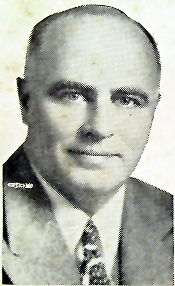
Historical · U.S. House · Minnesota · District 2
Joseph O’Hara
Former U.S. Representative · Minnesota District 2 · 1941–1959 · Republican
Joseph O’Hara represented Minnesota's District 2 in the United States House of Representatives (1941–1959) for the Republican party. The page below collects sourced biographical facts, term history, committee roles, and provenance for O’Hara.
Bioguide ID: O000056
Key facts
- Full name
- Joseph O’Hara
- State
- Minnesota
- District
- District 2
- Party
- Republican
- House service
- 1941–1959
- First House term
- 1941
- Status
- Left office
- Current term ends
- —
- Born
- 1895
- Bioguide ID
- O000056
- Committee assignments
- —
- Dataset version
- 1.20260605
Biographical narrative
867 words · sourced from the Wikipedia REST extract
Joseph O'Hara was a U.S. Representative from Minnesota who served in the House of Representatives for nine consecutive terms from 1941 until 1959. A member of the Republican Party, he was known for his isolationist views during World War II and his opposition to civil rights legislation. O'Hara's legal career began prior to his political tenure, and he held various roles in local government before being elected to Congress.
Early life and career
Joseph O'Hara was born on January 23, 1895, in Tipton, Iowa. He grew up in a region that would shape his early education and career. O'Hara attended public schools and graduated from Spirit Lake High School in Iowa. Following his high school education, he pursued further studies in law, attending the University of Notre Dame in South Bend, Indiana, where he graduated from the law department. In 1920, he was admitted to the bar and began practicing law in Glencoe, Minnesota.
O'Hara's career was marked by his involvement in local governance and legal affairs. He served as an attorney for various municipalities, including villages, cities, towns, and school districts. His legal expertise also led him to the position of county attorney for McLeod County from 1934 to 1938. His legal background provided a foundation for his subsequent political career, as he developed a reputation for his advocacy on behalf of local governments.
In addition to his legal career, O'Hara served in the military during World War I. He was commissioned as a second lieutenant in the Infantry of the Officers’ Reserve Corps and later promoted to captain in the Quartermaster Corps. His military service extended from May 1917 to August 1919, during which he also achieved the rank of major in the Infantry Reserve Corps after serving overseas. This experience contributed to his leadership skills and public service ethos.
House tenure
O'Hara's political career in the U.S. House of Representatives began when he was elected as a Republican to the 77th Congress, which convened on January 3, 1941. He was subsequently re-elected for eight additional terms, serving until January 3, 1959. Throughout his tenure, O'Hara was known for his strong opinions and willingness to engage in contentious debates, particularly regarding foreign policy and military funding.
During World War II, O'Hara's isolationist stance became a defining aspect of his political identity. He was an outspoken ally of Charles Lindbergh and opposed U.S. involvement in the war. His views were particularly controversial given the global context of the time, especially after the fall of France and prior to the Soviet Union's entry into the conflict. O'Hara's opposition to military support for Britain, as exemplified by his stance on a bill that aimed to provide funding for the British military, drew significant criticism from his contemporaries. A group of southern representatives publicly denounced him, highlighting the contentious nature of his views and the political climate of the era.
O'Hara's tenure was marked by a series of significant legislative events, including his opposition to civil rights initiatives. Notably, he voted against the Civil Rights Act of 1957, reflecting his alignment with certain conservative elements within the Republican Party at that time. His political positions often aligned with those who favored limited government intervention in social issues, which was a prevailing sentiment among some factions of the Republican Party during the mid-20th century.
Despite his lengthy service in Congress, O'Hara chose not to seek re-election in 1958 for the 86th Congress. After concluding his congressional career, he returned to the practice of law in Washington, D.C., where he continued to reside until his death.
Legislative focus and committees
Throughout his nine terms in the House of Representatives, Joseph O'Hara's legislative focus was shaped by his legal background and his political beliefs. His isolationist views during World War II influenced his positions on military funding and foreign policy. O'Hara was known for advocating against U.S. involvement in international conflicts, which aligned with the isolationist sentiment that was prevalent among certain segments of the American public during the early years of the war.
In addition to his foreign policy positions, O'Hara's legislative record included a range of issues pertinent to his constituents in Minnesota. His work as an attorney for local governments likely informed his approach to legislation affecting municipalities and local governance. O'Hara's legal expertise may have also played a role in his participation in various committees during his time in Congress, although specific committee assignments are not detailed in the available records.
O'Hara's opposition to civil rights legislation, particularly the Civil Rights Act of 1957, positioned him within a faction of the Republican Party that resisted the growing momentum for civil rights reforms during the 1950s. His voting record reflected a commitment to conservative principles that prioritized limited government intervention in social issues.
After leaving Congress, O'Hara resumed his legal career, indicating a continued dedication to public service and advocacy through the legal profession. He passed away on March 4, 1975, in Bethesda, Maryland, and was interred at Gate of Heaven Cemetery in Silver Spring, Maryland. His long tenure in the House of Representatives and his involvement in local governance left a mark on the political landscape of Minnesota during a transformative period in American history.
Notable legislation
Sponsored and co-sponsored legislation for Joseph O’Hara is pending operator curation. The biographical narrative above carries the same provenance trail until per-bill rows are written.
Sources
- [1]https://en.wikipedia.org/wiki/Joseph_P._O'HaraWikipedia · retrieved 2026-06-05
Notable quotes
Sourced quotes for Joseph O’Hara are pending operator curation. Narrative-scope provenance remains attached below.
Sources
- [1]https://en.wikipedia.org/wiki/Joseph_P._O'HaraWikipedia · retrieved 2026-06-05
Key positions
Curated policy positions for Joseph O’Hara are pending operator review. The biographical narrative above carries the same provenance trail until per-topic positions are written.
Sources
- [1]https://en.wikipedia.org/wiki/Joseph_P._O'HaraWikipedia · retrieved 2026-06-05
Terms served
- 1941–1943U.S. House · Term 1 · Republican
- 1943–1945U.S. House · Term 2 · Republican
- 1945–1947U.S. House · Term 3 · Republican
- 1947–1949U.S. House · Term 4 · Republican
- 1949–1951U.S. House · Term 5 · Republican
- 1951–1953U.S. House · Term 6 · Republican
- 1953–1955U.S. House · Term 7 · Republican
- 1955–1957U.S. House · Term 8 · Republican
- 1957–1959U.S. House · Term 9 · Republican
Sources & provenance
Every attributable claim above carries a per-section [N] marker that resolves to the corresponding URL below. Each entry records the upstream provider, the canonical URL, and the timestamp at which the source was retrieved by the ingest pipeline.
Key facts
- https://bioguide.congress.gov/search/bio/O000056bioguide · retrieved 2026-06-05
- https://www.govtrack.us/congress/members/408291govtrack · retrieved 2026-06-05
Biographical narrative
- https://en.wikipedia.org/wiki/Joseph_P._O'Harawikipedia · retrieved 2026-06-05
Find your representative
Every U.S. state elects representatives by district. Browse Minnesota’s delegation, the full former-representative roster, or explore the role and term length.
Related on The Candidate
- Preceded by Elmer RyanEarlier holder of the Minnesota District 2 House seat · Democratic.Open
- Succeeded by Ancher NelsenLater holder of the Minnesota District 2 House seat · Republican.Open
- Albert QuieFormer U.S. Representative · Minnesota District 1 · RepublicanOpen
- Allen FurlowFormer U.S. Representative · Minnesota District 1 · RepublicanOpen
- Arlen ErdahlFormer U.S. Representative · Minnesota District 1 · RepublicanOpen
- August AndresenFormer U.S. Representative · Minnesota District 1 · RepublicanOpen