
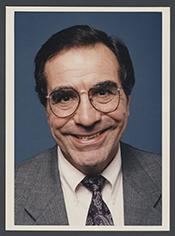
Historical · U.S. House · Minnesota · District 4
Bruce Vento
Former U.S. Representative · Minnesota District 4 · 1977–2001 · Democratic
Bruce Vento represented Minnesota's District 4 in the United States House of Representatives (1977–2001) for the Democratic party. The page below collects sourced biographical facts, term history, committee roles, and provenance for Vento.
Bioguide ID: V000087
Key facts
- Full name
- Bruce Vento
- State
- Minnesota
- District
- District 4
- Party
- Democratic
- House service
- 1977–2001
- First House term
- 1977
- Status
- Left office
- Current term ends
- —
- Born
- 1940
- Bioguide ID
- V000087
- Committee assignments
- —
- Dataset version
- 1.20260605
Biographical narrative
859 words · sourced from the Wikipedia REST extract
Bruce F. Vento was an American educator and politician who served as a Democratic-Farmer-Labor member of the United States House of Representatives. He represented Minnesota's 4th congressional district from 1977 until his death in 2000. Over the course of his congressional career, Vento was known for his advocacy on environmental issues, affordable housing, and support for veterans, particularly those from the Hmong community.
Early life and career
Bruce F. Vento was born on October 7, 1940, in Saint Paul, Minnesota. He pursued higher education at the University of Minnesota Twin Cities, where he earned a Bachelor of Arts degree in 1961. Following this, he attended the University of Wisconsin River Falls, where he received a Bachelor of Science degree with honors in 1965. Vento's early career was rooted in education; he worked as a public school teacher in St. Paul, Minnesota, before transitioning into politics.
Vento's political career began in the Minnesota House of Representatives, where he served from 1971 until 1976. His time in the state legislature laid the groundwork for his future endeavors at the federal level. His legislative focus during this period included issues related to education and community development, reflecting his background as an educator and his commitment to public service.
House tenure
In 1976, Bruce Vento was elected to the United States House of Representatives, marking the beginning of a lengthy congressional career that would span 12 terms. He represented Minnesota's 4th congressional district, a position he held until his death in 2000. Throughout his tenure, Vento was a member of the Democratic Party and was affiliated with the Democratic-Farmer-Labor Party, which is the Minnesota branch of the national Democratic Party.
Vento's congressional career was marked by significant legislative achievements and a commitment to various social issues. He was particularly noted for his efforts in environmental protection and affordable housing initiatives. His work in Congress included a focus on securing federal funding for programs aimed at improving the living conditions of low-income families and addressing homelessness.
One of Vento's most notable legislative accomplishments was the introduction of the McKinney-Vento Homeless Assistance Act of 1986. This landmark legislation provided federal funding for shelter programs and aimed to address the growing issue of homelessness in the United States. The act represented a significant step in federal efforts to support vulnerable populations and has had a lasting impact on homelessness policy.
Legislative focus and committees
During his time in the House of Representatives, Bruce Vento served on several committees that aligned with his legislative interests and priorities. His work on these committees allowed him to influence a wide range of issues, including education, housing, and environmental policy. Vento's commitment to these areas was evident in his legislative initiatives and the collaborative efforts he undertook with various stakeholders.
In addition to his work on housing and environmental issues, Vento was a strong advocate for veterans, particularly those from the Hmong community. He introduced the Hmong Veterans' Naturalization Act of 2000, which aimed to grant honorary U.S. citizenship to Laotian and Hmong veterans who served in the "U.S. Secret Army" during the Vietnam War. This legislation was significant as it recognized the contributions of these veterans and sought to rectify historical injustices. The bill garnered bipartisan support and was passed by both the House and Senate following Vento's death, ultimately being signed into law by President Bill Clinton.
Vento's dedication to public service extended beyond his legislative work. He engaged with community leaders and organizations to build support for his initiatives, demonstrating his commitment to representing the interests of his constituents. His collaborative approach included working with Hmong elders and community leaders in the Twin Cities and across the United States, which was instrumental in advancing the Hmong Veterans' Naturalization Act.
Tragically, Bruce Vento's life and career were cut short when he passed away on October 10, 2000, just days after his 60th birthday. He died from pleural mesothelioma, a rare form of lung cancer linked to asbestos exposure. At the time of his death, Vento had already announced that he would not seek a 13th term in Congress. His passing occurred a month before the general election, eliminating the need for a special election to fill his seat. State Representative Betty McCollum, a fellow member of the Democratic-Farmer-Labor Party, succeeded him in representing Minnesota's 4th congressional district.
Vento's legacy is honored in various ways within his home state of Minnesota. The Bruce Vento Regional Trail runs through St. Paul, providing a recreational space that reflects his commitment to environmental conservation. Additionally, the Bruce Vento Nature Sanctuary, a reclaimed area that was once a railroad yard and dumping site, stands as a testament to his advocacy for environmental restoration. In recognition of his contributions to education and community service, East Consolidated Elementary School in St. Paul was renamed Bruce Vento Elementary School shortly after his death.
Bruce F. Vento's career in public service was characterized by his dedication to improving the lives of his constituents and advocating for social justice. His legislative efforts, particularly in the areas of homelessness and veterans' rights, have left a lasting impact on both his community and the broader legislative landscape.
Notable legislation
Sponsored and co-sponsored legislation for Bruce Vento is pending operator curation. The biographical narrative above carries the same provenance trail until per-bill rows are written.
Sources
- [1]https://en.wikipedia.org/wiki/Bruce_VentoWikipedia · retrieved 2026-06-05
Notable quotes
Sourced quotes for Bruce Vento are pending operator curation. Narrative-scope provenance remains attached below.
Sources
- [1]https://en.wikipedia.org/wiki/Bruce_VentoWikipedia · retrieved 2026-06-05
Key positions
Curated policy positions for Bruce Vento are pending operator review. The biographical narrative above carries the same provenance trail until per-topic positions are written.
Sources
- [1]https://en.wikipedia.org/wiki/Bruce_VentoWikipedia · retrieved 2026-06-05
Terms served
- 1977–1979U.S. House · Term 1 · Democratic
- 1979–1981U.S. House · Term 2 · Democratic
- 1981–1983U.S. House · Term 3 · Democratic
- 1983–1985U.S. House · Term 4 · Democratic
- 1985–1987U.S. House · Term 5 · Democratic
- 1987–1989U.S. House · Term 6 · Democratic
- 1989–1991U.S. House · Term 7 · Democratic
- 1991–1993U.S. House · Term 8 · Democratic
- 1993–1995U.S. House · Term 9 · Democratic
- 1995–1997U.S. House · Term 10 · Democratic
- 1997–1999U.S. House · Term 11 · Democratic
- 1999–2001U.S. House · Term 12 · Democratic
Sources & provenance
Every attributable claim above carries a per-section [N] marker that resolves to the corresponding URL below. Each entry records the upstream provider, the canonical URL, and the timestamp at which the source was retrieved by the ingest pipeline.
Key facts
- https://bioguide.congress.gov/search/bio/V000087bioguide · retrieved 2026-06-05
- https://www.govtrack.us/congress/members/400612govtrack · retrieved 2026-06-05
Biographical narrative
- https://en.wikipedia.org/wiki/Bruce_Ventowikipedia · retrieved 2026-06-05
Find your representative
Every U.S. state elects representatives by district. Browse Minnesota’s delegation, the full former-representative roster, or explore the role and term length.
Related on The Candidate
- Preceded by Joseph KarthEarlier holder of the Minnesota District 4 House seat · Democratic.Open
- Albert QuieFormer U.S. Representative · Minnesota District 1 · RepublicanOpen
- Allen FurlowFormer U.S. Representative · Minnesota District 1 · RepublicanOpen
- Arlen ErdahlFormer U.S. Representative · Minnesota District 1 · RepublicanOpen
- August AndresenFormer U.S. Representative · Minnesota District 1 · RepublicanOpen
- Democratic PartyFederal candidates and office holders on the Democratic line.Open