
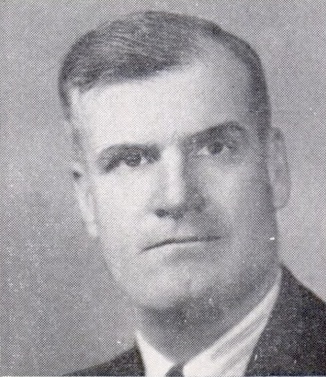
Historical · U.S. House · Minnesota · District 6
Fred Marshall
Former U.S. Representative · Minnesota District 6 · 1949–1963 · Democratic
Fred Marshall represented Minnesota's District 6 in the United States House of Representatives (1949–1963) for the Democratic party. The page below collects sourced biographical facts, term history, committee roles, and provenance for Marshall.
Bioguide ID: M000152
Key facts
- Full name
- Fred Marshall
- State
- Minnesota
- District
- District 6
- Party
- Democratic
- House service
- 1949–1963
- First House term
- 1949
- Status
- Left office
- Current term ends
- —
- Born
- 1906
- Bioguide ID
- M000152
- Committee assignments
- —
- Dataset version
- 1.20260605
Biographical narrative
937 words · sourced from the Wikipedia REST extract
Fred Marshall was an American politician and farmer who served as a U.S. Representative for Minnesota's 6th congressional district from 1949 until 1963. A member of the Democratic–Farmer–Labor Party (DFL), he was known for his commitment to agricultural issues and rural communities throughout his political career. Marshall's tenure in Congress spanned seven terms, during which he focused on various legislative initiatives that reflected the interests of his constituents and the broader agricultural community.
Early life and career
Fred Marshall was born on March 13, 1906, in Union Grove Township, located near Grove City, Minnesota. Growing up in a rural environment, he developed a strong connection to agriculture and farming from an early age. After completing his high school education in Paynesville, Minnesota, Marshall engaged in farming, which would become a central aspect of his life and career.
Marshall's involvement in agriculture extended beyond his personal farming endeavors. He became actively engaged in agricultural administration, serving on the Minnesota Agriculture Administration Committee from 1937 to 1941. This role allowed him to influence agricultural policy and support farmers in Minnesota during a critical period in American history, which included the Great Depression and the onset of World War II. His work on this committee provided him with valuable insights into the challenges faced by farmers and the agricultural sector.
In 1941, Marshall transitioned to a significant position within the federal government when he was appointed as the state director of the Farm Security Administration, which later became known as the Farmers Home Administration. In this role, he was responsible for overseeing programs designed to assist farmers and rural communities, particularly those affected by economic hardship. He held this position until 1948, gaining further experience in agricultural policy and rural development, which would inform his future legislative priorities.
House tenure
Fred Marshall's political career took a decisive turn in 1948 when he decided to run for a seat in the United States House of Representatives, representing Minnesota's 6th congressional district. His campaign was successful, as he defeated the long-serving Republican incumbent Harold Knutson in a closely contested election. Marshall's victory was notable, as it marked a shift in the political landscape of the district, which had been held by Republicans for many years. His win was characterized by a narrow margin, reflecting the competitive nature of the race and the changing sentiments among voters.
Once in Congress, Marshall quickly established himself as a dedicated representative of his constituents. He was reelected every two years, serving a total of seven terms in the House. His tenure in Congress was marked by a commitment to addressing the needs of farmers and rural communities, as well as advocating for policies that would benefit the agricultural sector. Throughout his time in office, he worked on various issues, including agricultural policy, rural development, and social welfare programs aimed at supporting low-income families and farmers.
In 1962, after serving in Congress for over a decade, Marshall made the decision not to seek reelection. His choice to step down from public office came as a surprise to many, as he had been a prominent figure in Minnesota politics and had built a strong rapport with his constituents. Following his departure from Congress, he was succeeded by fellow DFL member Alec G. Olson, who continued to represent the interests of the district.
Legislative focus and committees
During his time in the U.S. House of Representatives, Fred Marshall's legislative focus was heavily influenced by his background in agriculture and his commitment to rural issues. As a member of the Democratic–Farmer–Labor Party, he aligned himself with policies that aimed to support farmers, improve agricultural practices, and enhance the quality of life in rural communities. His work in Congress reflected a deep understanding of the challenges faced by those in the agricultural sector, as well as a desire to advocate for their needs at the national level.
Marshall served on several important committees during his congressional tenure, which allowed him to play a significant role in shaping legislation that affected agriculture and rural development. His committee assignments provided him with platforms to address issues such as farm subsidies, rural infrastructure, and food security. Through his participation in these committees, he was able to advocate for policies that aimed to strengthen the agricultural economy and support farmers in Minnesota and beyond.
In addition to his legislative work, Marshall was also involved in various initiatives aimed at improving the lives of his constituents. He recognized the importance of social welfare programs and supported measures that sought to alleviate poverty and provide assistance to low-income families. His commitment to social justice and equity was evident in his advocacy for programs that aimed to uplift marginalized communities, particularly in rural areas.
After leaving Congress, Fred Marshall returned to his agricultural roots, continuing to engage in farming and related activities. He remained active in the agricultural community and took on roles that allowed him to contribute to food marketing and agricultural policy. He served on the National Commission on Food Marketing and the United States Department of Agriculture Forest Appeals Board, where he continued to influence agricultural practices and policies.
Fred Marshall passed away on June 5, 1985, in Litchfield, Minnesota. He was laid to rest in Burr Oak Cemetery, located on the family farm in Union Grove Township, Meeker County. His legacy as a dedicated public servant and advocate for agriculture and rural communities continues to be remembered in Minnesota and beyond. Through his years of service, he left an indelible mark on the political landscape of his state and contributed to the advancement of policies that supported farmers and rural residents.
Notable legislation
Sponsored and co-sponsored legislation for Fred Marshall is pending operator curation. The biographical narrative above carries the same provenance trail until per-bill rows are written.
Sources
- [1]https://en.wikipedia.org/wiki/Fred_Marshall_(American_politician)Wikipedia · retrieved 2026-06-05
Notable quotes
Sourced quotes for Fred Marshall are pending operator curation. Narrative-scope provenance remains attached below.
Sources
- [1]https://en.wikipedia.org/wiki/Fred_Marshall_(American_politician)Wikipedia · retrieved 2026-06-05
Key positions
Curated policy positions for Fred Marshall are pending operator review. The biographical narrative above carries the same provenance trail until per-topic positions are written.
Sources
- [1]https://en.wikipedia.org/wiki/Fred_Marshall_(American_politician)Wikipedia · retrieved 2026-06-05
Terms served
- 1949–1951U.S. House · Term 1 · Democratic
- 1951–1953U.S. House · Term 2 · Democratic
- 1953–1955U.S. House · Term 3 · Democratic
- 1955–1957U.S. House · Term 4 · Democratic
- 1957–1959U.S. House · Term 5 · Democratic
- 1959–1961U.S. House · Term 6 · Democratic
- 1961–1963U.S. House · Term 7 · Democratic
Sources & provenance
Every attributable claim above carries a per-section [N] marker that resolves to the corresponding URL below. Each entry records the upstream provider, the canonical URL, and the timestamp at which the source was retrieved by the ingest pipeline.
Key facts
- https://bioguide.congress.gov/search/bio/M000152bioguide · retrieved 2026-06-05
- https://www.govtrack.us/congress/members/407174govtrack · retrieved 2026-06-05
Biographical narrative
- https://en.wikipedia.org/wiki/Fred_Marshall_(American_politician)wikipedia · retrieved 2026-06-05
Find your representative
Every U.S. state elects representatives by district. Browse Minnesota’s delegation, the full former-representative roster, or explore the role and term length.
Related on The Candidate
- Preceded by Harold KnutsonEarlier holder of the Minnesota District 6 House seat · Republican.Open
- Succeeded by Alec OlsonLater holder of the Minnesota District 6 House seat · Democratic.Open
- Albert QuieFormer U.S. Representative · Minnesota District 1 · RepublicanOpen
- Allen FurlowFormer U.S. Representative · Minnesota District 1 · RepublicanOpen
- Arlen ErdahlFormer U.S. Representative · Minnesota District 1 · RepublicanOpen
- August AndresenFormer U.S. Representative · Minnesota District 1 · RepublicanOpen