
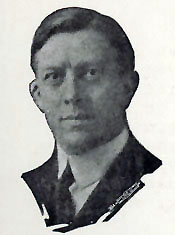
Historical · U.S. House · Minnesota · District 9
Conrad Selvig
Former U.S. Representative · Minnesota District 9 · 1927–1933 · Republican
Conrad Selvig represented Minnesota's District 9 in the United States House of Representatives (1927–1933) for the Republican party. The page below collects sourced biographical facts, term history, committee roles, and provenance for Selvig.
Bioguide ID: S000236
Key facts
- Full name
- Conrad Selvig
- State
- Minnesota
- District
- District 9
- Party
- Republican
- House service
- 1927–1933
- First House term
- 1927
- Status
- Left office
- Current term ends
- —
- Born
- 1877
- Bioguide ID
- S000236
- Committee assignments
- —
- Dataset version
- 1.20260606
Biographical narrative
1,010 words · sourced from the Wikipedia REST extract
Conrad Selvig was a notable figure in American politics, serving as a Republican member of the United States House of Representatives for Minnesota's 9th congressional district. His congressional career spanned three terms from 1927 to 1933, during which he engaged in various legislative activities and contributed to the political landscape of his time. Born in 1877, Selvig's life journey took him from his roots in Minnesota to a significant role in the federal government, reflecting the experiences of many Americans of his era.
Early life and career
Conrad George Selvig was born on October 11, 1877, in Rushford, Minnesota. He was the son of Gunder C. Selvig and Guri Maria Hagnestad Selvig, both of whom were immigrants from Stavanger, Norway. This Norwegian heritage played a significant role in shaping his identity and values. Gunder Selvig worked for the Chicago, Milwaukee, and St. Paul Railroad, which was an important employer in the region and indicative of the industrial growth occurring in the United States during that period.
Selvig's early education took place in Rushford, where he graduated from Rushford High School in 1895. Following his high school education, he pursued higher education at the University of Minnesota, from which he graduated in 1908. His academic background laid the foundation for a career in education, a field in which he would become deeply involved.
After completing his education, Selvig dedicated himself to teaching and educational administration. He worked in various school districts in Fillmore County, Minnesota, and later in Crookston, Minnesota. His commitment to education was further exemplified by his appointment as the Superintendent of the Northwest School of Agriculture in Crookston in 1910. He held this position for 17 years, during which he was responsible for overseeing agricultural education and training, a crucial area of focus in a state known for its farming and agricultural output.
In addition to his role as an educator, Selvig was active in educational organizations. He served as president of the Minnesota Education Association from 1908 to 1909 and later as president of the Northwestern Minnesota Education Association from 1921 to 1922. These leadership positions allowed him to advocate for educational policies and improvements, reflecting his commitment to the advancement of education in Minnesota.
Selvig's career was also marked by his military service. He fought in the Spanish-American War as a member of the 12th Minnesota Volunteer Infantry, an experience that likely influenced his perspectives on national service and civic duty. This military background contributed to his understanding of the challenges faced by veterans and their families, an issue that would resonate in his later political career.
House tenure
Conrad Selvig's political career began when he was elected as a U.S. Representative for Minnesota's 9th congressional district. He served in the 70th, 71st, and 72nd Congresses, with his tenure spanning from March 4, 1927, to March 3, 1933. His election to Congress came during a time of significant change in the United States, as the nation was grappling with the effects of the Great Depression and the shifting dynamics of the political landscape.
During his time in the House of Representatives, Selvig participated in various legislative activities and discussions that were pertinent to his constituents and the nation as a whole. His role as a congressman allowed him to advocate for policies that aligned with the interests of his district, which included a diverse population engaged in agriculture, industry, and education. The challenges of the Great Depression likely influenced many of the issues he addressed, as economic recovery and support for struggling families were paramount concerns during this period.
Selvig's time in Congress was characterized by a commitment to representing the needs and interests of his constituents. He navigated the complexities of federal legislation and worked alongside other members of Congress to address pressing issues of the day. His experience as an educator and administrator may have informed his approach to policy-making, emphasizing the importance of education and community support in fostering economic recovery.
After serving three terms in the House, Selvig's congressional career came to an end on March 3, 1933. His departure from Congress marked the conclusion of a significant chapter in his life, during which he had the opportunity to influence legislation and advocate for the people of Minnesota's 9th district.
Legislative focus and committees
Throughout his congressional tenure, Conrad Selvig's legislative focus was shaped by the pressing issues of the time, particularly those affecting his constituents in Minnesota. While specific details about the bills he sponsored or supported are not provided, it can be inferred that his background in education and agriculture likely influenced his priorities in Congress.
Given the economic challenges of the Great Depression, it is reasonable to assume that Selvig was involved in discussions surrounding economic recovery efforts, agricultural policies, and educational funding. These areas were critical not only to the residents of his district but also to the broader national agenda as the country sought to recover from economic turmoil.
Selvig's experience as an educator may have led him to advocate for policies that supported educational institutions and initiatives. Education was a vital component of community development, and his leadership roles in various educational associations likely provided him with insights into the needs of schools and educators. This perspective would have been particularly relevant during a time when educational funding and reform were critical issues.
In addition to education, Selvig's agricultural background may have prompted him to support legislation that benefited farmers and the agricultural sector. Minnesota's economy was heavily reliant on agriculture, and policies that promoted farming, supported rural communities, and addressed the challenges faced by farmers would have been essential to his constituents.
After concluding his congressional service, Selvig returned to Minnesota, where he continued to be involved in his community. He passed away on August 2, 1953, in Los Angeles, California, and was interred in Oakdale Cemetery in Crookston, Minnesota. His life and career reflect the experiences of many Americans during a transformative period in the nation's history, and his contributions to education and public service remain a part of Minnesota's legacy.
Notable legislation
Sponsored and co-sponsored legislation for Conrad Selvig is pending operator curation. The biographical narrative above carries the same provenance trail until per-bill rows are written.
Sources
- [1]https://en.wikipedia.org/wiki/Conrad_SelvigWikipedia · retrieved 2026-06-06
Notable quotes
Sourced quotes for Conrad Selvig are pending operator curation. Narrative-scope provenance remains attached below.
Sources
- [1]https://en.wikipedia.org/wiki/Conrad_SelvigWikipedia · retrieved 2026-06-06
Key positions
Curated policy positions for Conrad Selvig are pending operator review. The biographical narrative above carries the same provenance trail until per-topic positions are written.
Sources
- [1]https://en.wikipedia.org/wiki/Conrad_SelvigWikipedia · retrieved 2026-06-06
Terms served
- 1927–1929U.S. House · Term 1 · Republican
- 1929–1931U.S. House · Term 2 · Republican
- 1931–1933U.S. House · Term 3 · Republican
Sources & provenance
Every attributable claim above carries a per-section [N] marker that resolves to the corresponding URL below. Each entry records the upstream provider, the canonical URL, and the timestamp at which the source was retrieved by the ingest pipeline.
Key facts
- https://bioguide.congress.gov/search/bio/S000236bioguide · retrieved 2026-06-06
- https://www.govtrack.us/congress/members/409740govtrack · retrieved 2026-06-06
Biographical narrative
- https://en.wikipedia.org/wiki/Conrad_Selvigwikipedia · retrieved 2026-06-06
Find your representative
Every U.S. state elects representatives by district. Browse Minnesota’s delegation, the full former-representative roster, or explore the role and term length.
Related on The Candidate
- Preceded by Knud WefaldEarlier holder of the Minnesota District 9 House seat · Farmer-Labor.Open
- Succeeded by Richard BucklerLater holder of the Minnesota District 9 House seat · Farmer-Labor.Open
- Albert QuieFormer U.S. Representative · Minnesota District 1 · RepublicanOpen
- Allen FurlowFormer U.S. Representative · Minnesota District 1 · RepublicanOpen
- Arlen ErdahlFormer U.S. Representative · Minnesota District 1 · RepublicanOpen
- August AndresenFormer U.S. Representative · Minnesota District 1 · RepublicanOpen