
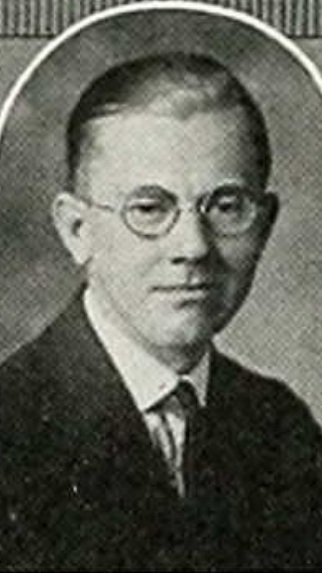
Historical · U.S. House · Missouri · District 1
Clare Magee
Former U.S. Representative · Missouri District 1 · 1949–1953 · Democratic
Clare Magee represented Missouri's District 1 in the United States House of Representatives (1949–1953) for the Democratic party. The page below collects sourced biographical facts, term history, committee roles, and provenance for Magee.
Bioguide ID: M000045
Key facts
- Full name
- Clare Magee
- State
- Missouri
- District
- District 1
- Party
- Democratic
- House service
- 1949–1953
- First House term
- 1949
- Status
- Left office
- Current term ends
- —
- Born
- 1899
- Bioguide ID
- M000045
- Committee assignments
- —
- Dataset version
- 1.20260605
Biographical narrative
1,014 words · sourced from the Wikipedia REST extract
Clare Magee was an American lawyer and politician who served as a member of the United States House of Representatives for Missouri's 1st congressional district from 1949 until 1953. A member of the Democratic Party, Magee's congressional career was marked by his commitment to veterans' issues, particularly in relation to the G.I. Bill. His life spanned significant historical events, including both World Wars, and his career reflected the complexities of American political life in the mid-20th century.
Early life and career
Clare Magee was born on March 31, 1899, on a farm in Putnam County, near Livonia, Missouri. Growing up in a rural environment, he experienced the challenges and opportunities of farm life, which would later inform his political and personal perspectives. Magee completed his secondary education at Unionville High School, where he likely developed foundational skills in leadership and communication that would serve him well in his future endeavors.
Following high school, Magee pursued higher education at Kirksville State Teachers College and the University of Missouri. His academic journey culminated in the study of law at the University of Missouri School of Law, where he prepared for a career in legal practice. This educational background provided him with the tools necessary to navigate the complexities of law and governance.
Magee's early career was shaped by his service in the United States Navy during World War I, where he held the rank of seaman first class and served as a small arms instructor. This experience not only instilled in him a sense of duty and patriotism but also exposed him to the military's organizational structure and discipline. After the war, he ventured west to the Bighorn Basin region, where he homesteaded and worked as a laborer for the United States Reclamation Service in Deaver, Wyoming. This period of his life reflected a commitment to hard work and resilience, traits that would characterize his later political career.
In 1922, Magee was admitted to the bar and began practicing law in Unionville, Missouri. His legal career provided him with a platform to engage with the community and address local issues. In 1932, he took over the operation of his family's farm, which connected him further to the agricultural community and its concerns. His role as postmaster of Unionville from 1935 to 1941 also demonstrated his commitment to public service and community engagement.
Magee's military service continued during World War II when he joined the Army as a private in the Field Artillery Branch. He was later commissioned as a captain in the United States Army Air Corps, serving until the war's conclusion. This experience further solidified his understanding of military affairs and veterans' issues, which would become a focal point of his later legislative work.
House tenure
Clare Magee's political career took a significant turn in 1948 when he was elected as a Democrat to the Eighty-first Congress. His tenure in the House of Representatives began on January 3, 1949, and he served until January 3, 1953. During this time, he was involved in various legislative activities and contributed to discussions on key national issues.
Magee's election to Congress came at a time when the United States was grappling with the aftermath of World War II and the onset of the Cold War. His background as a veteran likely influenced his legislative priorities, particularly regarding issues affecting returning servicemen and women. He was recognized for his efforts to extend G.I. Bill benefits to veterans of the Korean War, reflecting his commitment to ensuring that those who served the country received the support they needed to reintegrate into civilian life.
During his time in office, Magee participated in the broader discussions surrounding post-war recovery and the expansion of social programs. His work in Congress was characterized by a focus on the needs of his constituents and an understanding of the challenges faced by veterans and their families. His legislative contributions were part of a larger movement within the Democratic Party to address social welfare and economic stability during a period of significant change in American society.
Despite his accomplishments, Magee did not seek renomination in 1952, concluding his congressional career after serving two terms. His decision to step away from politics marked a transition back to private life, where he resumed his legal practice in Unionville.
Legislative focus and committees
Throughout his congressional tenure, Clare Magee was known for his focus on issues related to veterans, particularly in the context of the G.I. Bill. This legislation was crucial for providing educational benefits, housing assistance, and other forms of support to veterans returning from military service. Magee's advocacy for extending these benefits to Korean War veterans illustrated his commitment to ensuring that those who served their country were not left behind as they transitioned back to civilian life.
In addition to veterans' issues, Magee's legislative work likely encompassed a range of topics relevant to his constituents in Missouri's 1st congressional district. While specific committee assignments are not detailed in the available information, it is common for members of Congress to serve on committees that align with their interests and the needs of their districts. These committees play a vital role in shaping legislation and overseeing various aspects of government policy.
Magee's time in Congress occurred during a period of significant social and political change in the United States. The post-war era was marked by debates over civil rights, economic policy, and the role of government in addressing social issues. As a member of the Democratic Party, Magee was part of a larger coalition advocating for progressive policies aimed at improving the lives of ordinary Americans.
After leaving Congress, Clare Magee returned to his legal practice, where he continued to engage with the community and address legal matters. His life and career were marked by a dedication to public service, both through his military service and his time in elected office. Magee passed away on August 7, 1969, in Unionville, Missouri, and was laid to rest at Unionville Cemetery, leaving behind a legacy of commitment to his constituents and the values he championed throughout his life.
Notable legislation
Sponsored and co-sponsored legislation for Clare Magee is pending operator curation. The biographical narrative above carries the same provenance trail until per-bill rows are written.
Sources
- [1]https://en.wikipedia.org/wiki/Clare_MageeWikipedia · retrieved 2026-06-05
Notable quotes
Sourced quotes for Clare Magee are pending operator curation. Narrative-scope provenance remains attached below.
Sources
- [1]https://en.wikipedia.org/wiki/Clare_MageeWikipedia · retrieved 2026-06-05
Key positions
Curated policy positions for Clare Magee are pending operator review. The biographical narrative above carries the same provenance trail until per-topic positions are written.
Sources
- [1]https://en.wikipedia.org/wiki/Clare_MageeWikipedia · retrieved 2026-06-05
Terms served
- 1949–1951U.S. House · Term 1 · Democratic
- 1951–1953U.S. House · Term 2 · Democratic
Sources & provenance
Every attributable claim above carries a per-section [N] marker that resolves to the corresponding URL below. Each entry records the upstream provider, the canonical URL, and the timestamp at which the source was retrieved by the ingest pipeline.
Key facts
- https://bioguide.congress.gov/search/bio/M000045bioguide · retrieved 2026-06-05
- https://www.govtrack.us/congress/members/407073govtrack · retrieved 2026-06-05
Biographical narrative
- https://en.wikipedia.org/wiki/Clare_Mageewikipedia · retrieved 2026-06-05
Find your representative
Every U.S. state elects representatives by district. Browse Missouri’s delegation, the full former-representative roster, or explore the role and term length.
Related on The Candidate
- Preceded by Wat ArnoldEarlier holder of the Missouri District 1 House seat · Republican.Open
- Succeeded by Bill Clay Sr.Later holder of the Missouri District 1 House seat · Democratic.Open
- Anthony IttnerFormer U.S. Representative · Missouri District 1 · RepublicanOpen
- Charles ClarkFormer U.S. Representative · Missouri District 1 · RepublicanOpen
- Cori BushFormer U.S. Representative · Missouri District 1 · DemocraticOpen
- Democratic PartyFederal candidates and office holders on the Democratic line.Open