
Historical · U.S. House · Missouri · District 1
Wat Arnold
Former U.S. Representative · Missouri District 1 · 1943–1949 · Republican
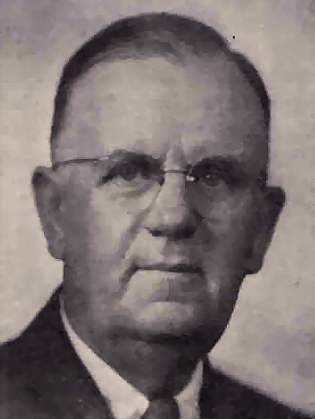
Wat Arnold represented Missouri's District 1 in the United States House of Representatives (1943–1949) for the Republican party. The page below collects sourced biographical facts, term history, committee roles, and provenance for Arnold.
Bioguide ID: A000296
Key facts
- Full name
- Wat Arnold
- State
- Missouri
- District
- District 1
- Party
- Republican
- House service
- 1943–1949
- First House term
- 1943
- Status
- Left office
- Current term ends
- —
- Born
- 1879
- Bioguide ID
- A000296
- Committee assignments
- —
- Dataset version
- 1.20260605
Biographical narrative
943 words · sourced from the Wikipedia REST extract
Samuel Washington Arnold, commonly known as Wat Arnold, served as a U.S. Representative for Missouri's 1st congressional district from 1943 until 1949. A member of the Republican Party, Arnold's political career spanned three terms in the House of Representatives. He was born on September 21, 1879, in Schuyler County, Missouri, and his life journey included a diverse array of experiences in education, business, and broadcasting, which shaped his perspectives and contributions during his time in Congress.
Early life and career
Wat Arnold was born on a farm near Downing, Missouri, to Cumberland Wilson Arnold and Mary Elizabeth Hill Arnold. Growing up in a rural environment, he received his early education at a local school in Coffey, Missouri. His academic pursuits led him to the North Missouri Normal School, now recognized as Truman State University, located in Kirksville, Missouri. He graduated from this institution in 1902, laying the groundwork for his future endeavors in education and public service.
Following his graduation, Arnold embarked on a career in education, serving as a teacher and later as a superintendent in various rural schools across northeast Missouri. His commitment to education reflected his belief in the importance of knowledge and learning in shaping the future of his community. In 1904, seeking new opportunities, he relocated to St. Louis, where he took a position with the internal revenue office. This role provided him with insights into governmental operations and fiscal matters, experiences that would later inform his legislative work.
On Christmas Eve of 1904, Arnold married Myra Gertrude Mills, marking the beginning of a partnership that would last throughout his life. The following year, in 1905, the couple moved to Atlanta, Missouri, where Arnold transitioned into the lumber industry. He began a career that would span over five decades, establishing himself as a significant figure in the local economy. In 1908, seeking to expand his business, Arnold relocated his family to Kirksville, Missouri, where he founded the Arnold Lumber Company. This enterprise became a staple of the Kirksville business community, operating for an impressive seventy-five years and contributing to the economic development of the region.
In addition to his business ventures, Arnold was also involved in the media industry as a founding partner of the North Missouri Broadcasting Company. This company was responsible for the establishment and operation of radio stations KIRX in Kirksville and KTTN in Trenton, Missouri. His involvement in broadcasting reflected his interest in communication and community engagement, further solidifying his role as a prominent figure in northeastern Missouri.
House tenure
Wat Arnold's political career began in earnest when he was elected as a Republican to the U.S. House of Representatives. His first term commenced on January 3, 1943, during the Seventy-eighth Congress. Arnold served a total of three consecutive terms in the House, representing the interests of his constituents in Missouri's 1st congressional district. His tenure in Congress coincided with a period of significant national and international events, including World War II and its aftermath, which influenced legislative priorities and public policy.
Throughout his time in office, Arnold was involved in various legislative initiatives and discussions that addressed the pressing issues of the day. His experience as a businessman and educator likely informed his approach to governance, as he sought to balance the needs of his constituents with the broader objectives of national policy. Arnold's legislative focus was shaped by the economic conditions of the time, as well as the social and political dynamics that characterized the mid-20th century.
Despite his efforts and contributions, Arnold faced challenges in securing re-election. After completing his third term, he was an unsuccessful candidate for re-election in 1948 to the Eighty-first Congress. He also sought election in 1950 to the Eighty-second Congress and in 1952 to the Eighty-third Congress, but these attempts were not successful. Following these defeats, Arnold chose to retire from political life, concluding a chapter of public service that had spanned several years.
Legislative focus and committees
During his time in the House of Representatives, Wat Arnold's legislative focus was likely influenced by his background in education and business, as well as the needs of his constituents in Missouri. While specific details regarding the bills he sponsored or the committees he served on are not provided, it can be inferred that his experiences in the lumber industry and broadcasting may have informed his perspectives on economic development, infrastructure, and education policy.
Arnold's involvement in various community initiatives prior to his congressional career suggests that he was attuned to the needs and concerns of his constituents. His background as a businessman may have led him to advocate for policies that supported local economies and job creation, particularly in the wake of the economic challenges posed by the war and its aftermath. Additionally, his experience in education likely contributed to his understanding of the importance of educational opportunities and resources for the youth in his district.
The context of Arnold's legislative work must also be viewed against the backdrop of the broader political landscape of the time. The mid-20th century was marked by significant changes in American society, including shifts in civil rights, economic policy, and foreign relations. As a member of the Republican Party during this era, Arnold would have been part of discussions and debates that shaped the direction of national policy in response to these changes.
After leaving Congress, Arnold returned to his business interests and community involvement. He passed away on December 18, 1961, in Kirksville, Missouri, where he was interred in Maple Hills Cemetery. His legacy, marked by his contributions to education, business, and public service, reflects a life dedicated to the betterment of his community and the nation.
Notable legislation
Sponsored and co-sponsored legislation for Wat Arnold is pending operator curation. The biographical narrative above carries the same provenance trail until per-bill rows are written.
Sources
- [1]https://en.wikipedia.org/wiki/Samuel_W._ArnoldWikipedia · retrieved 2026-06-05
Notable quotes
Sourced quotes for Wat Arnold are pending operator curation. Narrative-scope provenance remains attached below.
Sources
- [1]https://en.wikipedia.org/wiki/Samuel_W._ArnoldWikipedia · retrieved 2026-06-05
Key positions
Curated policy positions for Wat Arnold are pending operator review. The biographical narrative above carries the same provenance trail until per-topic positions are written.
Sources
- [1]https://en.wikipedia.org/wiki/Samuel_W._ArnoldWikipedia · retrieved 2026-06-05
Terms served
- 1943–1945U.S. House · Term 1 · Republican
- 1945–1947U.S. House · Term 2 · Republican
- 1947–1949U.S. House · Term 3 · Republican
Sources & provenance
Every attributable claim above carries a per-section [N] marker that resolves to the corresponding URL below. Each entry records the upstream provider, the canonical URL, and the timestamp at which the source was retrieved by the ingest pipeline.
Key facts
- https://bioguide.congress.gov/search/bio/A000296bioguide · retrieved 2026-06-05
- https://www.govtrack.us/congress/members/400938govtrack · retrieved 2026-06-05
Biographical narrative
- https://en.wikipedia.org/wiki/Samuel_W._Arnoldwikipedia · retrieved 2026-06-05
Find your representative
Every U.S. state elects representatives by district. Browse Missouri’s delegation, the full former-representative roster, or explore the role and term length.
Related on The Candidate
- Preceded by Milton RomjueEarlier holder of the Missouri District 1 House seat · Democratic.Open
- Succeeded by Clare MageeLater holder of the Missouri District 1 House seat · Democratic.Open
- Anthony IttnerFormer U.S. Representative · Missouri District 1 · RepublicanOpen
- Bill Clay Sr.Former U.S. Representative · Missouri District 1 · DemocraticOpen
- Charles ClarkFormer U.S. Representative · Missouri District 1 · RepublicanOpen
- Republican PartyFederal candidates and office holders on the Republican line.Open