
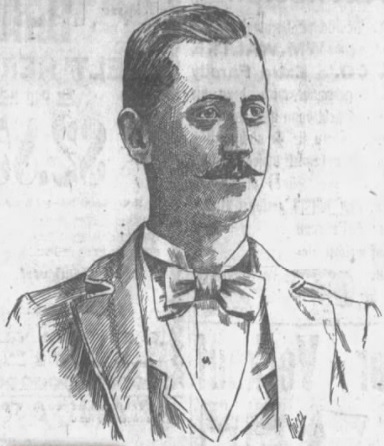
Historical · U.S. House · Missouri · District 10
Frederick Essen
Former U.S. Representative · Missouri District 10 · 1917–1919 · Republican
Frederick Essen represented Missouri's District 10 in the United States House of Representatives (1917–1919) for the Republican party. The page below collects sourced biographical facts, term history, committee roles, and provenance for Essen.
Bioguide ID: E000219
Key facts
- Full name
- Frederick Essen
- State
- Missouri
- District
- District 10
- Party
- Republican
- House service
- 1917–1919
- First House term
- 1917
- Status
- Left office
- Current term ends
- —
- Born
- 1863
- Bioguide ID
- E000219
- Committee assignments
- —
- Dataset version
- 1.20260606
Biographical narrative
824 words · sourced from the Wikipedia REST extract
Frederick Essen was a U.S. Representative from Missouri, serving in the House of Representatives as a member of the Republican Party. His congressional career was brief, spanning a single term from 1918 to 1919. Born in 1863, Essen's life encompassed various roles in public service, education, and the newspaper industry, reflecting a diverse professional background that contributed to his political career.
Early life and career
Frederick Essen was born on April 22, 1863, near Pond in St. Louis County, Missouri. His early education took place in the public schools of the area, where he laid the foundation for his future endeavors. Following his schooling, Essen engaged in agricultural pursuits, which were common in the region during that time. This involvement in farming provided him with firsthand experience of the challenges and opportunities faced by rural communities, which would later inform his political perspectives.
Essen's career took a significant turn when he entered the realm of public service. He was elected as the recorder of deeds for St. Louis County, a position he held from 1894 to 1902. This role allowed him to gain valuable experience in local government and public administration, enhancing his understanding of the legal and bureaucratic processes that govern civic life.
In addition to his work in public office, Essen ventured into the newspaper business in Clayton, Missouri. He became the owner of two local newspapers, which he later merged under the name "Watchman-Advocate." This involvement in journalism not only provided him with a platform to influence public opinion but also helped him establish connections within the community. His work in the media likely contributed to his visibility and reputation, which would be advantageous in his later political career.
Essen was actively engaged in the Republican Party and participated in several national conventions as a delegate. His involvement in the Republican National Conventions in 1904, 1908, and 1912 demonstrated his commitment to the party and its principles, as well as his desire to play a role in shaping national policies and platforms.
In addition to his political and journalistic pursuits, Essen was also involved in education. He served on the board of education in Clayton and held the position of president from 1909 to 1919. This role allowed him to influence educational policies and initiatives in his community, further solidifying his commitment to public service.
House tenure
Frederick Essen's tenure in the U.S. House of Representatives began when he was elected to fill a vacancy created by the death of Jacob Edwin Meeker. He was elected as a Republican to the Sixty-fifth Congress, officially taking office on November 5, 1918. His time in Congress was relatively short, as he served until March 3, 1919. During this period, Essen participated in the legislative process and contributed to discussions and decisions affecting his constituents and the nation.
Despite the brevity of his congressional career, Essen's election to the House marked a significant achievement in his political journey. He represented Missouri's 10th congressional district, a role that required him to advocate for the interests of his constituents at the federal level. However, he did not seek renomination in 1918, choosing instead to conclude his time in Congress after a single term.
Following his departure from the House, Essen returned to his previous endeavors in the newspaper business. His experience in Congress likely enriched his understanding of the political landscape, which he may have continued to explore through his journalistic pursuits.
Legislative focus and committees
During his time in the House of Representatives, Frederick Essen's specific legislative focus and committee assignments are not extensively documented. However, as a member of the Republican Party during a period of significant national change, it can be inferred that his legislative interests may have aligned with the party's priorities at the time. The late 1910s were marked by various social and economic challenges, including the aftermath of World War I and the beginning of the Progressive Era's reforms.
Essen's background in education and local government may have influenced his perspectives on issues related to education, infrastructure, and community development. His experience as a recorder of deeds and a member of the board of education could have provided him with insights into the needs of his constituents, particularly in areas related to public services and local governance.
After leaving Congress, Essen continued to engage in various professional activities, including banking, which suggests a continued interest in economic matters and community development. His diverse career, spanning agriculture, journalism, public service, and banking, reflects a multifaceted approach to his professional life and a commitment to contributing to his community in various capacities.
Frederick Essen passed away on August 18, 1946, in Creve Coeur, Missouri. His contributions to public service, education, and journalism left a mark on the communities he served. He was interred in Bethel Cemetery in Pond, Missouri, where he is remembered as a figure who navigated multiple roles throughout his life, from agriculture to politics and beyond.
Notable legislation
Sponsored and co-sponsored legislation for Frederick Essen is pending operator curation. The biographical narrative above carries the same provenance trail until per-bill rows are written.
Sources
- [1]https://en.wikipedia.org/wiki/Frederick_EssenWikipedia · retrieved 2026-06-06
Notable quotes
Sourced quotes for Frederick Essen are pending operator curation. Narrative-scope provenance remains attached below.
Sources
- [1]https://en.wikipedia.org/wiki/Frederick_EssenWikipedia · retrieved 2026-06-06
Key positions
Curated policy positions for Frederick Essen are pending operator review. The biographical narrative above carries the same provenance trail until per-topic positions are written.
Sources
- [1]https://en.wikipedia.org/wiki/Frederick_EssenWikipedia · retrieved 2026-06-06
Terms served
- 1917–1919U.S. House · Term 1 · Republican
Sources & provenance
Every attributable claim above carries a per-section [N] marker that resolves to the corresponding URL below. Each entry records the upstream provider, the canonical URL, and the timestamp at which the source was retrieved by the ingest pipeline.
Key facts
- https://bioguide.congress.gov/search/bio/E000219bioguide · retrieved 2026-06-06
- https://www.govtrack.us/congress/members/403905govtrack · retrieved 2026-06-06
Biographical narrative
- https://en.wikipedia.org/wiki/Frederick_Essenwikipedia · retrieved 2026-06-06
Find your representative
Every U.S. state elects representatives by district. Browse Missouri’s delegation, the full former-representative roster, or explore the role and term length.
Related on The Candidate
- Preceded by Richard BartholdtEarlier holder of the Missouri District 10 House seat · Republican.Open
- Succeeded by Cleveland NewtonLater holder of the Missouri District 10 House seat · Republican.Open
- Anthony IttnerFormer U.S. Representative · Missouri District 1 · RepublicanOpen
- Bill Clay Sr.Former U.S. Representative · Missouri District 1 · DemocraticOpen
- Charles ClarkFormer U.S. Representative · Missouri District 1 · RepublicanOpen
- Clare MageeFormer U.S. Representative · Missouri District 1 · DemocraticOpen