
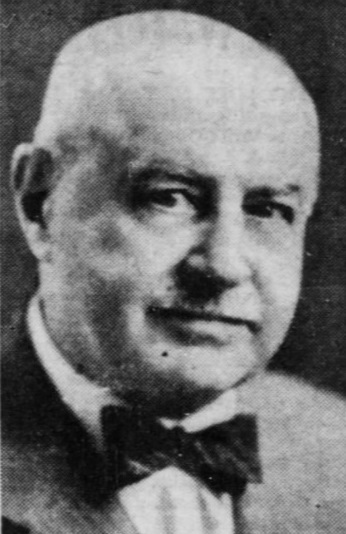
Historical · U.S. House · Missouri · District 10
Henry Niedringhaus
Former U.S. Representative · Missouri District 10 · 1927–1933 · Republican
Henry Niedringhaus represented Missouri's District 10 in the United States House of Representatives (1927–1933) for the Republican party. The page below collects sourced biographical facts, term history, committee roles, and provenance for Niedringhaus.
Bioguide ID: N000105
Key facts
- Full name
- Henry Niedringhaus
- State
- Missouri
- District
- District 10
- Party
- Republican
- House service
- 1927–1933
- First House term
- 1927
- Status
- Left office
- Current term ends
- —
- Born
- 1864
- Bioguide ID
- N000105
- Committee assignments
- —
- Dataset version
- 1.20260606
Biographical narrative
832 words · sourced from the Wikipedia REST extract
Henry Niedringhaus was an American politician and businessman who served as a U.S. Representative for Missouri's 10th congressional district from 1927 to 1933. A member of the Republican Party, he was known for his moderate political stance within the party and his involvement in various legislative matters during his time in office. Following his congressional career, Niedringhaus returned to St. Louis, where he lived until his death in 1941.
Early life and career
Henry Frederick Niedringhaus was born on December 15, 1864, in St. Louis, Missouri. He was the son of Frederick William Niedringhaus, a German immigrant, and he was also the nephew of Frederick G. Niedringhaus, who was a notable politician in the region. Niedringhaus received his early education in public schools and furthered his studies at Central Wesleyan College and Smith Academy. This educational background laid the foundation for his future endeavors in both business and politics.
Niedringhaus embarked on a career in business, where he spent 43 years as a manager at a plant of the National Enameling and Stamping Company located in Granite City, Illinois. His long tenure at the company contributed significantly to his financial success, allowing him to accumulate considerable wealth. In 1924, he left his position at the company, which marked a transition in his career from business to public service.
His political journey began as he aligned himself with the Republican Party, which was a significant aspect of his identity as a public figure. Niedringhaus's business acumen and his connections within the Republican Party eventually led him to seek a position in the United States Congress.
House tenure
Niedringhaus's congressional career began when he was elected to the U.S. House of Representatives, representing Missouri's 10th congressional district. His first term commenced on March 4, 1927. During his time in office, he served a total of three terms, concluding his service on March 3, 1933. His tenure coincided with a period of significant political and economic change in the United States, including the onset of the Great Depression.
Throughout his time in Congress, Niedringhaus was elected during a period when his district leaned slightly Republican. He successfully secured re-election in his first two terms, and in a notable third election in 1930, he achieved an overwhelming majority of the vote, receiving 99.8%. This impressive electoral success reflected his ability to connect with constituents, although it also indicated the political dynamics of the time.
However, after his third term, Niedringhaus faced challenges in the political landscape. Following the 1930 census, his district was consolidated into the 8th congressional district, which altered the electoral map and ultimately led to his defeat in the subsequent election. His departure from Congress marked the end of his formal political career, but it did not diminish his influence or legacy in the region.
Legislative focus and committees
During his time in the House of Representatives, Niedringhaus was involved in various legislative matters and served on the Committee on Rivers and Harbors. This committee was responsible for overseeing legislation related to the nation's waterways and infrastructure, which were critical issues during the early 20th century. His participation in this committee underscored his interest in infrastructure development and the economic implications of waterway management.
Niedringhaus's voting record indicated a moderate approach to several contentious issues of his time. He was known to have voted in favor of repealing the Eighteenth Amendment, which had established Prohibition in the United States. This decision reflected a more liberal stance compared to many of his Republican colleagues, who were generally more conservative on social issues. Additionally, he opposed the payment of bonuses to World War I veterans, a decision that was controversial and drew criticism from various veteran advocacy groups. He also opposed the Garner-Wagner Relief Bill, which aimed to provide assistance during the economic hardships of the Great Depression.
Overall, Niedringhaus's legislative focus and committee work illustrated his engagement with key issues of his time, as well as his willingness to navigate the complexities of political decision-making. His moderate political stance positioned him as an ideological median within Congress, allowing him to work across party lines on certain matters while still adhering to the core principles of the Republican Party.
After concluding his congressional service, Niedringhaus retired from public life and returned to St. Louis, where he remained active in community affairs. His personal life included two marriages, first to Cora Boucher in 1889, who passed away in 1916, and later to Ariel L. Cargo in the late 1920s or early 1930s. He was also involved in various charitable organizations, including serving as the president of the Shriners Hospital for Children in St. Louis and holding the position of Potentate of the Shriners in 1916.
Henry Niedringhaus passed away on August 3, 1941, at the age of 76, in St. Louis. He was laid to rest at Bellefontaine Cemetery, leaving behind a legacy as a businessman and politician who contributed to the political landscape of Missouri during a transformative era in American history.
Notable legislation
Sponsored and co-sponsored legislation for Henry Niedringhaus is pending operator curation. The biographical narrative above carries the same provenance trail until per-bill rows are written.
Sources
- [1]https://en.wikipedia.org/wiki/Henry_F._NiedringhausWikipedia · retrieved 2026-06-06
Notable quotes
Sourced quotes for Henry Niedringhaus are pending operator curation. Narrative-scope provenance remains attached below.
Sources
- [1]https://en.wikipedia.org/wiki/Henry_F._NiedringhausWikipedia · retrieved 2026-06-06
Key positions
Curated policy positions for Henry Niedringhaus are pending operator review. The biographical narrative above carries the same provenance trail until per-topic positions are written.
Sources
- [1]https://en.wikipedia.org/wiki/Henry_F._NiedringhausWikipedia · retrieved 2026-06-06
Terms served
- 1927–1929U.S. House · Term 1 · Republican
- 1929–1931U.S. House · Term 2 · Republican
- 1931–1933U.S. House · Term 3 · Republican
Sources & provenance
Every attributable claim above carries a per-section [N] marker that resolves to the corresponding URL below. Each entry records the upstream provider, the canonical URL, and the timestamp at which the source was retrieved by the ingest pipeline.
Key facts
- https://bioguide.congress.gov/search/bio/N000105bioguide · retrieved 2026-06-06
- https://www.govtrack.us/congress/members/408189govtrack · retrieved 2026-06-06
Biographical narrative
- https://en.wikipedia.org/wiki/Henry_F._Niedringhauswikipedia · retrieved 2026-06-06
Find your representative
Every U.S. state elects representatives by district. Browse Missouri’s delegation, the full former-representative roster, or explore the role and term length.
Related on The Candidate
- Preceded by Cleveland NewtonEarlier holder of the Missouri District 10 House seat · Republican.Open
- Succeeded by Orville ZimmermanLater holder of the Missouri District 10 House seat · Democratic.Open
- Anthony IttnerFormer U.S. Representative · Missouri District 1 · RepublicanOpen
- Bill Clay Sr.Former U.S. Representative · Missouri District 1 · DemocraticOpen
- Charles ClarkFormer U.S. Representative · Missouri District 1 · RepublicanOpen
- Clare MageeFormer U.S. Representative · Missouri District 1 · DemocraticOpen