
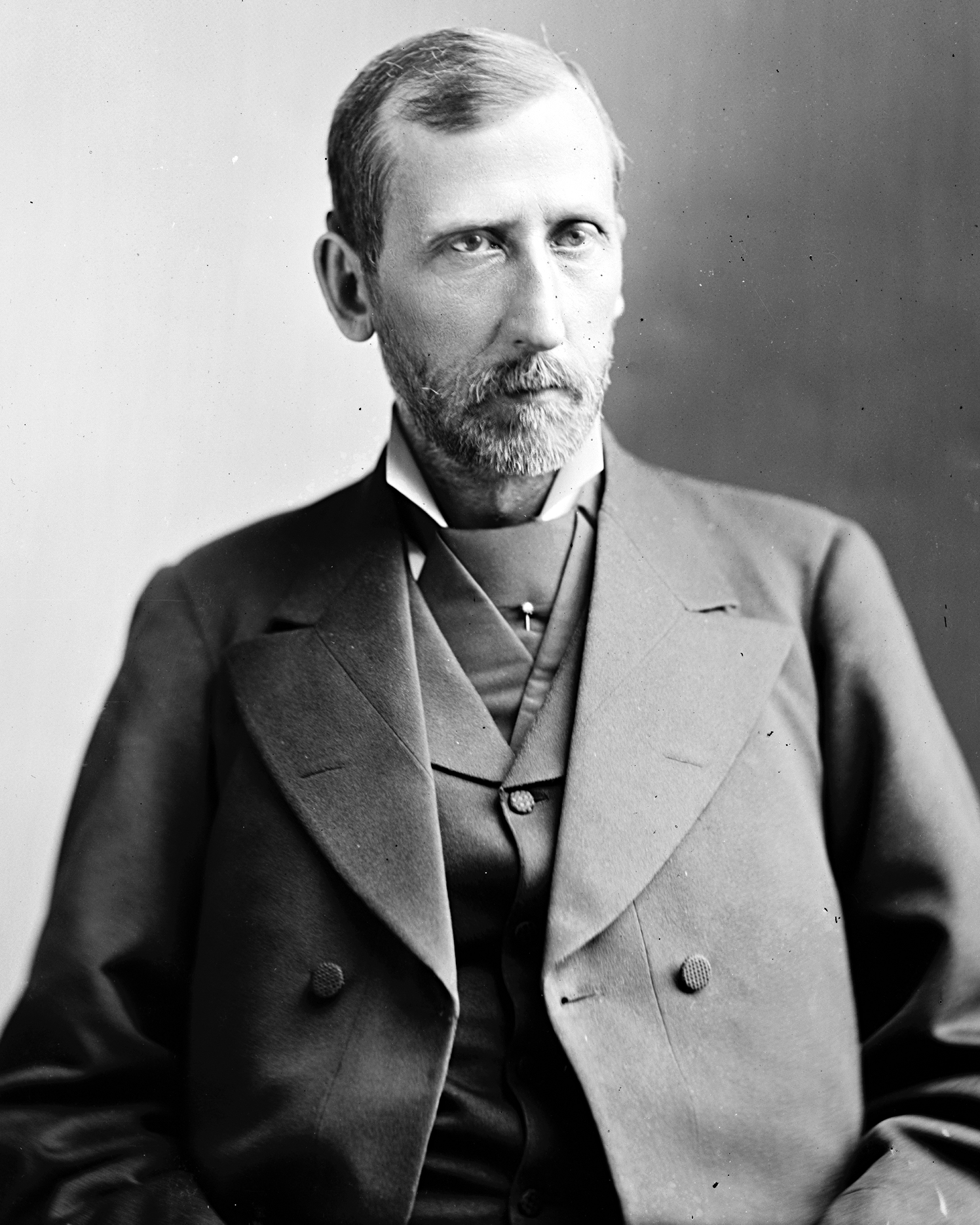
Historical · U.S. House · Missouri · District 10
Henry Pollard
Former U.S. Representative · Missouri District 10 · 1877–1879 · Republican
Henry Pollard represented Missouri's District 10 in the United States House of Representatives (1877–1879) for the Republican party. The page below collects sourced biographical facts, term history, committee roles, and provenance for Pollard.
Bioguide ID: P000414
Key facts
- Full name
- Henry Pollard
- State
- Missouri
- District
- District 10
- Party
- Republican
- House service
- 1877–1879
- First House term
- 1877
- Status
- Left office
- Current term ends
- —
- Born
- 1836
- Bioguide ID
- P000414
- Committee assignments
- —
- Dataset version
- 1.20260606
Biographical narrative
900 words · sourced from the Wikipedia REST extract
Henry Pollard was an American attorney and politician who served as a U.S. Representative for Missouri's 10th congressional district from 1877 to 1879. A member of the Republican Party, Pollard's political career followed a diverse background that included military service during the American Civil War and various roles in local government. His contributions to both his community and the nation are marked by his legal career and his brief tenure in Congress.
Early life and career
Henry Moses Pollard was born on June 14, 1836, in Plymouth, Vermont, to Moses Pollard and Abigail (Brown) Pollard. Raised in a small town, Pollard received his early education in Plymouth and graduated from Black River Academy, a preparatory school known for its rigorous academic standards. Following his education at Black River Academy, he pursued higher education at Dartmouth College, where he earned a Bachelor of Science degree in 1857. Dartmouth, one of the Ivy League institutions, provided him with a solid foundation for his future endeavors.
After completing his studies at Dartmouth, Pollard ventured into the field of education, teaching in several states, including Kentucky, Iowa, and Wisconsin. This experience in education not only honed his communication skills but also deepened his understanding of the diverse American landscape during a time of significant change. While teaching, he also began to study law at the Milwaukee firm of Walter S. Carter and William G. Whipple. He was admitted to the bar in 1861, but his legal career was temporarily set aside as he chose to serve his country during the American Civil War.
With the onset of the Civil War, Pollard joined the Union Army, enlisting as a first lieutenant in Company I of the 8th Vermont Infantry Regiment. His regiment initially served in the Department of the Gulf, later participating in the Civil War Defenses of Washington and the Virginia Valley campaigns of 1864. Pollard's military service was marked by his commitment to the Union cause, and he remained in active duty until the war concluded in 1865, achieving the rank of major by the time of his discharge in July of that year.
After the war, Pollard completed his legal education with a six-month term at Albany Law School, further solidifying his qualifications as an attorney. He then relocated to Chillicothe, Missouri, where he began practicing law in partnership with Joel Funk Asper. Following Asper's election to Congress, Pollard continued his legal practice in partnership with Judge Elbridge J. Broaddus. His involvement in local politics began to take shape during this period, as he was appointed county attorney of Livingston County in 1874. This role allowed him to gain valuable experience in legal matters and public service, setting the stage for his future political career. In 1876, he was elected mayor of Chillicothe, serving in that capacity until 1877.
House tenure
In 1876, Pollard's political aspirations culminated in his election to the United States House of Representatives, where he represented Missouri's 10th congressional district. His term in the House began on March 4, 1877, and concluded on March 3, 1879. During his time in Congress, Pollard was part of a legislative body that was navigating the complexities of post-Civil War America, a period characterized by significant social, economic, and political transformations.
As a member of the Republican Party, Pollard aligned himself with the party's platform, which at the time focused on issues such as Reconstruction, economic development, and civil rights for formerly enslaved individuals. However, specific details regarding his legislative activities, including the bills he sponsored or supported, are not extensively documented. His tenure in the House was relatively brief, and he was not successful in his bid for reelection in 1878. Following his departure from Congress, Pollard returned to his legal practice, continuing to contribute to his community through his work in law.
Legislative focus and committees
While specific details about Pollard's legislative focus during his time in the House are limited, it is important to contextualize his role within the broader political landscape of the late 19th century. The period following the Civil War was marked by significant challenges, including the integration of formerly enslaved individuals into society, economic recovery, and the expansion of infrastructure across the nation. As a Republican representative, Pollard would have been expected to engage with these pressing issues, although the specifics of his contributions remain less documented.
After leaving Congress, Pollard moved to St. Louis in 1879, where he continued his legal practice. He initially partnered with Seneca N. Taylor and later practiced law as a solo practitioner. His legal career in St. Louis allowed him to remain active in the community and contribute to the legal landscape of the region. In addition to his legal work, Pollard was involved in civic organizations, including the New England Society of St. Louis, which he helped found and served as its first president. This involvement reflects his commitment to fostering community ties and supporting cultural initiatives.
Pollard's life came to a close on February 24, 1904, in St. Louis, where he passed away at the age of 67. His contributions to his community and the nation were recognized posthumously, and he was interred at Edgewood Cemetery in Chillicothe, Missouri. Pollard's journey from a small-town educator to a U.S. Representative illustrates the diverse paths individuals have taken in American politics, highlighting the interplay between local and national governance during a transformative era in U.S. history.
Notable legislation
Sponsored and co-sponsored legislation for Henry Pollard is pending operator curation. The biographical narrative above carries the same provenance trail until per-bill rows are written.
Sources
- [1]https://en.wikipedia.org/wiki/Henry_M._PollardWikipedia · retrieved 2026-06-06
Notable quotes
Sourced quotes for Henry Pollard are pending operator curation. Narrative-scope provenance remains attached below.
Sources
- [1]https://en.wikipedia.org/wiki/Henry_M._PollardWikipedia · retrieved 2026-06-06
Key positions
Curated policy positions for Henry Pollard are pending operator review. The biographical narrative above carries the same provenance trail until per-topic positions are written.
Sources
- [1]https://en.wikipedia.org/wiki/Henry_M._PollardWikipedia · retrieved 2026-06-06
Terms served
- 1877–1879U.S. House · Term 1 · Republican
Sources & provenance
Every attributable claim above carries a per-section [N] marker that resolves to the corresponding URL below. Each entry records the upstream provider, the canonical URL, and the timestamp at which the source was retrieved by the ingest pipeline.
Key facts
- https://bioguide.congress.gov/search/bio/P000414bioguide · retrieved 2026-06-06
- https://www.govtrack.us/congress/members/408807govtrack · retrieved 2026-06-06
Biographical narrative
- https://en.wikipedia.org/wiki/Henry_M._Pollardwikipedia · retrieved 2026-06-06
Find your representative
Every U.S. state elects representatives by district. Browse Missouri’s delegation, the full former-representative roster, or explore the role and term length.
Related on The Candidate
- Preceded by Rezin De BoltEarlier holder of the Missouri District 10 House seat · Democratic.Open
- Succeeded by Gideon RothwellLater holder of the Missouri District 10 House seat · Democratic.Open
- Anthony IttnerFormer U.S. Representative · Missouri District 1 · RepublicanOpen
- Bill Clay Sr.Former U.S. Representative · Missouri District 1 · DemocraticOpen
- Charles ClarkFormer U.S. Representative · Missouri District 1 · RepublicanOpen
- Clare MageeFormer U.S. Representative · Missouri District 1 · DemocraticOpen