
Historical · U.S. House · Missouri · District 11
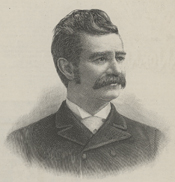
John O’Neill
Former U.S. Representative · Missouri District 11 · 1883–1895 · Democratic
John O’Neill represented Missouri's District 11 in the United States House of Representatives (1883–1895) for the Democratic party. The page below collects sourced biographical facts, term history, committee roles, and provenance for O’Neill.
Bioguide ID: O000097
Key facts
- Full name
- John O’Neill
- State
- Missouri
- District
- District 11
- Party
- Democratic
- House service
- 1883–1895
- First House term
- 1883
- Status
- Left office
- Current term ends
- —
- Born
- 1846
- Bioguide ID
- O000097
- Committee assignments
- —
- Dataset version
- 1.20260606
Biographical narrative
979 words · sourced from the Wikipedia REST extract
John O’Neill was a prominent figure in Missouri's political landscape during the late 19th century, serving as a U.S. Representative for the state's 11th congressional district. A member of the Democratic Party, O’Neill's political career spanned over a decade, during which he was involved in various legislative committees and played a role in shaping the policies of his time. His tenure in the U.S. House of Representatives is marked by his service across five terms, during which he engaged in significant legislative activities before returning to his legal career.
Early life and career
John O’Neill was born on June 25, 1846, in St. Louis, Missouri. Growing up in a city that was rapidly developing during the mid-19th century, he attended local common schools, which provided him with a foundational education. His academic pursuits led him to study law, a field that would become central to his professional life. After completing his legal studies, O’Neill was admitted to the bar in 1870, allowing him to begin practicing law in St. Louis. This legal career would later complement his political endeavors, providing him with the skills necessary to navigate the complexities of legislative processes.
In addition to his legal practice, O’Neill ventured into the manufacturing sector, specifically in the production of gold pens. This entrepreneurial endeavor showcased his versatility and ability to engage in diverse fields. His involvement in local governance began in the early 1870s when he was elected to the Missouri House of Representatives, where he served from 1872 to 1878. This experience in state politics laid the groundwork for his future aspirations at the national level.
O’Neill's political career continued to evolve as he took on the role of a member of the municipal assembly from 1879 to 1881. This position allowed him to gain further insight into the workings of government and public administration, enhancing his understanding of the needs and concerns of his constituents. His active participation in local government and his legal background positioned him as a suitable candidate for higher office, ultimately leading to his election to the U.S. House of Representatives.
House tenure
John O’Neill's congressional career began when he was elected as a Democrat to the Forty-eighth Congress, serving from March 4, 1883, to March 3, 1885. He was subsequently re-elected to the Forty-ninth Congress and the Fiftieth Congress, serving in total for three consecutive terms during this initial period. His tenure in the House was marked by his involvement in various legislative committees, where he contributed to discussions and decisions on key issues of the day.
During the Forty-ninth Congress, O’Neill served as chairman of the Committee on Expenditures on Public Buildings, a role that placed him at the forefront of discussions regarding government spending on infrastructure and public facilities. His leadership in this committee underscored his commitment to ensuring that public resources were managed effectively and transparently. Additionally, he was involved with the Committee on Labor during both the Forty-ninth and Fiftieth Congresses, reflecting his interest in labor issues and the rights of workers during a time of significant industrial growth and labor unrest in the United States.
Despite his active participation and contributions, O’Neill faced challenges in his political career. He was an unsuccessful candidate for re-election to the Fifty-first Congress in 1888, which marked a temporary setback in his legislative journey. However, he returned to Congress when he was elected to the Fifty-second Congress, serving from March 4, 1891, to March 3, 1893. His resilience in the political arena demonstrated his dedication to public service and the interests of his constituents.
O’Neill's political acumen was further evidenced when he successfully contested the election of Charles F. Joy to the Fifty-third Congress, serving from April 3, 1894, to March 3, 1895. This victory illustrated his ability to navigate the electoral process and engage effectively with the electorate. However, after completing this term, he chose not to seek renomination in 1894, marking the end of his congressional service.
Legislative focus and committees
Throughout his time in the U.S. House of Representatives, John O’Neill's legislative focus was shaped by the pressing issues of his era. His involvement in the Committee on Expenditures on Public Buildings highlighted his commitment to overseeing government spending and ensuring accountability in public projects. This role was particularly significant during a period when the United States was experiencing rapid urbanization and expansion, necessitating careful consideration of how public funds were allocated for infrastructure development.
O’Neill's chairmanship of the Committee on Labor also underscored his engagement with the labor movement, which was gaining momentum during the late 19th century. The industrial revolution brought about significant changes in the workforce, and O’Neill's participation in this committee allowed him to address the challenges faced by workers, including labor rights, working conditions, and fair wages. His work in this area was crucial as the nation grappled with the implications of industrialization on society and the economy.
In addition to his committee assignments, O’Neill's legislative efforts were reflective of the broader Democratic Party platform of the time, which often emphasized issues such as economic equity, labor rights, and government accountability. His background in law and local governance provided him with a unique perspective on the intersection of legal frameworks and public policy, enabling him to advocate effectively for the needs of his constituents.
After concluding his congressional service in 1895, O’Neill returned to his legal practice in St. Louis. His decision to resume his law career indicated a continued commitment to public service, albeit outside the legislative arena. John O’Neill passed away on February 19, 1898, in St. Louis, Missouri, leaving behind a legacy of public service and engagement in the political processes of his time. He was interred in Calvary Cemetery, marking the final resting place of a figure who played a notable role in the political history of Missouri and the United States during a transformative period.
Notable legislation
Sponsored and co-sponsored legislation for John O’Neill is pending operator curation. The biographical narrative above carries the same provenance trail until per-bill rows are written.
Sources
- [1]https://en.wikipedia.org/wiki/John_J._O'Neill_(American_politician)Wikipedia · retrieved 2026-06-06
Notable quotes
Sourced quotes for John O’Neill are pending operator curation. Narrative-scope provenance remains attached below.
Sources
- [1]https://en.wikipedia.org/wiki/John_J._O'Neill_(American_politician)Wikipedia · retrieved 2026-06-06
Key positions
Curated policy positions for John O’Neill are pending operator review. The biographical narrative above carries the same provenance trail until per-topic positions are written.
Sources
- [1]https://en.wikipedia.org/wiki/John_J._O'Neill_(American_politician)Wikipedia · retrieved 2026-06-06
Terms served
- 1883–1885U.S. House · Term 1 · Democratic
- 1885–1887U.S. House · Term 2 · Democratic
- 1887–1889U.S. House · Term 3 · Democratic
- 1891–1893U.S. House · Term 4 · Democratic
- 1893–1895U.S. House · Term 5 · Democratic
Sources & provenance
Every attributable claim above carries a per-section [N] marker that resolves to the corresponding URL below. Each entry records the upstream provider, the canonical URL, and the timestamp at which the source was retrieved by the ingest pipeline.
Key facts
- https://bioguide.congress.gov/search/bio/O000097bioguide · retrieved 2026-06-06
- https://www.govtrack.us/congress/members/408306govtrack · retrieved 2026-06-06
Biographical narrative
- https://en.wikipedia.org/wiki/John_J._O'Neill_(American_politician)wikipedia · retrieved 2026-06-06
Find your representative
Every U.S. state elects representatives by district. Browse Missouri’s delegation, the full former-representative roster, or explore the role and term length.
Related on The Candidate
- Preceded by John Clark Jr.Earlier holder of the Missouri District 11 House seat · Democratic.Open
- Succeeded by John HuntLater holder of the Missouri District 11 House seat · Democratic.Open
- Anthony IttnerFormer U.S. Representative · Missouri District 1 · RepublicanOpen
- Bill Clay Sr.Former U.S. Representative · Missouri District 1 · DemocraticOpen
- Charles ClarkFormer U.S. Representative · Missouri District 1 · RepublicanOpen
- Clare MageeFormer U.S. Representative · Missouri District 1 · DemocraticOpen