
Historical · U.S. House · Missouri · District 12
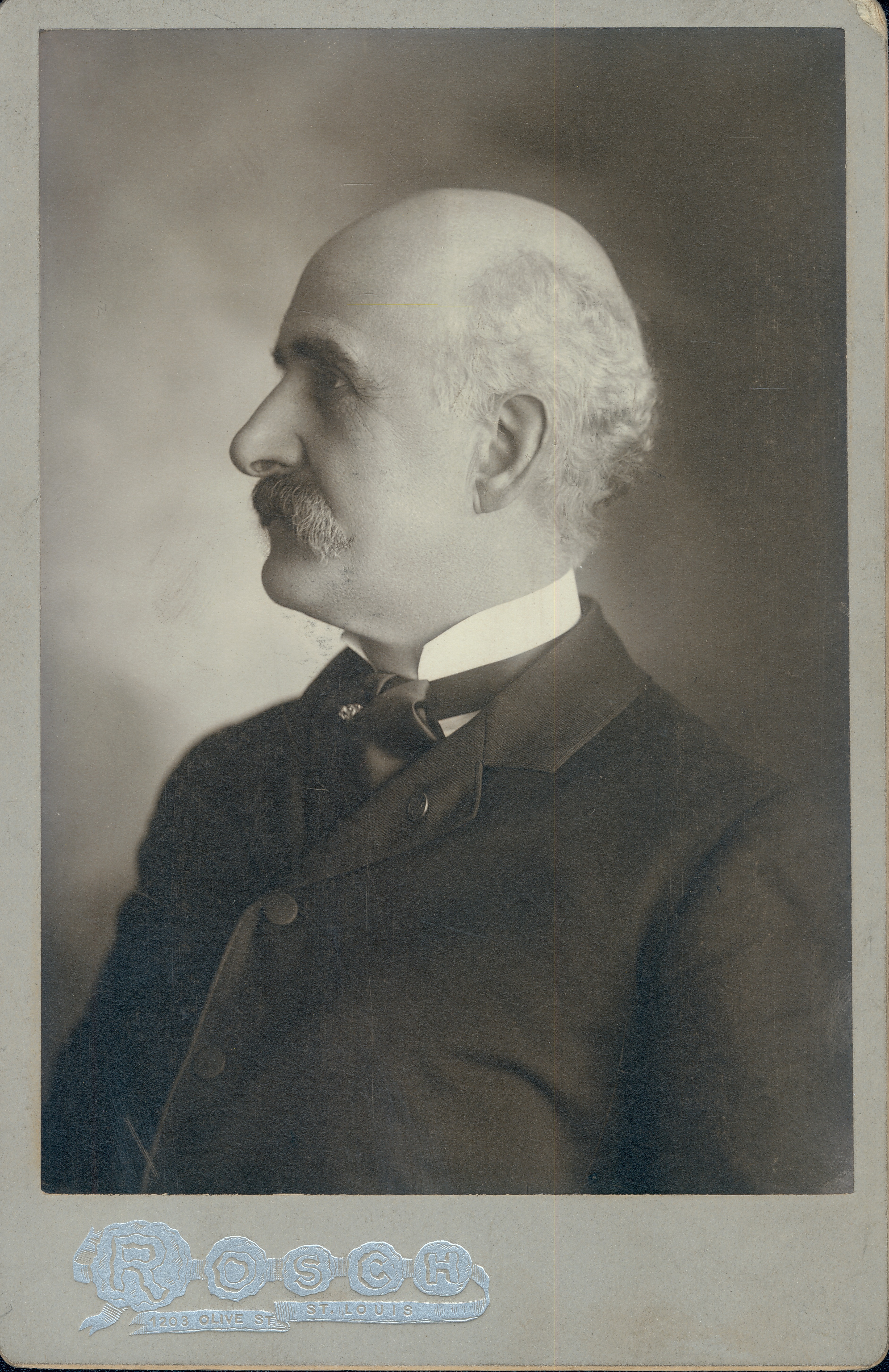
Charles Pearce
Former U.S. Representative · Missouri District 12 · 1897–1901 · Republican
Charles Pearce represented Missouri's District 12 in the United States House of Representatives (1897–1901) for the Republican party. The page below collects sourced biographical facts, term history, committee roles, and provenance for Pearce.
Bioguide ID: P000582
Key facts
- Full name
- Charles Pearce
- State
- Missouri
- District
- District 12
- Party
- Republican
- House service
- 1897–1901
- First House term
- 1897
- Status
- Left office
- Current term ends
- —
- Born
- 1842
- Bioguide ID
- P000582
- Committee assignments
- —
- Dataset version
- 1.20260606
Biographical narrative
900 words · sourced from the Wikipedia REST extract
Charles Pearce was a prominent figure in American politics during the late 19th century, serving as a United States Congressman representing Missouri's 12th congressional district. A member of the Republican Party, Pearce's political career spanned two terms in the U.S. House of Representatives, from 1897 until 1901. His life before entering politics was marked by a diverse array of experiences, including military service, legal practice, and involvement in local industry. Pearce's contributions to both his state and the nation reflect a commitment to public service and civic engagement.
Early life and career
Charles Pearce was born on May 29, 1842, in Whitesboro, Oneida County, New York. His early education took place at Fairfield Seminary, a preparatory school that laid the groundwork for his later academic pursuits. He went on to attend Union College in Schenectady, New York, where he graduated in 1863. During his time at Union College, Pearce became a member of the Kappa Alpha Society, an organization that fostered leadership and camaraderie among its members.
In the same year he graduated, Pearce enlisted in the Union Army, a decision that would shape much of his early adult life. He was commissioned as a captain in Battery D of the Sixteenth Regiment of New York Heavy Artillery. His military service was marked by a rapid rise in rank; he was promoted to major in June 1864. Pearce's service included significant responsibilities, such as acting as provost marshal general for the eastern district of North Carolina during the occupation of Wilmington. His military career came to a close in the fall of 1865 when he resigned from the Army.
Following his military service, Pearce relocated to St. Louis, Missouri, in 1866. This move marked the beginning of his professional life in the Midwest. He pursued a legal career, studying law and gaining admission to the bar in 1867. Once established as a lawyer, he began practicing in St. Louis, where he developed a reputation for his legal acumen. In addition to his legal work, Pearce was involved in the manufacturing sector, particularly in the production of bagging, rope, and twine, which contributed to the local economy.
Pearce's commitment to public service extended beyond his legal and business endeavors. In 1877, he organized and commanded the First Regiment of the Missouri National Guard, reflecting his ongoing dedication to civic duty and community leadership. His involvement in various capacities within the community showcased his desire to contribute to the welfare of his fellow citizens.
House tenure
Charles Pearce's political career in the U.S. House of Representatives began when he was elected as a Republican to the Fifty-fifth Congress, which commenced on March 4, 1897. He successfully secured re-election to the Fifty-sixth Congress, which continued until March 3, 1901. Throughout his time in Congress, Pearce was involved in various legislative activities and contributed to the discussions and decisions that shaped national policy during his tenure.
During his time in the House, Pearce represented the interests of his constituents from Missouri's 12th congressional district. His legislative work was influenced by the political climate of the time, which included issues related to economic development, infrastructure, and social policies. As a member of the Republican Party, Pearce aligned with the party's platform, which emphasized free enterprise, limited government, and individual liberties.
Pearce's decision not to seek renomination in 1900 marked the end of his congressional career. This choice may have been influenced by various factors, including personal considerations and the evolving political landscape. His final term concluded on March 3, 1901, after which he returned to St. Louis, where he continued to be involved in local affairs until his passing.
Legislative focus and committees
While specific details regarding the legislation Pearce supported or the committees on which he served are not extensively documented, his time in Congress coincided with significant national developments. The late 19th century was a period of rapid industrialization and urbanization in the United States, and legislators like Pearce were tasked with addressing the challenges and opportunities that arose from these changes.
Pearce's background in law and business likely informed his legislative priorities, as he would have been keenly aware of the implications of economic policies on his constituents. Issues such as trade, labor relations, and infrastructure development were prominent during his time in office, and Pearce's contributions to these discussions would have been shaped by his experiences in both the legal and manufacturing sectors.
In addition to his legislative duties, Pearce was actively engaged in the Republican National Convention as a delegate in 1888. This involvement highlighted his commitment to the party and its principles, as well as his desire to influence the direction of national politics. Furthermore, in 1891, he was appointed chairman of a commission tasked with negotiating with the Sioux Indians of the Northwest, reflecting his engagement with issues related to Native American affairs and his willingness to take on complex and sensitive matters.
Charles Pearce passed away on January 30, 1902, in St. Louis, Missouri. His contributions to public service, both as a military officer and as a legislator, left a lasting impact on his community and the state of Missouri. He was interred in Fort Hill Cemetery in Auburn, New York, where he is remembered for his dedication to his country and his constituents. Pearce's life and career exemplify the multifaceted roles that individuals can play in shaping the political landscape of their time.
Notable legislation
Sponsored and co-sponsored legislation for Charles Pearce is pending operator curation. The biographical narrative above carries the same provenance trail until per-bill rows are written.
Sources
- [1]https://en.wikipedia.org/wiki/Charles_E._PearceWikipedia · retrieved 2026-06-06
Notable quotes
Sourced quotes for Charles Pearce are pending operator curation. Narrative-scope provenance remains attached below.
Sources
- [1]https://en.wikipedia.org/wiki/Charles_E._PearceWikipedia · retrieved 2026-06-06
Key positions
Curated policy positions for Charles Pearce are pending operator review. The biographical narrative above carries the same provenance trail until per-topic positions are written.
Sources
- [1]https://en.wikipedia.org/wiki/Charles_E._PearceWikipedia · retrieved 2026-06-06
Terms served
- 1897–1899U.S. House · Term 1 · Republican
- 1899–1901U.S. House · Term 2 · Republican
Sources & provenance
Every attributable claim above carries a per-section [N] marker that resolves to the corresponding URL below. Each entry records the upstream provider, the canonical URL, and the timestamp at which the source was retrieved by the ingest pipeline.
Key facts
- https://bioguide.congress.gov/search/bio/P000582bioguide · retrieved 2026-06-06
- https://www.govtrack.us/congress/members/408564govtrack · retrieved 2026-06-06
Biographical narrative
- https://en.wikipedia.org/wiki/Charles_E._Pearcewikipedia · retrieved 2026-06-06
Find your representative
Every U.S. state elects representatives by district. Browse Missouri’s delegation, the full former-representative roster, or explore the role and term length.
Related on The Candidate
- Preceded by Seth CobbEarlier holder of the Missouri District 12 House seat · Democratic.Open
- Succeeded by George WagonerLater holder of the Missouri District 12 House seat · Republican.Open
- Anthony IttnerFormer U.S. Representative · Missouri District 1 · RepublicanOpen
- Bill Clay Sr.Former U.S. Representative · Missouri District 1 · DemocraticOpen
- Charles ClarkFormer U.S. Representative · Missouri District 1 · RepublicanOpen
- Clare MageeFormer U.S. Representative · Missouri District 1 · DemocraticOpen