
Historical · U.S. House · Missouri · District 12
John Glover
Former U.S. Representative · Missouri District 12 · 1873–1879 · Democratic
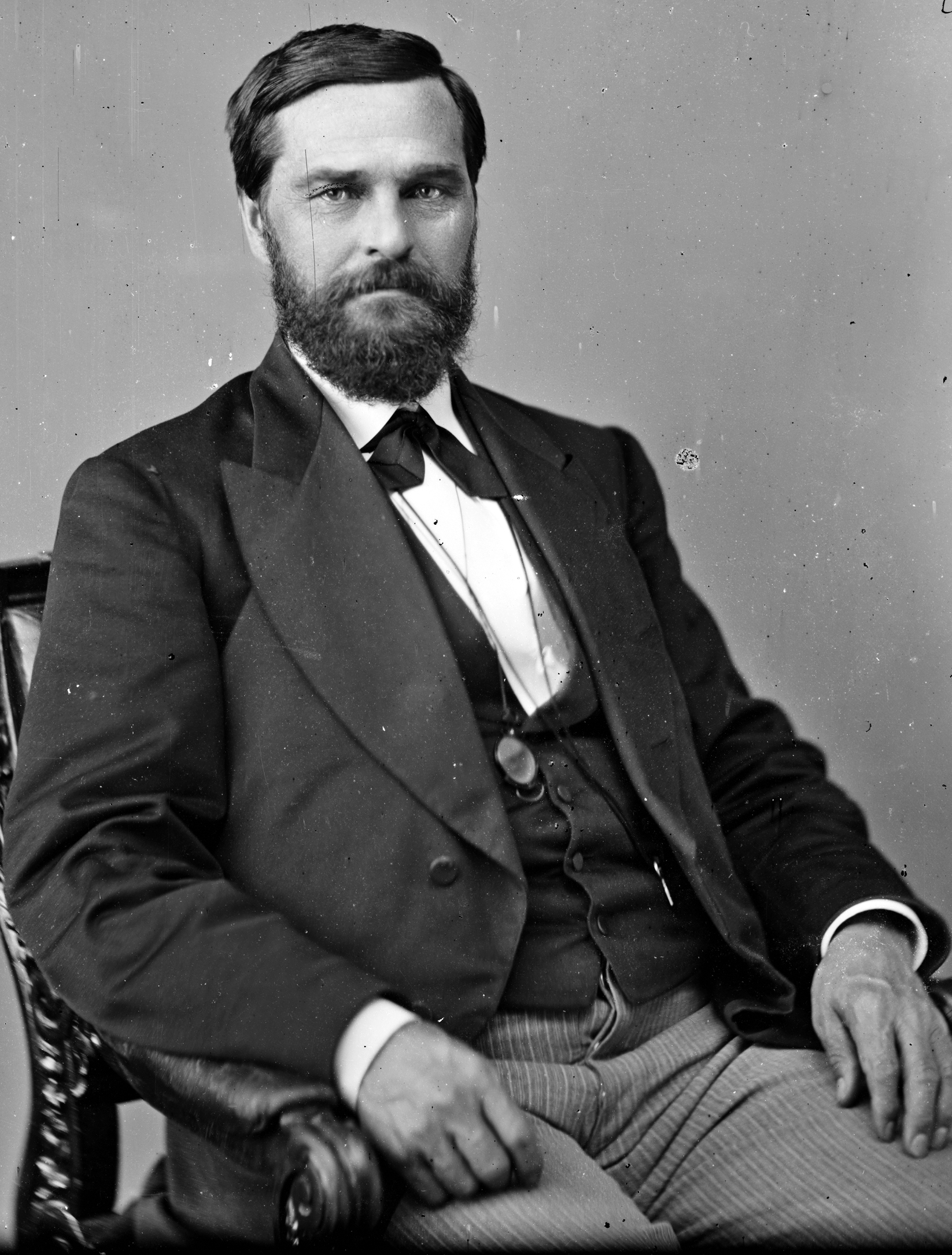
John Glover represented Missouri's District 12 in the United States House of Representatives (1873–1879) for the Democratic party. The page below collects sourced biographical facts, term history, committee roles, and provenance for Glover.
Bioguide ID: G000245
Key facts
- Full name
- John Glover
- State
- Missouri
- District
- District 12
- Party
- Democratic
- House service
- 1873–1879
- First House term
- 1873
- Status
- Left office
- Current term ends
- —
- Born
- 1822
- Bioguide ID
- G000245
- Committee assignments
- —
- Dataset version
- 1.20260606
Biographical narrative
1,082 words · sourced from the Wikipedia REST extract
John Glover was an American politician who served as a U.S. Representative from Missouri's 12th congressional district. A member of the Democratic Party, Glover's congressional career spanned three terms from 1873 to 1879. His life before and after his time in Congress included significant involvement in law, military service during the Civil War, and agricultural pursuits. Glover's legacy is marked by his contributions to both his local community and the broader political landscape of his time.
Early life and career
John Glover was born on September 4, 1822, in Harrodsburg, Kentucky. He grew up in a region that was undergoing significant changes due to the westward expansion of the United States. In 1836, Glover and his family moved to Missouri, where they settled in Knox County, near the town of Newark. This transition marked the beginning of Glover's deep connection to Missouri, a state that would play a pivotal role in his later political career.
Glover's early education took place in public schools in Kentucky, which provided him with a foundational knowledge that he would build upon in his later studies. After relocating to Missouri, he continued his education at Marion and Masonic Colleges located in Philadelphia, Missouri. It was during this time that he developed an interest in law, which led him to pursue legal studies. Upon completing his education, Glover was admitted to the bar, allowing him to begin his legal practice in St. Louis, Missouri.
In 1850, seeking new opportunities, Glover moved to California, where he continued to practice law. However, his time in California was relatively brief, as he returned to Knox County, Missouri, in 1855 to manage his father's affairs. This return to Missouri would eventually set the stage for his political career, as he became more involved in local and state issues.
Glover's life took a significant turn during the American Civil War. He enlisted in the Union Army and served as a colonel of the Third Regiment, Missouri Volunteer Cavalry, starting on September 4, 1861. His military service was marked by various assignments throughout Missouri and Arkansas, where he took on leadership roles, including command of the District of Rolla and the Sub-District of Pilot Knob. Glover's military career was not without challenges; he faced health issues that ultimately led to his resignation on February 23, 1864, in Springfield, Illinois. Despite these challenges, his service in the military contributed to his reputation as a leader and a dedicated public servant.
Following the war, Glover transitioned into a role in public service as the collector of internal revenue for Missouri's third district, a position he held from December 1, 1866, until March 3, 1867. This role allowed him to engage with the financial aspects of governance and further solidified his standing in the community. His experiences during the war and in public service laid the groundwork for his subsequent political career.
House tenure
Glover's entry into the U.S. House of Representatives began when he was elected as a Democrat to the Forty-third Congress, which commenced on March 4, 1873. He was subsequently re-elected to the Forty-fourth and Forty-fifth Congresses, serving until March 3, 1879. During his time in Congress, Glover was involved in various legislative activities and contributed to discussions on issues pertinent to his constituents and the nation.
As a member of the House, Glover's role included participation in debates and votes on a wide range of legislation. His tenure coincided with a period of significant political and social change in the United States, as the nation was grappling with the aftermath of the Civil War and the challenges of Reconstruction. Glover's experiences as a soldier and his understanding of the complexities of governance likely informed his perspectives on these issues.
In the Forty-fifth Congress, Glover served as the chairman of the Committee on Expenditures in the Department of the Treasury. This position placed him in a critical role regarding fiscal oversight and accountability within the federal government. As chairman, he would have been responsible for examining expenditures and ensuring that funds were allocated appropriately, a task that required both diligence and a keen understanding of financial matters.
Despite his contributions and active participation in Congress, Glover faced challenges in his political career. He was an unsuccessful candidate for renomination in 1878, which marked the end of his congressional tenure. Following his departure from the House, Glover returned to his agricultural pursuits, a field he had engaged in prior to and during his political career.
Legislative focus and committees
Throughout his time in Congress, Glover's legislative focus was likely influenced by his background in law, military service, and local governance. His role as chairman of the Committee on Expenditures in the Department of the Treasury suggests that he had an interest in fiscal responsibility and the efficient management of government resources. This focus on financial oversight would have been particularly relevant during a time when the federal government was working to stabilize its finances after the Civil War.
Glover's experiences as a soldier may have also shaped his views on veterans' affairs and military-related issues. While specific legislative initiatives he supported are not detailed, it is reasonable to assume that his military background informed his understanding of the needs and challenges faced by veterans and their families during the post-war period.
In addition to his committee work, Glover's engagement with his constituents would have been a significant aspect of his congressional duties. As a representative from Missouri, he would have been expected to advocate for the interests of his district, addressing local concerns and working to secure resources and support for his constituents. This direct connection to the people he represented was a fundamental aspect of his role as a U.S. Representative.
After leaving Congress, Glover continued to be involved in his community and engaged in agricultural pursuits. He remained connected to the land and the people of Missouri, reflecting a commitment to the region that had shaped his life and career. Glover passed away on November 15, 1891, near Newark, Missouri, and was interred on his farm before being reinterred in Woodland Cemetery in Quincy, Illinois.
In summary, John Glover's life was marked by a commitment to public service, military duty, and community engagement. His tenure in the U.S. House of Representatives was characterized by his focus on fiscal responsibility and his efforts to represent the interests of his constituents in Missouri. Glover's legacy is one of dedication to his state and country, reflecting the values and challenges of his time.
Notable legislation
Sponsored and co-sponsored legislation for John Glover is pending operator curation. The biographical narrative above carries the same provenance trail until per-bill rows are written.
Sources
- [1]https://en.wikipedia.org/wiki/John_Montgomery_GloverWikipedia · retrieved 2026-06-06
Notable quotes
Sourced quotes for John Glover are pending operator curation. Narrative-scope provenance remains attached below.
Sources
- [1]https://en.wikipedia.org/wiki/John_Montgomery_GloverWikipedia · retrieved 2026-06-06
Key positions
Curated policy positions for John Glover are pending operator review. The biographical narrative above carries the same provenance trail until per-topic positions are written.
Sources
- [1]https://en.wikipedia.org/wiki/John_Montgomery_GloverWikipedia · retrieved 2026-06-06
Terms served
- 1873–1875U.S. House · Term 1 · Democratic
- 1875–1877U.S. House · Term 2 · Democratic
- 1877–1879U.S. House · Term 3 · Democratic
Sources & provenance
Every attributable claim above carries a per-section [N] marker that resolves to the corresponding URL below. Each entry records the upstream provider, the canonical URL, and the timestamp at which the source was retrieved by the ingest pipeline.
Key facts
- https://bioguide.congress.gov/search/bio/G000245bioguide · retrieved 2026-06-06
- https://www.govtrack.us/congress/members/404607govtrack · retrieved 2026-06-06
Biographical narrative
- https://en.wikipedia.org/wiki/John_Montgomery_Gloverwikipedia · retrieved 2026-06-06
Find your representative
Every U.S. state elects representatives by district. Browse Missouri’s delegation, the full former-representative roster, or explore the role and term length.
Related on The Candidate
- Succeeded by Seth CobbLater holder of the Missouri District 12 House seat · Democratic.Open
- Anthony IttnerFormer U.S. Representative · Missouri District 1 · RepublicanOpen
- Bill Clay Sr.Former U.S. Representative · Missouri District 1 · DemocraticOpen
- Charles ClarkFormer U.S. Representative · Missouri District 1 · RepublicanOpen
- Clare MageeFormer U.S. Representative · Missouri District 1 · DemocraticOpen
- Democratic PartyFederal candidates and office holders on the Democratic line.Open