
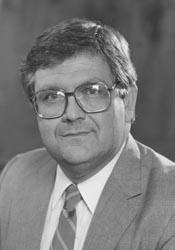
Historical · U.S. House · Missouri · District 2
Jack Buechner
Former U.S. Representative · Missouri District 2 · 1987–1991 · Republican
Jack Buechner represented Missouri's District 2 in the United States House of Representatives (1987–1991) for the Republican party. The page below collects sourced biographical facts, term history, committee roles, and provenance for Buechner.
Bioguide ID: B001036
Key facts
- Full name
- Jack Buechner
- State
- Missouri
- District
- District 2
- Party
- Republican
- House service
- 1987–1991
- First House term
- 1987
- Status
- Left office
- Current term ends
- —
- Born
- 1940
- Bioguide ID
- B001036
- Committee assignments
- —
- Dataset version
- 1.20260605
Biographical narrative
909 words · sourced from the Wikipedia REST extract
Jack Buechner was an American lawyer and politician who served as a U.S. Representative for Missouri's 2nd congressional district from 1987 until 1991. A member of the Republican Party, Buechner's political career included a tenure in the Missouri House of Representatives prior to his congressional service. After leaving Congress, he held various leadership roles in political and legal organizations, contributing to public policy and political education until his retirement.
Early life and career
Jack Buechner was born on June 4, 1940, in Kirkwood, Missouri. He attended local parochial schools during his formative years, which laid the groundwork for his educational pursuits. Buechner graduated from Benedictine College in Atchison, Kansas, where he earned a Bachelor of Arts degree in political science. Following his undergraduate studies, he pursued a legal education at Saint Louis University School of Law, obtaining his Juris Doctor degree.
Buechner's political career began in earnest when he was elected to the Missouri House of Representatives in 1972. He served in this capacity until 1982, gaining valuable experience in state governance and legislative processes. His early involvement in politics included participation as a delegate at the Republican National Conventions in 1964, 1980, and 1988, reflecting his active engagement in the party's national activities.
In 1984, Buechner made his first bid for a seat in the U.S. House of Representatives, challenging the incumbent Democrat Robert A. Young in Missouri's 2nd congressional district. Although he lost this election narrowly, receiving 47.5% of the vote, he continued to build his political profile. Two years later, in 1986, Buechner ran again against Young and successfully won the election, this time garnering 52.7% of the vote. His victory marked the beginning of his congressional tenure.
House tenure
Buechner's first term in the U.S. House of Representatives commenced in 1987. During his time in Congress, he was known for his conservative stance on various issues, as reflected in his voting record. He was one of 26 House Republicans who voted against overriding President Ronald Reagan's veto of a clean water bill, which Reagan criticized for being excessive in spending. This decision underscored Buechner's commitment to fiscal conservatism.
Throughout his congressional career, Buechner served on the Budget Committee and the Committee on Science, Space and Technology. His legislative actions and voting patterns were evaluated by organizations such as the American Conservative Union, which rated him as 86% conservative for his votes in 1987. His ratings fluctuated in subsequent years, with scores of 88% in 1988, 73% in 1989, and 67% in 1990, indicating a consistent alignment with conservative principles, though with some variation over time.
Buechner was re-elected in 1988, continuing his legislative work. However, his tenure came to an end in 1990 when he faced a narrow defeat to Democrat Joan Kelly Horn. The election was particularly competitive, with Buechner losing by just 54 votes. This election cycle was notable, as many incumbents faced challenges, with a significant number winning re-election with less than 60% of the vote. Factors contributing to Buechner's defeat included broader issues related to taxes and budgetary concerns, which were prevalent in the political discourse of the time.
In addition to his legislative work, Buechner gained some recognition outside of traditional political circles. He was the first Congressional guest on the television show "Late Night with David Letterman," which highlighted his visibility as a public figure. Furthermore, he participated in informal gatherings, such as poker games hosted by Senator Alfonse D'Amato, which served as networking opportunities for lobbyists and members of Congress.
Legislative focus and committees
During his time in the House of Representatives, Buechner's legislative focus encompassed a range of issues aligned with his conservative ideology. His service on the Budget Committee allowed him to engage directly with fiscal policy, a critical area of concern for many constituents and party members. His involvement in the Committee on Science, Space and Technology placed him at the intersection of scientific advancement and legislative oversight, where he contributed to discussions on technology and research funding.
Buechner's voting record reflected a commitment to conservative principles, particularly in relation to government spending and regulation. His ratings from the American Conservative Union indicated a strong alignment with conservative values, particularly in the earlier years of his congressional service. This alignment was evident in his opposition to certain spending bills and his advocacy for policies that promoted fiscal responsibility.
After leaving Congress, Buechner transitioned to various leadership roles in political and legal organizations. He became the president of the International Republican Institute, where he continued to influence political discourse and strategy. His career also included a partnership at the law firm Manatt, Phelps & Phillips, and later at Anderson Kill & Olick, P.C. In academia, he shared his expertise as a visiting professor of political thought at Webster University Vienna and as an adjunct professor of political science at Saint Louis University and Stephens College.
Buechner's contributions to public policy and political education extended beyond his congressional tenure, as he remained engaged in various initiatives and organizations until his retirement in 2005. His involvement with the ReFormers Caucus of Issue One further demonstrated his commitment to promoting reform in the political system.
Jack Buechner passed away on March 6, 2020, in Washington, D.C., leaving behind a legacy of public service and political engagement that spanned several decades. His career reflected a dedication to the principles of the Republican Party and a commitment to the legislative process at both the state and federal levels.
Notable legislation
Sponsored and co-sponsored legislation for Jack Buechner is pending operator curation. The biographical narrative above carries the same provenance trail until per-bill rows are written.
Sources
- [1]https://en.wikipedia.org/wiki/Jack_BuechnerWikipedia · retrieved 2026-06-05
Notable quotes
Sourced quotes for Jack Buechner are pending operator curation. Narrative-scope provenance remains attached below.
Sources
- [1]https://en.wikipedia.org/wiki/Jack_BuechnerWikipedia · retrieved 2026-06-05
Key positions
Curated policy positions for Jack Buechner are pending operator review. The biographical narrative above carries the same provenance trail until per-topic positions are written.
Sources
- [1]https://en.wikipedia.org/wiki/Jack_BuechnerWikipedia · retrieved 2026-06-05
Terms served
- 1987–1989U.S. House · Term 1 · Republican
- 1989–1991U.S. House · Term 2 · Republican
Sources & provenance
Every attributable claim above carries a per-section [N] marker that resolves to the corresponding URL below. Each entry records the upstream provider, the canonical URL, and the timestamp at which the source was retrieved by the ingest pipeline.
Key facts
- https://bioguide.congress.gov/search/bio/B001036bioguide · retrieved 2026-06-05
- https://www.govtrack.us/congress/members/401986govtrack · retrieved 2026-06-05
Biographical narrative
- https://en.wikipedia.org/wiki/Jack_Buechnerwikipedia · retrieved 2026-06-05
Find your representative
Every U.S. state elects representatives by district. Browse Missouri’s delegation, the full former-representative roster, or explore the role and term length.
Related on The Candidate
- Preceded by Robert Young IIIEarlier holder of the Missouri District 2 House seat · Democratic.Open
- Succeeded by Joan HornLater holder of the Missouri District 2 House seat · Democratic.Open
- Anthony IttnerFormer U.S. Representative · Missouri District 1 · RepublicanOpen
- Bill Clay Sr.Former U.S. Representative · Missouri District 1 · DemocraticOpen
- Charles ClarkFormer U.S. Representative · Missouri District 1 · RepublicanOpen
- Clare MageeFormer U.S. Representative · Missouri District 1 · DemocraticOpen