
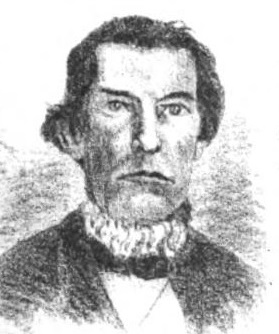
Historical · U.S. House · Missouri · District 2
John Jameson
Former U.S. Representative · Missouri District 2 · 1839–1849 · Democratic
John Jameson represented Missouri's District 2 in the United States House of Representatives (1839–1849) for the Democratic party. The page below collects sourced biographical facts, term history, committee roles, and provenance for Jameson.
Bioguide ID: J000054
Key facts
- Full name
- John Jameson
- State
- Missouri
- District
- District 2
- Party
- Democratic
- House service
- 1839–1849
- First House term
- 1839
- Status
- Left office
- Current term ends
- —
- Born
- 1802
- Bioguide ID
- J000054
- Committee assignments
- —
- Dataset version
- 1.20260606
Biographical narrative
955 words · sourced from the Wikipedia REST extract
John Jameson was an American politician, farmer, and lawyer who served as a U.S. Representative for Missouri's 2nd congressional district during the mid-19th century. A member of the Democratic Party, Jameson held office in the House of Representatives for three terms, contributing to the legislative process during a period marked by significant national change. His career was characterized by his involvement in local governance, military service, and legal advocacy, reflecting the multifaceted nature of public service in his era.
Early life and career
John Jameson was born on March 6, 1802, in Mount Sterling, Kentucky, located in Montgomery County. His early education took place in common schools, which were typical for the time and provided foundational learning for many young men in rural America. In 1825, seeking new opportunities, Jameson relocated to Callaway County, Missouri. This move was part of a broader westward migration that characterized the early 19th century as individuals and families sought land and new beginnings in the expanding United States.
Upon settling in Missouri, Jameson pursued a legal career. He studied law diligently, and by 1826, he was admitted to the bar, allowing him to practice law in Fulton, Missouri. His legal career would later intersect with his political ambitions, as he navigated the complexities of law and governance. In addition to his legal practice, Jameson was also a farmer, which was a common occupation for many individuals in that era, particularly in the agrarian society of Missouri.
Jameson's commitment to public service began early in his life. He served as a captain in the militia during the Black Hawk War, a conflict that took place between 1832 and 1833, primarily involving Native American tribes in the Midwest. His military service reflected a sense of duty and leadership that would carry over into his political career. In addition to his military involvement, he held several local offices, including a term as a member of the Missouri House of Representatives from 1830 to 1836. His leadership skills were recognized when he was elected Speaker of the Missouri House from 1834 to 1836, a position that required significant political acumen and the ability to manage legislative proceedings.
House tenure
John Jameson’s tenure in the U.S. House of Representatives began when he was elected as a Democrat to the 26th Congress, filling a vacancy created by the death of Albert G. Harrison. He served in this capacity from December 12, 1839, until March 3, 1841. His initial term in Congress allowed him to engage with national issues and represent the interests of his constituents in Missouri. However, he chose not to seek renomination in 1840, indicating a willingness to step back from the political spotlight after his first term.
Jameson returned to Congress in 1842 when he was elected to the 28th Congress, serving from March 1843 until March 3, 1845. His second term provided him with further opportunities to influence legislation and contribute to discussions on pressing national matters. Once again, he opted not to run for renomination in 1844, suggesting a pattern of selective engagement in his political career.
In 1846, Jameson was elected to the 30th Congress, where he served from March 4, 1847, until March 3, 1849. This final term in the House marked the culmination of his congressional career. Throughout his time in office, he navigated the complexities of a rapidly changing nation, addressing issues that would shape the future of the United States. His decision not to seek renomination after this term indicated a transition away from his political responsibilities, allowing him to focus on other pursuits.
Legislative focus and committees
During his time in the House of Representatives, John Jameson was involved in various legislative matters, although specific details about the bills he sponsored or supported are not extensively documented. His experience as a lawyer likely informed his approach to legislation, as he would have been familiar with legal principles and the intricacies of governance. The political landscape of the time was characterized by debates over issues such as westward expansion, slavery, and states' rights, which were particularly pertinent to Missouri and the broader region.
In addition to his legislative duties, Jameson’s legal background played a significant role in his post-congressional career. In 1855, he gained attention for his involvement in a notable legal case as a defense attorney for a slave named Celia. This case became influential in discussions surrounding slavery and legal rights, as Jameson argued that Celia possessed the same right to defend her honor as white women under Missouri law. Although his defense was ultimately unsuccessful, it highlighted the complexities of legal arguments surrounding slavery and the rights of enslaved individuals during this period.
In his later years, Jameson returned to farming, a profession that he had engaged in prior to and during his political career. His connection to the land and agricultural practices remained a significant aspect of his identity. Additionally, he was ordained as a minister in the Christian Church, reflecting a commitment to spiritual service and community engagement.
John Jameson passed away on January 24, 1857, in Fulton, Missouri. He was interred in the Jameson family cemetery near his home, marking the end of a life dedicated to public service, law, and agriculture. His legacy continued through his descendants, including his daughter Elizabeth, who became the grandmother of Richard Reid Rogers, a notable figure in the Panama Canal Zone under President Theodore Roosevelt.
In summary, John Jameson’s life and career exemplified the diverse roles that individuals could play in the early 19th century American society. His contributions as a farmer, lawyer, politician, and community leader reflect the interconnectedness of these identities in shaping the social and political fabric of Missouri and the nation during a transformative era.
Notable legislation
Sponsored and co-sponsored legislation for John Jameson is pending operator curation. The biographical narrative above carries the same provenance trail until per-bill rows are written.
Sources
- [1]https://en.wikipedia.org/wiki/John_Jameson_(politician)Wikipedia · retrieved 2026-06-06
Notable quotes
Sourced quotes for John Jameson are pending operator curation. Narrative-scope provenance remains attached below.
Sources
- [1]https://en.wikipedia.org/wiki/John_Jameson_(politician)Wikipedia · retrieved 2026-06-06
Key positions
Curated policy positions for John Jameson are pending operator review. The biographical narrative above carries the same provenance trail until per-topic positions are written.
Sources
- [1]https://en.wikipedia.org/wiki/John_Jameson_(politician)Wikipedia · retrieved 2026-06-06
Terms served
- 1839–1841U.S. House · Term 1 · Democratic
- 1843–1845U.S. House · Term 2 · Democratic
- 1847–1849U.S. House · Term 3 · Democratic
Sources & provenance
Every attributable claim above carries a per-section [N] marker that resolves to the corresponding URL below. Each entry records the upstream provider, the canonical URL, and the timestamp at which the source was retrieved by the ingest pipeline.
Key facts
- https://bioguide.congress.gov/search/bio/J000054bioguide · retrieved 2026-06-06
- https://www.govtrack.us/congress/members/405959govtrack · retrieved 2026-06-06
Biographical narrative
- https://en.wikipedia.org/wiki/John_Jameson_(politician)wikipedia · retrieved 2026-06-06
Find your representative
Every U.S. state elects representatives by district. Browse Missouri’s delegation, the full former-representative roster, or explore the role and term length.
Related on The Candidate
- Succeeded by William BayLater holder of the Missouri District 2 House seat · Democratic.Open
- Anthony IttnerFormer U.S. Representative · Missouri District 1 · RepublicanOpen
- Bill Clay Sr.Former U.S. Representative · Missouri District 1 · DemocraticOpen
- Charles ClarkFormer U.S. Representative · Missouri District 1 · RepublicanOpen
- Clare MageeFormer U.S. Representative · Missouri District 1 · DemocraticOpen
- Democratic PartyFederal candidates and office holders on the Democratic line.Open