
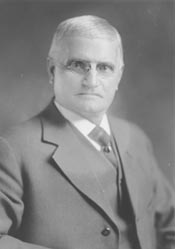
Historical · U.S. House · Missouri · District 4
Charles Booher
Former U.S. Representative · Missouri District 4 · 1887–1921 · Democratic
Charles Booher represented Missouri's District 4 in the United States House of Representatives (1887–1921) for the Democratic party. The page below collects sourced biographical facts, term history, committee roles, and provenance for Booher.
Bioguide ID: B000626
Key facts
- Full name
- Charles Booher
- State
- Missouri
- District
- District 4
- Party
- Democratic
- House service
- 1887–1921
- First House term
- 1887
- Status
- Left office
- Current term ends
- —
- Born
- 1848
- Bioguide ID
- B000626
- Committee assignments
- —
- Dataset version
- 1.20260606
Biographical narrative
885 words · sourced from the Wikipedia REST extract
Charles Booher was a prominent figure in American politics during the late 19th and early 20th centuries, serving as a U.S. Representative from Missouri. A member of the Democratic Party, Booher's political career spanned over three decades, during which he was elected to the House of Representatives for eight terms. His tenure in Congress was marked by his commitment to his constituents and his involvement in various legislative matters. Booher's life and career reflect the complexities of American political life during a transformative period in the nation's history.
Early life and career
Charles Ferris Booher was born on January 31, 1848, on a farm near East Groveland, New York. Growing up in a rural environment, he received his early education in the common schools of the area. He later attended the Geneseo Academy in Geneseo, New York, where he furthered his studies. After completing his education, Booher began his professional journey by teaching school, an experience that likely shaped his understanding of the educational needs of his community.
Booher's interest in law led him to pursue legal studies, and he was admitted to the bar in 1871. Following his admission, he began practicing law in Rochester, Missouri. His legal career was marked by a commitment to public service, as he took on various roles that would eventually lead him to a significant political career. In 1875, he moved to Savannah, Missouri, where he was appointed as the prosecuting attorney for Andrew County. He served in this capacity from 1875 to 1877 and again from 1883 to 1885, gaining valuable experience in the legal and political landscape of the region.
In addition to his legal work, Booher was involved in local governance. He served as the mayor of Savannah from 1886 to 1890, a role that allowed him to engage directly with the community and address local issues. After his tenure as mayor, he resumed his law practice in Savannah and expanded his professional endeavors by entering the loan and real estate business in 1888. This combination of legal, political, and business experience laid the groundwork for his future political career.
House tenure
Booher's political career in the U.S. House of Representatives began when he was elected as a Democrat to the Fiftieth Congress in a special election held to fill the vacancy left by the death of Congressman James N. Burnes. He served in this capacity for a brief period from February 19, 1889, to March 3, 1889. Following this initial term, Booher did not seek election for a full term.
However, his political aspirations did not end there. He was later elected to the Sixtieth Congress and subsequently served in six additional Congresses, with his tenure spanning from March 4, 1907, until January 21, 1921. Throughout his time in office, Booher was involved in various legislative activities and contributed to discussions on issues pertinent to his constituents and the nation as a whole. His long service in the House of Representatives is indicative of his ability to connect with voters and maintain their support over the years.
Booher's decision not to seek renomination in 1920 marked the end of his congressional career. His departure from the House concluded a significant chapter in his life, during which he had established himself as a dedicated public servant. Following his retirement from Congress, Booher returned to Savannah, Missouri, where he continued to be engaged in community affairs until his death.
Legislative focus and committees
During his tenure in the U.S. House of Representatives, Charles Booher was involved in various legislative matters that reflected the interests and needs of his constituents in Missouri. While specific details about the bills he sponsored or the committees he served on are not provided, it is common for members of Congress to focus on issues relevant to their districts, such as agriculture, infrastructure, education, and economic development. Given Booher's background in law and local governance, it is likely that he brought a practical perspective to legislative discussions.
As a member of the Democratic Party during a time of significant political change in the United States, Booher's legislative priorities may have aligned with the broader goals of his party, which included addressing social issues and promoting economic opportunities for all citizens. The early 20th century was a period marked by industrialization, urbanization, and various social reforms, and Booher's contributions to these discussions would have been shaped by the context of his time.
Booher's involvement in local governance prior to his congressional career likely provided him with insights into the challenges faced by his constituents. This experience would have informed his legislative approach, as he sought to advocate for policies that would benefit the people of Missouri's Fourth Congressional District. His long service in the House suggests that he was able to navigate the complexities of legislative processes and build relationships with colleagues, which are essential skills for effective governance.
Charles Booher passed away on January 21, 1921, in Savannah, Missouri, shortly after concluding his congressional service. His contributions to American politics, particularly in the context of Missouri's legislative history, remain a part of the broader narrative of the U.S. Congress during a transformative era. He was interred in City Cemetery in Savannah, where he is remembered as a dedicated public servant who engaged deeply with the issues of his time.
Notable legislation
Sponsored and co-sponsored legislation for Charles Booher is pending operator curation. The biographical narrative above carries the same provenance trail until per-bill rows are written.
Sources
- [1]https://en.wikipedia.org/wiki/Charles_F._BooherWikipedia · retrieved 2026-06-06
Notable quotes
Sourced quotes for Charles Booher are pending operator curation. Narrative-scope provenance remains attached below.
Sources
- [1]https://en.wikipedia.org/wiki/Charles_F._BooherWikipedia · retrieved 2026-06-06
Key positions
Curated policy positions for Charles Booher are pending operator review. The biographical narrative above carries the same provenance trail until per-topic positions are written.
Sources
- [1]https://en.wikipedia.org/wiki/Charles_F._BooherWikipedia · retrieved 2026-06-06
Terms served
- 1887–1889U.S. House · Term 1 · Democratic
- 1907–1909U.S. House · Term 2 · Democratic
- 1909–1911U.S. House · Term 3 · Democratic
- 1911–1913U.S. House · Term 4 · Democratic
- 1913–1915U.S. House · Term 5 · Democratic
- 1915–1917U.S. House · Term 6 · Democratic
- 1917–1919U.S. House · Term 7 · Democratic
- 1919–1921U.S. House · Term 8 · Democratic
Sources & provenance
Every attributable claim above carries a per-section [N] marker that resolves to the corresponding URL below. Each entry records the upstream provider, the canonical URL, and the timestamp at which the source was retrieved by the ingest pipeline.
Key facts
- https://bioguide.congress.gov/search/bio/B000626bioguide · retrieved 2026-06-06
- https://www.govtrack.us/congress/members/401591govtrack · retrieved 2026-06-06
Biographical narrative
- https://en.wikipedia.org/wiki/Charles_F._Booherwikipedia · retrieved 2026-06-06
Find your representative
Every U.S. state elects representatives by district. Browse Missouri’s delegation, the full former-representative roster, or explore the role and term length.
Related on The Candidate
- Preceded by Robert HatcherEarlier holder of the Missouri District 4 House seat · Democratic.Open
- Succeeded by Charles FaustLater holder of the Missouri District 4 House seat · Republican.Open
- Anthony IttnerFormer U.S. Representative · Missouri District 1 · RepublicanOpen
- Bill Clay Sr.Former U.S. Representative · Missouri District 1 · DemocraticOpen
- Charles ClarkFormer U.S. Representative · Missouri District 1 · RepublicanOpen
- Clare MageeFormer U.S. Representative · Missouri District 1 · DemocraticOpen