
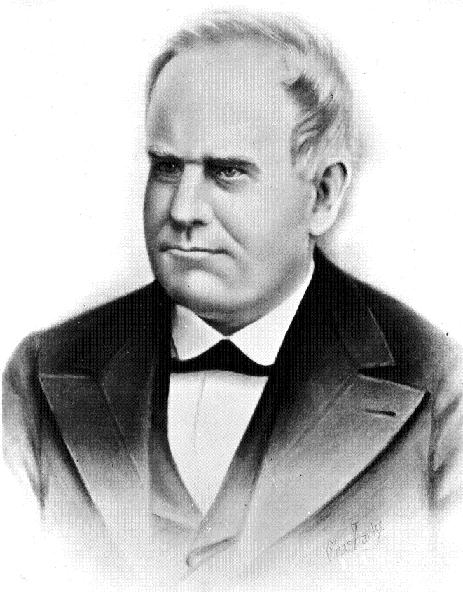
Historical · U.S. House · Missouri · District 4
Willard Hall
Former U.S. Representative · Missouri District 4 · 1847–1853 · Democratic
Willard Hall represented Missouri's District 4 in the United States House of Representatives (1847–1853) for the Democratic party. The page below collects sourced biographical facts, term history, committee roles, and provenance for Hall.
Bioguide ID: H000077
Key facts
- Full name
- Willard Hall
- State
- Missouri
- District
- District 4
- Party
- Democratic
- House service
- 1847–1853
- First House term
- 1847
- Status
- Left office
- Current term ends
- —
- Born
- 1820
- Bioguide ID
- H000077
- Committee assignments
- —
- Dataset version
- 1.20260606
Biographical narrative
896 words · sourced from the Wikipedia REST extract
William Willard Preble Hall was an American lawyer and politician who served as a U.S. Representative for Missouri's 4th congressional district from 1847 to 1853. A member of the Democratic Party, Hall's political career spanned several significant events in American history, including the Mexican-American War and the Civil War. He later became the 17th Governor of Missouri, serving from 1864 to 1865. Hall's contributions to both state and national politics were marked by his involvement in legal affairs, military service, and governance during tumultuous periods in U.S. history.
Early life and career
Willard Hall was born on May 9, 1820, in Harpers Ferry, Virginia, which was a significant location during the early 19th century due to its strategic position. He received his early education at a private school in Baltimore, Maryland, before pursuing higher education at Yale University, where he graduated in 1839. Following his graduation, Hall moved to Randolph County, Missouri, in 1840, accompanying his father, John H. Hall. It was in Missouri that Hall began his legal career, studying law and gaining admission to the bar in 1841. He commenced his law practice in Sparta, Buchanan County, Missouri, in 1842.
Hall's legal career progressed rapidly; he was appointed as the circuit attorney in 1843 and served in that capacity for several years. His political involvement began to take shape when he was selected as a presidential elector on the Democratic ticket in 1844. Hall's commitment to public service extended beyond legal practice, as he enlisted in the First Missouri Cavalry Regiment during the Mexican-American War. He initially served as a private and was later promoted to lieutenant. His military service included a notable appointment by General Stephen W. Kearny, where he collaborated with Colonel Alexander Doniphan to draft the Kearny Code, a set of civil laws for territories acquired from Mexico, which was published in both English and Spanish.
In addition to his military duties, Hall participated in the historic march of the Mormon Battalion to California before returning to Missouri to assume his congressional seat.
House tenure
Willard Hall's tenure in the U.S. House of Representatives began on March 4, 1847, after he was elected as a Democrat to represent Missouri's 4th congressional district. He served three consecutive terms in the House, concluding his service on March 3, 1853. During his time in Congress, Hall was involved in various legislative matters and held significant positions within the House. He was the chairman of the Committee on Private Land Claims during the Thirty-first Congress and later chaired the Committee on Public Lands in the Thirty-second Congress. These roles allowed him to influence legislation regarding land ownership and rights, which were critical issues during that era, especially in the context of westward expansion and the aftermath of the Mexican-American War.
Hall's congressional career coincided with a period of intense national debate over issues such as slavery, territorial expansion, and state rights. Although specific legislative actions taken by Hall during his time in office are not detailed, his leadership roles suggest that he was actively engaged in shaping policies related to land and property rights, which were pivotal in the context of the growing tensions leading up to the Civil War.
After concluding his congressional service, Hall relocated to St. Joseph, Missouri, in 1854, where he continued to practice law. His political aspirations did not end with his congressional tenure; he ran unsuccessfully for the United States Senate in 1856, indicating his continued interest in public service and governance.
Legislative focus and committees
Throughout his time in the House of Representatives, Willard Hall's legislative focus primarily revolved around land-related issues, as evidenced by his leadership positions on the relevant committees. As chairman of the Committee on Private Land Claims, he was responsible for overseeing matters related to land ownership disputes and claims, which were particularly significant in the context of the expanding United States and the incorporation of new territories. His subsequent chairmanship of the Committee on Public Lands further emphasized his involvement in issues concerning land management, allocation, and the rights of individuals and entities claiming land.
These committee roles placed Hall at the center of discussions that were crucial to the development of policies governing land use and ownership during a time when the nation was grappling with the implications of territorial expansion and the integration of newly acquired lands into the Union. The legislative environment of the 1840s and early 1850s was characterized by debates over the extension of slavery into new territories, which often intersected with land issues. Although specific legislative outcomes from Hall's tenure are not detailed, his committee leadership suggests that he played a role in navigating the complexities of these contentious issues.
In summary, Willard Hall's career as a U.S. Representative was marked by his focus on land claims and public lands, reflecting broader national concerns during a pivotal era in American history. His subsequent appointment as lieutenant governor and later as governor of Missouri during the Civil War further illustrates his engagement in public service and governance, contributing to the state's political landscape during a time of significant upheaval. After his political career, Hall returned to his legal practice in St. Joseph, where he continued to influence the community until his death in 1882. His legacy is intertwined with the development of Missouri's legal and political frameworks during a transformative period in the United States.
Notable legislation
Sponsored and co-sponsored legislation for Willard Hall is pending operator curation. The biographical narrative above carries the same provenance trail until per-bill rows are written.
Sources
- [1]https://en.wikipedia.org/wiki/Willard_P._HallWikipedia · retrieved 2026-06-06
Notable quotes
Sourced quotes for Willard Hall are pending operator curation. Narrative-scope provenance remains attached below.
Sources
- [1]https://en.wikipedia.org/wiki/Willard_P._HallWikipedia · retrieved 2026-06-06
Key positions
Curated policy positions for Willard Hall are pending operator review. The biographical narrative above carries the same provenance trail until per-topic positions are written.
Sources
- [1]https://en.wikipedia.org/wiki/Willard_P._HallWikipedia · retrieved 2026-06-06
Terms served
- 1847–1849U.S. House · Term 1 · Democratic
- 1849–1851U.S. House · Term 2 · Democratic
- 1851–1853U.S. House · Term 3 · Democratic
Sources & provenance
Every attributable claim above carries a per-section [N] marker that resolves to the corresponding URL below. Each entry records the upstream provider, the canonical URL, and the timestamp at which the source was retrieved by the ingest pipeline.
Key facts
- https://bioguide.congress.gov/search/bio/H000077bioguide · retrieved 2026-06-06
- https://www.govtrack.us/congress/members/404960govtrack · retrieved 2026-06-06
Biographical narrative
- https://en.wikipedia.org/wiki/Willard_P._Hallwikipedia · retrieved 2026-06-06
Find your representative
Every U.S. state elects representatives by district. Browse Missouri’s delegation, the full former-representative roster, or explore the role and term length.
Related on The Candidate
- Succeeded by Mordecai OliverLater holder of the Missouri District 4 House seat · Ind. Republican-Democrat.Open
- Anthony IttnerFormer U.S. Representative · Missouri District 1 · RepublicanOpen
- Bill Clay Sr.Former U.S. Representative · Missouri District 1 · DemocraticOpen
- Charles ClarkFormer U.S. Representative · Missouri District 1 · RepublicanOpen
- Clare MageeFormer U.S. Representative · Missouri District 1 · DemocraticOpen
- Democratic PartyFederal candidates and office holders on the Democratic line.Open