
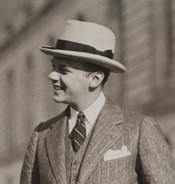
Historical · U.S. House · Missouri · District 5
George Combs Jr.
Former U.S. Representative · Missouri District 5 · 1927–1929 · Democratic
George Combs Jr. represented Missouri's District 5 in the United States House of Representatives (1927–1929) for the Democratic party. The page below collects sourced biographical facts, term history, committee roles, and provenance for Jr..
Bioguide ID: C000654
Key facts
- Full name
- George Combs Jr.
- State
- Missouri
- District
- District 5
- Party
- Democratic
- House service
- 1927–1929
- First House term
- 1927
- Status
- Left office
- Current term ends
- —
- Born
- 1899
- Bioguide ID
- C000654
- Committee assignments
- —
- Dataset version
- 1.20260606
Biographical narrative
944 words · sourced from the Wikipedia REST extract
George Combs Jr. was a U.S. Representative from Missouri, serving in the House of Representatives during the late 1920s. A member of the Democratic Party, Combs's political career was marked by a single term in Congress, where he represented Missouri's Fifth Congressional District. His professional background included law practice and various roles in public service, which shaped his later career in media and government. Born in 1899, Combs's life spanned significant periods in American history, including both World Wars and the Great Depression, influencing his perspectives and contributions to public discourse.
Early life and career
George Hamilton Combs Jr. was born on May 2, 1899, in Kansas City, Missouri. He grew up in the area and attended local public schools, which laid the foundation for his future educational pursuits. Combs furthered his education at the University of Missouri, where he began to develop the skills that would later serve him in his legal and political careers. He also attended the University of Michigan at Ann Arbor, enhancing his academic credentials.
In 1918, during World War I, Combs served in the United States Navy. His military service contributed to his understanding of national issues and civic responsibility, experiences that would later inform his political career. After the war, he returned to his studies and graduated from the Kansas City School of Law in 1921. Shortly thereafter, he was admitted to the bar, allowing him to begin his legal practice in Kansas City.
Combs's early career in law included a position as the assistant prosecuting attorney for Jackson County, Missouri, from 1922 to 1924. This role provided him with valuable experience in the legal system and public service, as he dealt with various legal matters and gained insight into the workings of local government. Despite his legal background, Combs sought a broader platform for his ambitions and ran for a seat in the U.S. Congress in 1924. However, his bid for election to the Sixty-ninth Congress was unsuccessful, marking a challenging start to his political aspirations.
House tenure
George Combs's political career took a significant turn when he was elected as a Democrat to the Seventieth Congress, serving from March 4, 1927, to March 3, 1929. His election represented a culmination of his earlier efforts and reflected the political dynamics of Missouri during that period. As a member of the House of Representatives, Combs participated in the legislative process, contributing to discussions and decisions that shaped national policy.
During his term, Combs was involved in various legislative activities, although specific details regarding the bills he sponsored or supported are not extensively documented. His time in Congress coincided with a period of economic change in the United States, as the nation was on the brink of the Great Depression. This context likely influenced the issues he prioritized and addressed during his tenure.
Despite his efforts, Combs did not seek renomination in 1928, concluding his congressional career after a single term. His decision to step away from electoral politics may have been influenced by various factors, including the shifting political landscape and personal considerations. Following his departure from Congress, Combs remained active in public life, continuing to engage with political and legal matters in different capacities.
Legislative focus and committees
While specific details about Combs's legislative focus during his time in the House of Representatives are limited, it is important to contextualize his work within the broader political environment of the late 1920s. As a member of the Democratic Party, he would have been aligned with the party's platform, which at the time included issues such as economic reform, labor rights, and social welfare. The late 1920s were marked by significant economic prosperity, but also by the early signs of the economic challenges that would soon follow with the onset of the Great Depression.
After leaving Congress, Combs continued his professional journey in New York City, where he practiced law and took on various roles in public service. In 1929, he transitioned from his political career to focus on legal work, which included serving as a special assistant to the attorney general of New York in 1931. His legal expertise was further utilized as he worked as an attorney for the Triborough Bridge Authority in the early 1930s, a role that involved navigating the complexities of infrastructure development and public utilities.
Combs's career evolved as he became involved in media and communications. He served as a radio news analyst, war correspondent, and writer from 1937 to 1951, reflecting the growing importance of media in shaping public opinion and political discourse. His work in this field included commentary on significant national and international events, allowing him to remain engaged with the public and political issues.
In addition to his media work, Combs held the position of special United States attorney for the Office of Price Stabilization in the southern district of New York from 1951 to 1952. This role was particularly relevant during a time when economic stability was a pressing concern for the nation. He also served as a television and radio news commentator from 1952 to 1961, further solidifying his presence in the media landscape.
Combs's career culminated in his role as the chief United Nations correspondent and news commentator for the Mutual Broadcasting System from 1961 to 1971. This position allowed him to cover international affairs and engage with global issues, reflecting his longstanding interest in public service and communication.
George Combs Jr. passed away on November 29, 1977, in West Palm Beach, Florida. His life and career encompassed a range of experiences in law, politics, and media, illustrating the diverse pathways through which individuals can contribute to public life and civic engagement.
Notable legislation
Sponsored and co-sponsored legislation for George Combs Jr. is pending operator curation. The biographical narrative above carries the same provenance trail until per-bill rows are written.
Sources
- [1]https://en.wikipedia.org/wiki/George_H._Combs_Jr.Wikipedia · retrieved 2026-06-06
Notable quotes
Sourced quotes for George Combs Jr. are pending operator curation. Narrative-scope provenance remains attached below.
Sources
- [1]https://en.wikipedia.org/wiki/George_H._Combs_Jr.Wikipedia · retrieved 2026-06-06
Key positions
Curated policy positions for George Combs Jr. are pending operator review. The biographical narrative above carries the same provenance trail until per-topic positions are written.
Sources
- [1]https://en.wikipedia.org/wiki/George_H._Combs_Jr.Wikipedia · retrieved 2026-06-06
Terms served
- 1927–1929U.S. House · Term 1 · Democratic
Sources & provenance
Every attributable claim above carries a per-section [N] marker that resolves to the corresponding URL below. Each entry records the upstream provider, the canonical URL, and the timestamp at which the source was retrieved by the ingest pipeline.
Key facts
- https://bioguide.congress.gov/search/bio/C000654bioguide · retrieved 2026-06-06
- https://www.govtrack.us/congress/members/402781govtrack · retrieved 2026-06-06
Biographical narrative
- https://en.wikipedia.org/wiki/George_H._Combs_Jr.wikipedia · retrieved 2026-06-06
Find your representative
Every U.S. state elects representatives by district. Browse Missouri’s delegation, the full former-representative roster, or explore the role and term length.
Related on The Candidate
- Preceded by Henry JostEarlier holder of the Missouri District 5 House seat · Democratic.Open
- Succeeded by Joseph ShannonLater holder of the Missouri District 5 House seat · Democratic.Open
- Anthony IttnerFormer U.S. Representative · Missouri District 1 · RepublicanOpen
- Bill Clay Sr.Former U.S. Representative · Missouri District 1 · DemocraticOpen
- Charles ClarkFormer U.S. Representative · Missouri District 1 · RepublicanOpen
- Clare MageeFormer U.S. Representative · Missouri District 1 · DemocraticOpen