
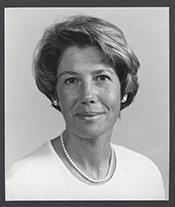
Historical · U.S. House · Missouri · District 5
Karen McCarthy
Former U.S. Representative · Missouri District 5 · 1995–2005 · Democratic
Karen McCarthy represented Missouri's District 5 in the United States House of Representatives (1995–2005) for the Democratic party. The page below collects sourced biographical facts, term history, committee roles, and provenance for McCarthy.
Bioguide ID: M000316
Key facts
- Full name
- Karen McCarthy
- State
- Missouri
- District
- District 5
- Party
- Democratic
- House service
- 1995–2005
- First House term
- 1995
- Status
- Left office
- Current term ends
- —
- Born
- 1947
- Bioguide ID
- M000316
- Committee assignments
- —
- Dataset version
- 1.20260605
Biographical narrative
872 words · sourced from the Wikipedia REST extract
Karen McCarthy was an American educator and politician who served as a U.S. Representative for Missouri's fifth congressional district from 1995 until 2005. A member of the Democratic Party, McCarthy's political career spanned several decades, beginning with her election to the Missouri House of Representatives in 1976. Throughout her time in office, she was known for her involvement in various legislative committees and her focus on issues such as education, health, and environmental policy. Following her congressional career, McCarthy faced personal challenges, including health issues, which ultimately led to her passing in 2010.
Early life and career
Karen McCarthy was born on March 18, 1947, in Haverhill, Massachusetts. She spent her formative years in Leawood, Kansas, where she completed her secondary education at Shawnee Mission East High School. McCarthy pursued higher education at the University of Kansas, earning a Bachelor of Science degree in biology and English in 1969. She later obtained a Master of Arts in English education from the University of Missouri–Kansas City in 1976. In addition to her teaching credentials, McCarthy also earned a Master of Business Administration from the University of Kansas.
Before entering politics, McCarthy had a career in education, teaching English at Shawnee Mission South High School and the Sunset Hill School. Her experience in the classroom likely informed her later legislative priorities, particularly in the areas of education and public policy.
McCarthy's political career began in the Missouri House of Representatives, where she was first elected in 1976 as a Democrat. Over the course of her tenure in the state legislature, she was re-elected multiple times, generally facing minimal opposition. McCarthy rose to prominence within the state House, becoming a ranking party member and serving on several key committees. Notably, she held the position of chairman of the Ways and Means Committee from 1983 to 1995 and was a member of the Appropriations and Energy committees. In 1994, she made history by becoming the first female president of the National Conference of State Legislatures.
House tenure
In 1994, following the decision of Congressman Alan Wheat to run for the U.S. Senate, McCarthy entered the race for the open seat in Missouri's fifth congressional district. She successfully navigated a competitive six-way primary and subsequently won the general election against Republican candidate Ron Freeman, securing approximately 56 percent of the vote. McCarthy's initial victory marked the beginning of a five-term congressional career, during which she was re-elected four additional times.
During her time in the U.S. House of Representatives, McCarthy served on the Energy and Commerce Committee, where she participated in various subcommittees, including those focused on commerce, trade, consumer protection, energy, air quality, telecommunications, and environmental hazards. Additionally, she was a member of the Select Committee on Homeland Security, where she held the position of ranking Democrat on the Intelligence and Counterterrorism subcommittee. Her involvement in these committees allowed her to influence significant legislation related to energy policy, public safety, and consumer rights.
In 2003, McCarthy announced that she would not seek a sixth term in the House, citing her struggle with alcoholism as a factor in her decision. This admission followed a widely reported incident in which she fell while intoxicated in a House office building, prompting her to seek treatment for her condition. Her decision to step down from public office marked the conclusion of her congressional career, which officially ended on January 3, 2005.
Legislative focus and committees
Throughout her congressional tenure, McCarthy was recognized for her commitment to various legislative issues, particularly those related to education, health care, and environmental policy. Her background in education influenced her advocacy for educational initiatives and reforms, as she sought to improve the quality of education in her district and beyond.
In addition to her work on education, McCarthy was actively involved in environmental issues. She served as co-chair of the Missouri Commission on Global Climate Change, where she participated in a comprehensive study aimed at developing environmental and economic policy options for the state. Her commitment to addressing climate change extended to her role as a congressional representative to the Kyoto Protocol, where she engaged in international discussions on global climate policy. McCarthy's involvement in these initiatives highlighted her dedication to addressing pressing environmental challenges.
Beyond her legislative work, McCarthy received recognition for her contributions to the arts and women's advocacy. She was honored with the Missouri Citizens for the Arts Advocacy Award in 2005 and was named Woman of the Year by the Business and Professional Women of the USA.
After leaving Congress, McCarthy returned to Kansas City, Missouri, where she remained active in various cultural and political activities. She served on several boards and continued to support initiatives that aligned with her interests and values. However, in June 2009, her family disclosed that she was suffering from an advanced form of Alzheimer's disease, which was compounded by undiagnosed bipolar disorder. Her health challenges led to her passing on October 5, 2010, at the age of 63.
McCarthy's legacy includes her contributions to education, environmental policy, and women's rights, as well as her role as a trailblazer for women in politics. Her career reflects a commitment to public service and advocacy for the constituents she represented throughout her time in office.
Notable legislation
Sponsored and co-sponsored legislation for Karen McCarthy is pending operator curation. The biographical narrative above carries the same provenance trail until per-bill rows are written.
Sources
- [1]https://en.wikipedia.org/wiki/Karen_McCarthyWikipedia · retrieved 2026-06-05
Notable quotes
Sourced quotes for Karen McCarthy are pending operator curation. Narrative-scope provenance remains attached below.
Sources
- [1]https://en.wikipedia.org/wiki/Karen_McCarthyWikipedia · retrieved 2026-06-05
Key positions
Curated policy positions for Karen McCarthy are pending operator review. The biographical narrative above carries the same provenance trail until per-topic positions are written.
Sources
- [1]https://en.wikipedia.org/wiki/Karen_McCarthyWikipedia · retrieved 2026-06-05
Terms served
- 1995–1997U.S. House · Term 1 · Democratic
- 1997–1999U.S. House · Term 2 · Democratic
- 1999–2001U.S. House · Term 3 · Democratic
- 2001–2003U.S. House · Term 4 · Democratic
- 2003–2005U.S. House · Term 5 · Democratic
Sources & provenance
Every attributable claim above carries a per-section [N] marker that resolves to the corresponding URL below. Each entry records the upstream provider, the canonical URL, and the timestamp at which the source was retrieved by the ingest pipeline.
Key facts
- https://bioguide.congress.gov/search/bio/M000316bioguide · retrieved 2026-06-05
- http://mccarthy.house.gov/house.gov · retrieved 2026-06-05
Biographical narrative
- https://en.wikipedia.org/wiki/Karen_McCarthywikipedia · retrieved 2026-06-05
Find your representative
Every U.S. state elects representatives by district. Browse Missouri’s delegation, the full former-representative roster, or explore the role and term length.
Related on The Candidate
- Preceded by Alan WheatEarlier holder of the Missouri District 5 House seat · Democratic.Open
- Anthony IttnerFormer U.S. Representative · Missouri District 1 · RepublicanOpen
- Bill Clay Sr.Former U.S. Representative · Missouri District 1 · DemocraticOpen
- Charles ClarkFormer U.S. Representative · Missouri District 1 · RepublicanOpen
- Clare MageeFormer U.S. Representative · Missouri District 1 · DemocraticOpen
- Democratic PartyFederal candidates and office holders on the Democratic line.Open