
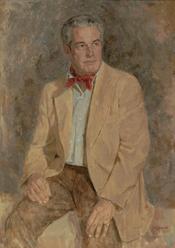
Historical · U.S. House · Missouri · District 5
Richard Bolling
Former U.S. Representative · Missouri District 5 · 1949–1983 · Democratic
Richard Bolling represented Missouri's District 5 in the United States House of Representatives (1949–1983) for the Democratic party. The page below collects sourced biographical facts, term history, committee roles, and provenance for Bolling.
Bioguide ID: B000605
Key facts
- Full name
- Richard Bolling
- State
- Missouri
- District
- District 5
- Party
- Democratic
- House service
- 1949–1983
- First House term
- 1949
- Status
- Left office
- Current term ends
- —
- Born
- 1916
- Bioguide ID
- B000605
- Committee assignments
- —
- Dataset version
- 1.20260605
Biographical narrative
928 words · sourced from the Wikipedia REST extract
Richard Bolling was a notable American politician who served as a Democratic U.S. Representative for Missouri's 5th congressional district from 1949 until 1983. He was recognized for his long tenure in Congress, spanning 17 terms, and for his leadership roles, including chairmanship of the influential House Committee on Rules. Bolling's legislative career was marked by significant contributions to civil rights legislation and his involvement in various congressional committees.
Early life and career
Richard Walker Bolling was born on May 17, 1916, in New York City. He was part of a distinguished family, being the great-great-grandson of John Williams Walker and the great-great-nephew of Percy Walker. His early education took place at Phillips Exeter Academy in Exeter, New Hampshire. Following the death of his father when he was fifteen, Bolling returned to his family's home in Huntsville, Alabama. He pursued higher education at the University of the South in Sewanee, Tennessee, where he earned a Bachelor of Arts degree in literature and French in 1937, followed by a Master of Arts degree in 1939. He continued his academic pursuits with graduate studies at Vanderbilt University in Nashville, Tennessee, during the years 1939 to 1940.
Bolling began his professional career in education, serving as a teacher at Sewanee Military Academy in 1938 and 1939. He then took on the role of assistant to the head of the Department of Education at Florence State Teachers College in Alabama in 1940. His academic career was briefly interrupted by military service during World War II.
In April 1941, Bolling enlisted in the United States Army, where he served as a private and eventually rose to the rank of lieutenant colonel by the time of his discharge in July 1946. His military service included four years overseas, where he worked as an assistant to General Douglas MacArthur in various locations, including Australia, New Guinea, the Philippines, and Japan. For his service, he received the Legion of Merit and the Bronze Star. After returning from military duty, Bolling served as a veterans' adviser at the University of Kansas City during 1946 and 1947.
House tenure
Bolling's political career began when he was elected as a Democrat to the 81st Congress in 1948, marking the start of his long tenure in the U.S. House of Representatives. He served continuously from January 3, 1949, until January 3, 1983, representing Missouri's 5th congressional district for a total of 17 terms. Throughout his time in Congress, Bolling was involved in various leadership roles and committees that shaped legislative processes.
He was particularly active in the Select Committee on Committees during the 93rd Congress and served as chairman of the Joint Economic Committee in the 95th Congress. His most prominent role came when he chaired the Committee on Rules during the 96th and 97th Congresses, a position that allowed him to influence the legislative agenda significantly. Bolling was known for his commitment to civil rights and played a crucial role in advancing significant legislation during his time in office.
One of his notable contributions was introducing the discharge petition that led to the release of the Civil Rights Act of 1964 from Senate committees controlled by southern Democrats. This action was pivotal in facilitating the passage of the landmark legislation. Bolling's voting record reflected his support for civil rights; he voted in favor of the Civil Rights Acts of 1957, 1960, 1964, and 1968, as well as the Voting Rights Act of 1965. He did not sign the 1956 Southern Manifesto, which opposed desegregation, and while he voted present on the 24th Amendment to the U.S. Constitution, his overall legislative actions indicated a commitment to civil rights.
Bolling's influence extended beyond individual votes; he was a candidate for House Majority Leader on two occasions, in 1961 and 1977, although he was not successful in securing the position. His political career concluded when he announced his retirement in 1981 due to health issues related to heart disease. He did not seek reelection for the 98th Congress in 1982, marking the end of his extensive service in the House.
Legislative focus and committees
Throughout his congressional career, Richard Bolling focused on various legislative issues, with a significant emphasis on civil rights and economic policy. His leadership roles in key committees allowed him to shape discussions and outcomes on critical legislation. As chairman of the Committee on Rules, he played a vital role in determining how legislation was presented and debated on the House floor, influencing the legislative process significantly.
Bolling's work on the Joint Economic Committee involved analyzing economic issues and proposing solutions to improve the nation's economic conditions. His tenure on this committee reflected his commitment to addressing economic challenges and advocating for policies that would benefit his constituents and the broader American public.
In addition to his legislative responsibilities, Bolling remained active in civic and educational pursuits after his retirement from Congress. He served as a visiting professor of political science at the University of Missouri-Kansas City and later as a professor of politics at Boston College in Massachusetts. His academic involvement demonstrated his dedication to education and public service even after his political career concluded.
Bolling's legacy is recognized through various honors, including the naming of the Richard Bolling Federal Building in Kansas City, Missouri, in his honor. He passed away on April 21, 1991, in Washington, D.C., leaving behind a significant record of public service and contributions to American legislative history. His long tenure and active engagement in civil rights issues mark him as a notable figure in the political landscape of the 20th century.
Notable legislation
Sponsored and co-sponsored legislation for Richard Bolling is pending operator curation. The biographical narrative above carries the same provenance trail until per-bill rows are written.
Sources
- [1]https://en.wikipedia.org/wiki/Richard_W._BollingWikipedia · retrieved 2026-06-05
Notable quotes
Sourced quotes for Richard Bolling are pending operator curation. Narrative-scope provenance remains attached below.
Sources
- [1]https://en.wikipedia.org/wiki/Richard_W._BollingWikipedia · retrieved 2026-06-05
Key positions
Curated policy positions for Richard Bolling are pending operator review. The biographical narrative above carries the same provenance trail until per-topic positions are written.
Sources
- [1]https://en.wikipedia.org/wiki/Richard_W._BollingWikipedia · retrieved 2026-06-05
Terms served
- 1949–1951U.S. House · Term 1 · Democratic
- 1951–1953U.S. House · Term 2 · Democratic
- 1953–1955U.S. House · Term 3 · Democratic
- 1955–1957U.S. House · Term 4 · Democratic
- 1957–1959U.S. House · Term 5 · Democratic
- 1959–1961U.S. House · Term 6 · Democratic
- 1961–1963U.S. House · Term 7 · Democratic
- 1963–1965U.S. House · Term 8 · Democratic
- 1965–1967U.S. House · Term 9 · Democratic
- 1967–1969U.S. House · Term 10 · Democratic
- 1969–1971U.S. House · Term 11 · Democratic
- 1971–1973U.S. House · Term 12 · Democratic
- 1973–1975U.S. House · Term 13 · Democratic
- 1975–1977U.S. House · Term 14 · Democratic
- 1977–1979U.S. House · Term 15 · Democratic
- 1979–1981U.S. House · Term 16 · Democratic
- 1981–1983U.S. House · Term 17 · Democratic
Sources & provenance
Every attributable claim above carries a per-section [N] marker that resolves to the corresponding URL below. Each entry records the upstream provider, the canonical URL, and the timestamp at which the source was retrieved by the ingest pipeline.
Key facts
- https://bioguide.congress.gov/search/bio/B000605bioguide · retrieved 2026-06-05
- https://www.govtrack.us/congress/members/401573govtrack · retrieved 2026-06-05
Biographical narrative
- https://en.wikipedia.org/wiki/Richard_W._Bollingwikipedia · retrieved 2026-06-05
Find your representative
Every U.S. state elects representatives by district. Browse Missouri’s delegation, the full former-representative roster, or explore the role and term length.
Related on The Candidate
- Preceded by Albert Reeves Jr.Earlier holder of the Missouri District 5 House seat · Republican.Open
- Succeeded by Alan WheatLater holder of the Missouri District 5 House seat · Democratic.Open
- Anthony IttnerFormer U.S. Representative · Missouri District 1 · RepublicanOpen
- Bill Clay Sr.Former U.S. Representative · Missouri District 1 · DemocraticOpen
- Charles ClarkFormer U.S. Representative · Missouri District 1 · RepublicanOpen
- Clare MageeFormer U.S. Representative · Missouri District 1 · DemocraticOpen