
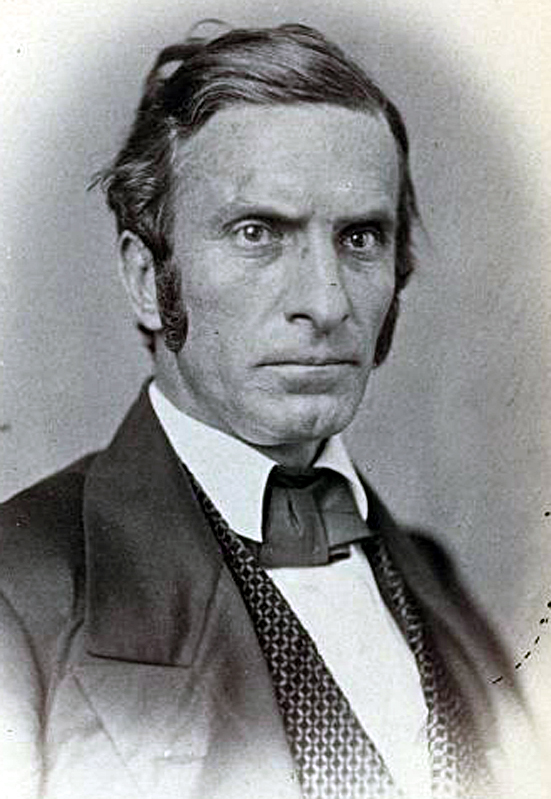
Historical · U.S. House · Missouri · District 5
Samuel Woodson
Former U.S. Representative · Missouri District 5 · 1857–1861 · American
Samuel Woodson represented Missouri's District 5 in the United States House of Representatives (1857–1861) for the American party. The page below collects sourced biographical facts, term history, committee roles, and provenance for Woodson.
Bioguide ID: W000728
Key facts
- Full name
- Samuel Woodson
- State
- Missouri
- District
- District 5
- Party
- American
- House service
- 1857–1861
- First House term
- 1857
- Status
- Left office
- Current term ends
- —
- Born
- 1815
- Bioguide ID
- W000728
- Committee assignments
- —
- Dataset version
- 1.20260606
Biographical narrative
967 words · sourced from the Wikipedia REST extract
Samuel Woodson was an American politician who served as a U.S. Representative from Missouri. A member of the American Party, he held office during a tumultuous period in American history, marked by rising tensions over issues such as slavery and state rights. Woodson's political career spanned two terms in the House of Representatives, from 1857 until 1861. After his congressional service, he continued to engage in public life, eventually becoming a judge in Missouri. His legacy is intertwined with the political landscape of the mid-19th century, reflecting the complexities of American governance during that era.
Early life and career
Samuel Woodson was born on October 24, 1815, near Nicholasville, Kentucky. He was the son of Samuel Hughes Woodson, who lived from 1777 to 1827. Growing up in Kentucky, Woodson received his early education in public schools, which laid the foundation for his future academic pursuits. He furthered his education at Centre College in Danville, Kentucky, where he likely developed the skills and knowledge that would serve him in his later career. Following his time at Centre College, Woodson attended the law department of Transylvania University in Lexington, Kentucky. This institution was known for its rigorous legal training, and Woodson graduated with the qualifications necessary to practice law.
After being admitted to the bar in 1838, Woodson began his legal career in Independence, Missouri, in 1840. His move to Missouri marked a significant transition in his life, as he became involved in the local legal community and began to establish his reputation as a lawyer. Woodson's legal practice would later provide him with the experience and connections that would be beneficial in his political career.
In addition to his legal work, Woodson entered public service at the state level. He served as a member of the Missouri House of Representatives in 1853 and 1854, where he participated in the legislative process and gained insight into the workings of government. His involvement in state politics continued when he was elected as a delegate to the State constitutional convention in 1855. This convention was significant, as it played a crucial role in shaping Missouri's governance and addressing the pressing issues of the time, including the contentious debate over slavery.
House tenure
Samuel Woodson's congressional career began when he was elected to the Thirty-fifth Congress, which convened on March 4, 1857. He represented Missouri's 5th congressional district as a member of the American Party, a political group that emerged in the 1850s, primarily in response to the growing divisions over slavery and immigration. The American Party, also known as the Know-Nothing Party, sought to promote nativist policies and was characterized by its opposition to the influence of immigrants and Catholics in American politics.
During his time in the House of Representatives, Woodson served in the Thirty-fifth and Thirty-sixth Congresses, with his tenure concluding on March 3, 1861. His legislative activities during this period would have been influenced by the national climate, which was increasingly fraught with conflict over the issue of slavery. The years leading up to the Civil War were marked by significant political strife, and Woodson's role as a congressman placed him at the center of these critical discussions.
Despite his involvement in national politics, Woodson did not seek renomination in 1860, choosing instead to return to his legal practice in Independence. This decision may have been influenced by the shifting political landscape and the growing tensions that would soon erupt into the Civil War. After leaving Congress, Woodson continued to engage in public service, transitioning to a judicial role that would allow him to contribute to the legal system in Missouri.
Legislative focus and committees
While specific details regarding Samuel Woodson's legislative focus and committee assignments during his time in Congress are not extensively documented, it can be inferred that his background as a lawyer and his experience in state politics would have informed his approach to legislation. As a member of the American Party, Woodson likely engaged with issues that were central to the party's platform, including immigration and nativism, as well as the contentious debates surrounding slavery.
The political environment of the late 1850s was characterized by intense discussions about the future of slavery in the United States, particularly as new states were being admitted to the Union. Woodson's tenure in Congress coincided with significant events such as the Dred Scott decision and the rise of the Republican Party, which opposed the expansion of slavery into new territories. Given the historical context, it is plausible that Woodson participated in debates and discussions that reflected the concerns of his constituents in Missouri, a border state with divided sentiments on the issue of slavery.
After his congressional career, Woodson's affiliation with the Democratic Party marked a shift in his political alignment. This transition may have been influenced by the changing political landscape following the Civil War, as many former members of the American Party sought new political homes in the aftermath of the conflict. In March 1875, Woodson was appointed as a judge of the twenty-fourth judicial circuit of Missouri, a position he held until his death on June 23, 1881. His judicial role allowed him to continue contributing to the legal framework of the state, further solidifying his legacy within Missouri's political history.
Samuel Woodson's life and career reflect the complexities of American politics during a time of significant change. His experiences as a lawyer, state legislator, and U.S. Representative illustrate the interconnectedness of legal and political systems in shaping the governance of the nation. Woodson's contributions to Missouri's political landscape, both in Congress and as a judge, underscore the importance of local leaders in navigating the challenges of their times. His burial at Woodlawn Cemetery in Independence serves as a reminder of his enduring presence in the community he served throughout his life.
Notable legislation
Sponsored and co-sponsored legislation for Samuel Woodson is pending operator curation. The biographical narrative above carries the same provenance trail until per-bill rows are written.
Sources
- [1]https://en.wikipedia.org/wiki/Samuel_H._Woodson_(Missouri_politician)Wikipedia · retrieved 2026-06-06
Notable quotes
Sourced quotes for Samuel Woodson are pending operator curation. Narrative-scope provenance remains attached below.
Sources
- [1]https://en.wikipedia.org/wiki/Samuel_H._Woodson_(Missouri_politician)Wikipedia · retrieved 2026-06-06
Key positions
Curated policy positions for Samuel Woodson are pending operator review. The biographical narrative above carries the same provenance trail until per-topic positions are written.
Sources
- [1]https://en.wikipedia.org/wiki/Samuel_H._Woodson_(Missouri_politician)Wikipedia · retrieved 2026-06-06
Terms served
- 1857–1859U.S. House · Term 1 · American
- 1859–1861U.S. House · Term 2 · American
Sources & provenance
Every attributable claim above carries a per-section [N] marker that resolves to the corresponding URL below. Each entry records the upstream provider, the canonical URL, and the timestamp at which the source was retrieved by the ingest pipeline.
Key facts
- https://bioguide.congress.gov/search/bio/W000728bioguide · retrieved 2026-06-06
- https://www.govtrack.us/congress/members/411881govtrack · retrieved 2026-06-06
Biographical narrative
- https://en.wikipedia.org/wiki/Samuel_H._Woodson_(Missouri_politician)wikipedia · retrieved 2026-06-06
Find your representative
Every U.S. state elects representatives by district. Browse Missouri’s delegation, the full former-representative roster, or explore the role and term length.
Related on The Candidate
- Preceded by John MillerEarlier holder of the Missouri District 5 House seat · Ind. Republican-Democrat.Open
- Succeeded by John ReidLater holder of the Missouri District 5 House seat · Democratic.Open
- Anthony IttnerFormer U.S. Representative · Missouri District 1 · RepublicanOpen
- Bill Clay Sr.Former U.S. Representative · Missouri District 1 · DemocraticOpen
- Charles ClarkFormer U.S. Representative · Missouri District 1 · RepublicanOpen
- Clare MageeFormer U.S. Representative · Missouri District 1 · DemocraticOpen