
Historical · U.S. House · Missouri · District 8
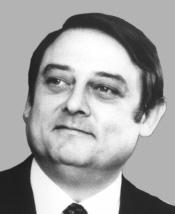
Bill Emerson
Former U.S. Representative · Missouri District 8 · 1981–1996 · Republican
Bill Emerson represented Missouri's District 8 in the United States House of Representatives (1981–1996) for the Republican party. The page below collects sourced biographical facts, term history, committee roles, and provenance for Emerson.
Bioguide ID: E000174
Key facts
- Full name
- Bill Emerson
- State
- Missouri
- District
- District 8
- Party
- Republican
- House service
- 1981–1996
- First House term
- 1981
- Status
- Left office
- Current term ends
- —
- Born
- 1938
- Bioguide ID
- E000174
- Committee assignments
- —
- Dataset version
- 1.20260605
Biographical narrative
939 words · sourced from the Wikipedia REST extract
Norvell William Emerson was an American politician who served as a member of the United States House of Representatives from Missouri's 8th congressional district from 1981 until his death in 1996. A member of the Republican Party, Emerson was known for his legislative work and contributions to various committees during his tenure in Congress. He was succeeded in office by his widow, Jo Ann Emerson, following his passing from lung cancer.
Early life and career
Bill Emerson was born on January 1, 1938, in Jefferson County, Missouri. He grew up in the area and attended public schools in Hillsboro, a nearby town. His early exposure to politics began when he served as a House Page, a role that provided him with firsthand experience of the legislative process. Emerson graduated from Westminster College in Fulton, Missouri, in 1959, where he laid the foundation for his future career in public service.
Following his undergraduate education, Emerson pursued a legal career by attending law school at the University of Missouri and later at the University of Baltimore. He earned his Bachelor of Laws (LL.B) degree from the University of Baltimore in 1964. During this time, he also gained practical experience in government by working as a Congressional aide to U.S. Representative Robert Ellsworth. After completing his law degree, Emerson continued his career in public service as a staff member for U.S. Senator Charles Mathias.
In addition to his academic and professional pursuits, Emerson served in the United States Air Force Reserve from 1964 until 1992, achieving the rank of captain. His military service coincided with a significant period in American history, including the Cold War and various domestic challenges.
Throughout the 1970s, Emerson worked in governmental affairs for several companies, which provided him with insights into the intersection of business and government. In 1979, he established his own consulting group, further solidifying his expertise in legislative matters. His experience and connections in the political landscape led to his election to Congress in 1980.
House tenure
Bill Emerson began his congressional career in January 1981, representing Missouri's 8th congressional district. He was elected as a Republican and quickly became known for his commitment to his constituents and his involvement in legislative affairs. Over the course of his eight terms in office, Emerson was re-elected seven times, demonstrating a strong support base in his district.
During his time in the House, Emerson served on the House Committee on Rules, a critical committee responsible for determining the procedures by which legislation is considered in the House of Representatives. His role on this committee allowed him to influence the legislative process and advocate for various issues important to his constituents and the broader Republican agenda.
Emerson's tenure in Congress was marked by his active participation in discussions and debates on a range of topics, including economic policy, healthcare, and social issues. He was known for his ability to navigate complex legislative challenges and work collaboratively with colleagues across party lines when necessary.
In 1988, Emerson faced personal challenges when he acknowledged his struggle with alcoholism. After an intervention by family and friends, he sought treatment at the Betty Ford Center, which marked a turning point in his life. Following his recovery, he became an advocate for addiction treatment and played a significant role in establishing the House Employee Assistance Program. This program provides legislative and administrative support services for House employees and has been expanded to the Senate, helping individuals struggling with alcoholism and other issues find the necessary treatment.
Emerson's commitment to public service and his advocacy for addiction recovery were significant aspects of his legacy, reflecting his dedication to improving the lives of those around him.
Legislative focus and committees
Throughout his congressional career, Bill Emerson focused on a variety of legislative issues that were important to his constituents and aligned with his party's values. His work on the House Committee on Rules positioned him to influence the legislative agenda and advocate for policies that he believed would benefit the people of Missouri.
One of Emerson's notable legislative achievements was his involvement in the Bill Emerson Good Samaritan Food Donation Act of 1996. This act aimed to encourage the donation of food and grocery products to nonprofit organizations for distribution to individuals in need. It provided legal protections for donors, ensuring they would not be held liable for any harm that might occur from donated food, as long as the donation was made in good faith. Emerson's advocacy for this legislation highlighted his commitment to addressing food insecurity and supporting charitable efforts in his community.
In addition to his work on food donation initiatives, Emerson was involved in various other legislative efforts, including those related to economic development and social welfare. His focus on these issues reflected a broader commitment to improving the quality of life for his constituents and addressing the challenges faced by many Americans.
Emerson's legacy extends beyond his legislative achievements. The Bill Emerson Memorial Bridge, which spans the Mississippi River at Cape Girardeau, is named in his honor, as is Emerson Hall, the main assembly room in the House Page School at the Library of Congress. Additionally, the national Food Security Wheat Reserve was renamed the Bill Emerson Humanitarian Trust in recognition of his contributions to food security initiatives.
Bill Emerson passed away on June 22, 1996, due to lung cancer. His death marked the end of a significant chapter in Missouri's political history, and he was succeeded in Congress by his widow, Jo Ann Emerson. His contributions to public service and his advocacy for important social issues continue to be remembered and honored in various ways.
Notable legislation
Sponsored and co-sponsored legislation for Bill Emerson is pending operator curation. The biographical narrative above carries the same provenance trail until per-bill rows are written.
Sources
- [1]https://en.wikipedia.org/wiki/Bill_EmersonWikipedia · retrieved 2026-06-05
Notable quotes
Sourced quotes for Bill Emerson are pending operator curation. Narrative-scope provenance remains attached below.
Sources
- [1]https://en.wikipedia.org/wiki/Bill_EmersonWikipedia · retrieved 2026-06-05
Key positions
Curated policy positions for Bill Emerson are pending operator review. The biographical narrative above carries the same provenance trail until per-topic positions are written.
Sources
- [1]https://en.wikipedia.org/wiki/Bill_EmersonWikipedia · retrieved 2026-06-05
Terms served
- 1981–1983U.S. House · Term 1 · Republican
- 1983–1985U.S. House · Term 2 · Republican
- 1985–1987U.S. House · Term 3 · Republican
- 1987–1989U.S. House · Term 4 · Republican
- 1989–1991U.S. House · Term 5 · Republican
- 1991–1993U.S. House · Term 6 · Republican
- 1993–1995U.S. House · Term 7 · Republican
- 1995–1996U.S. House · Term 8 · Republican
Sources & provenance
Every attributable claim above carries a per-section [N] marker that resolves to the corresponding URL below. Each entry records the upstream provider, the canonical URL, and the timestamp at which the source was retrieved by the ingest pipeline.
Key facts
- https://bioguide.congress.gov/search/bio/E000174bioguide · retrieved 2026-06-05
- https://www.govtrack.us/congress/members/403864govtrack · retrieved 2026-06-05
Biographical narrative
- https://en.wikipedia.org/wiki/Bill_Emersonwikipedia · retrieved 2026-06-05
Find your representative
Every U.S. state elects representatives by district. Browse Missouri’s delegation, the full former-representative roster, or explore the role and term length.
Related on The Candidate
- Preceded by Richard Ichord IIEarlier holder of the Missouri District 8 House seat · Democratic.Open
- Succeeded by Jo Ann EmersonLater holder of the Missouri District 8 House seat · Republican.Open
- Anthony IttnerFormer U.S. Representative · Missouri District 1 · RepublicanOpen
- Bill Clay Sr.Former U.S. Representative · Missouri District 1 · DemocraticOpen
- Charles ClarkFormer U.S. Representative · Missouri District 1 · RepublicanOpen
- Clare MageeFormer U.S. Representative · Missouri District 1 · DemocraticOpen