
Historical · U.S. House · Missouri · District 8
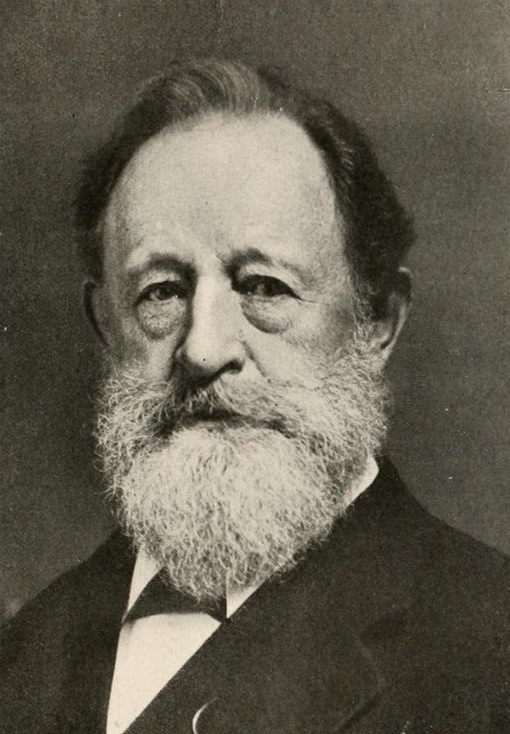
Frederick Niedringhaus
Former U.S. Representative · Missouri District 8 · 1889–1891 · Republican
Frederick Niedringhaus represented Missouri's District 8 in the United States House of Representatives (1889–1891) for the Republican party. The page below collects sourced biographical facts, term history, committee roles, and provenance for Niedringhaus.
Bioguide ID: N000104
Key facts
- Full name
- Frederick Niedringhaus
- State
- Missouri
- District
- District 8
- Party
- Republican
- House service
- 1889–1891
- First House term
- 1889
- Status
- Left office
- Current term ends
- —
- Born
- 1837
- Bioguide ID
- N000104
- Committee assignments
- —
- Dataset version
- 1.20260606
Biographical narrative
824 words · sourced from the Wikipedia REST extract
Frederick Niedringhaus was a German-born American businessman and politician who served as a U.S. Representative for Missouri's 8th congressional district. A member of the Republican Party, he held office from 1889 to 1891. Niedringhaus was notable for his contributions to both the business sector, particularly in the manufacturing of tinware, and for his role in legislative matters during his brief political career.
Early life and career
Frederick Gottlieb Niedringhaus was born on October 21, 1837, in Lübbecke, Westphalia, Germany. He received his education in local common schools, where he developed skills in glazing, painting, and tinning. In November 1855, at the age of 18, Niedringhaus emigrated to the United States, settling in St. Louis, Missouri. This move marked the beginning of a significant journey that would see him become a prominent figure in both business and politics.
Upon arriving in St. Louis, Niedringhaus partnered with his brother William to establish a tinware stamping company in the early 1860s. This venture coincided with the increased demand for tin products during the Civil War, leading to rapid growth for their business. In 1866, they founded the St. Louis Stamping Company, which was initially capitalized at $125,000. The company quickly expanded, and the brothers dedicated themselves to the intricacies of production and market development, often working directly on the factory floor to meet the demands of their customers.
In 1875, Niedringhaus and his brother innovated a new process for creating a decorative mottled surface on enameled metal, which they branded as Granite Ironware. This process involved rolling sheet iron into various shapes, dipping it into enamel, and baking it to produce a glossy finish. The popularity of Granite Ironware led to the establishment of a distribution network that utilized hardware stores as agents for their products. By 1877, the company had constructed a five-story brick warehouse and factory to accommodate their growing operations.
The St. Louis Stamping Company continued to evolve, expanding its product line to include terneplate, a roofing material, by 1885. In 1891, the Niedringhaus brothers acquired land in Madison County, Illinois, where they relocated and expanded their factory operations, ultimately incorporating the city of Granite City in 1896. The company later merged with other similar businesses to form the National Enameling and Stamping Company in 1899, further solidifying its position in the market.
In addition to his work in manufacturing, Niedringhaus pursued various business interests. In 1885, he and his brother acquired the Calumet Mine in Utah and also founded the Home Land & Cattle Company. They operated ranches in Montana and New Mexico, where they raised cattle under the brand N-N, symbolizing their brotherly partnership. At its height, the N-N ran a substantial cattle operation, managing up to one hundred thousand cattle at a time.
House tenure
Frederick Niedringhaus was elected to the United States House of Representatives as a Republican, serving in the Fifty-first Congress from March 4, 1889, to March 3, 1891. His election marked a significant transition from his successful business career to a role in public service. During his time in Congress, he was involved in various legislative efforts, including contributing to the drafting of the McKinley Tariff, which aimed to raise duties on imported tin-plate from Wales. This legislation was significant for the tinware industry and reflected Niedringhaus's background and interests.
Despite his active participation in Congress, Niedringhaus did not seek renomination in 1890, concluding his term after a single session. Following his departure from the House, he returned to his business pursuits, continuing to engage in the manufacturing sector and other ventures that had defined his earlier career.
Legislative focus and committees
During his brief tenure in the House of Representatives, Frederick Niedringhaus's legislative focus was closely aligned with his professional background in manufacturing and business. His involvement in the McKinley Tariff highlighted his commitment to protecting American industries, particularly those related to tinware and metal products. By advocating for increased tariffs on imported goods, he aimed to bolster domestic production and support the economic interests of his constituents and the broader manufacturing community.
While specific committee assignments during his time in Congress are not detailed, it can be inferred that his experience in the business sector would have provided valuable insights into economic and trade-related issues. His background likely influenced his approach to legislation, emphasizing the importance of supporting American manufacturing and addressing the challenges faced by domestic producers.
Frederick Niedringhaus's political career was relatively short-lived, but it was marked by a clear connection to his business expertise. After leaving Congress, he continued to engage in various business endeavors, further solidifying his legacy as a successful businessman and a dedicated public servant.
Niedringhaus married Dena Key on June 1, 1860, and together they had ten children. He lived a long life, passing away on November 25, 1922, in St. Louis, Missouri. He was interred at Bellefontaine Cemetery, leaving behind a legacy that intertwined business innovation and public service in the late 19th century.
Notable legislation
Sponsored and co-sponsored legislation for Frederick Niedringhaus is pending operator curation. The biographical narrative above carries the same provenance trail until per-bill rows are written.
Sources
- [1]https://en.wikipedia.org/wiki/Frederick_G._NiedringhausWikipedia · retrieved 2026-06-06
Notable quotes
Sourced quotes for Frederick Niedringhaus are pending operator curation. Narrative-scope provenance remains attached below.
Sources
- [1]https://en.wikipedia.org/wiki/Frederick_G._NiedringhausWikipedia · retrieved 2026-06-06
Key positions
Curated policy positions for Frederick Niedringhaus are pending operator review. The biographical narrative above carries the same provenance trail until per-topic positions are written.
Sources
- [1]https://en.wikipedia.org/wiki/Frederick_G._NiedringhausWikipedia · retrieved 2026-06-06
Terms served
- 1889–1891U.S. House · Term 1 · Republican
Sources & provenance
Every attributable claim above carries a per-section [N] marker that resolves to the corresponding URL below. Each entry records the upstream provider, the canonical URL, and the timestamp at which the source was retrieved by the ingest pipeline.
Key facts
- https://bioguide.congress.gov/search/bio/N000104bioguide · retrieved 2026-06-06
- https://www.govtrack.us/congress/members/408188govtrack · retrieved 2026-06-06
Biographical narrative
- https://en.wikipedia.org/wiki/Frederick_G._Niedringhauswikipedia · retrieved 2026-06-06
Find your representative
Every U.S. state elects representatives by district. Browse Missouri’s delegation, the full former-representative roster, or explore the role and term length.
Related on The Candidate
- Preceded by Samuel SawyerEarlier holder of the Missouri District 8 House seat · Ind. Democrat.Open
- Succeeded by Joel HubbardLater holder of the Missouri District 8 House seat · Republican.Open
- Anthony IttnerFormer U.S. Representative · Missouri District 1 · RepublicanOpen
- Bill Clay Sr.Former U.S. Representative · Missouri District 1 · DemocraticOpen
- Charles ClarkFormer U.S. Representative · Missouri District 1 · RepublicanOpen
- Clare MageeFormer U.S. Representative · Missouri District 1 · DemocraticOpen