
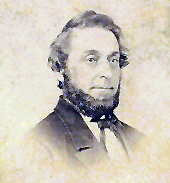
Historical · U.S. House · Missouri · District 8
John Benjamin
Former U.S. Representative · Missouri District 8 · 1865–1871 · Republican
John Benjamin represented Missouri's District 8 in the United States House of Representatives (1865–1871) for the Republican party. The page below collects sourced biographical facts, term history, committee roles, and provenance for Benjamin.
Bioguide ID: B000364
Key facts
- Full name
- John Benjamin
- State
- Missouri
- District
- District 8
- Party
- Republican
- House service
- 1865–1871
- First House term
- 1865
- Status
- Left office
- Current term ends
- —
- Born
- 1817
- Bioguide ID
- B000364
- Committee assignments
- —
- Dataset version
- 1.20260606
Biographical narrative
908 words · sourced from the Wikipedia REST extract
John Benjamin was a U.S. Representative from Missouri, serving three terms in the House of Representatives during the latter half of the 19th century. A member of the Republican Party, he was active in politics during a transformative period in American history, marked by the Civil War and the Reconstruction era. His career spanned various roles, including military service and law, reflecting a diverse background that informed his legislative work.
Early life and career
John Benjamin was born on January 23, 1817, in Cicero, New York. He received his early education in public schools, which laid the foundation for his future pursuits. In 1845, he relocated to Texas, where he likely sought new opportunities in the burgeoning frontier. However, his time in Texas was short-lived, as he moved to Missouri in 1848. This transition marked the beginning of his long-standing connection to the state, where he would eventually establish his political career.
Upon arriving in Missouri, Benjamin studied law and was admitted to the bar in the same year. He began practicing law in Shelbyville, Missouri, where he built a reputation as a legal professional. His involvement in local governance began when he served as a Democratic member of the Missouri House of Representatives from 1850 to 1852. This early political experience provided him with insights into legislative processes and the needs of his constituents.
In addition to his legal and political endeavors, Benjamin participated in the electoral process as a presidential elector for the Democratic ticket in 1856. His political affiliations would later shift as he became a member of the Republican Party, reflecting the changing political landscape of the time, particularly in the context of the Civil War.
With the outbreak of the Civil War, Benjamin enlisted in the Union Army in 1861. He began his military service as a private and quickly ascended through the ranks, achieving the positions of captain, major, lieutenant colonel, and eventually brevet brigadier general. His military service included a role as provost marshal of the Eighth District of Missouri from 1863 to 1864, where he was responsible for maintaining order and overseeing military operations in the region.
House tenure
John Benjamin's political career in the U.S. House of Representatives began when he was elected as a Republican to the Thirty-ninth Congress, which convened on March 4, 1865. He was subsequently re-elected to the Fortieth and Forty-first Congresses, serving until March 4, 1871. During his time in office, Benjamin was involved in various legislative activities that reflected the priorities of the Republican Party during the Reconstruction era.
His tenure in Congress was marked by a focus on issues pertinent to the post-war period, including civil rights and the reintegration of Southern states into the Union. As a member of the House, he contributed to discussions and decisions that shaped the future of the nation during a time of significant change.
In the Forty-first Congress, Benjamin served as the chairman of the Committee on Invalid Expenditures, a role that involved overseeing matters related to pensions and benefits for veterans. This position underscored his commitment to supporting those who had served in the military, particularly in the context of the Civil War's aftermath.
Despite his contributions, Benjamin chose not to seek renomination in 1870, concluding his time in Congress after three terms. His decision to step back from electoral politics marked a transition in his career, as he returned to his legal practice in Shelbyville.
Legislative focus and committees
During his time in the House of Representatives, John Benjamin's legislative focus was shaped by the broader political and social issues of his era. As a member of the Republican Party, he aligned himself with the party's goals of promoting civil rights, rebuilding the nation after the Civil War, and addressing the needs of veterans. His role as chairman of the Committee on Invalid Expenditures highlighted his dedication to veterans' affairs, a critical concern for many lawmakers during the Reconstruction period.
The committee's work involved scrutinizing government expenditures related to pensions and benefits for those who had served in the military. This focus was particularly relevant given the large number of veterans returning from the Civil War, many of whom required assistance and support. Benjamin's leadership in this area demonstrated his commitment to ensuring that veterans received the benefits they had earned through their service.
While specific legislative achievements during his terms are not detailed, Benjamin's participation in the House during a pivotal time in American history placed him at the center of significant discussions regarding civil rights, economic recovery, and the reintegration of Southern states into the Union. His experiences as a soldier and a legal professional likely informed his perspectives on these issues, allowing him to advocate effectively for his constituents and the broader interests of the nation.
After leaving Congress, Benjamin resumed his legal practice in Shelbyville, where he continued to engage with the community and contribute to local governance. He later moved to Washington, D.C., in 1874, where he shifted his focus to banking, indicating a continued interest in public service and economic matters.
John Benjamin passed away on March 8, 1877, in Washington, D.C. He was interred in a private cemetery in Shelbina, Missouri. His legacy includes his contributions to the political landscape of Missouri and his involvement in the U.S. Congress during a time of significant national transformation. The community of Benjamin, Missouri, is named in his honor, reflecting his lasting impact on the region.
Notable legislation
Sponsored and co-sponsored legislation for John Benjamin is pending operator curation. The biographical narrative above carries the same provenance trail until per-bill rows are written.
Sources
- [1]https://en.wikipedia.org/wiki/John_F._BenjaminWikipedia · retrieved 2026-06-06
Notable quotes
Sourced quotes for John Benjamin are pending operator curation. Narrative-scope provenance remains attached below.
Sources
- [1]https://en.wikipedia.org/wiki/John_F._BenjaminWikipedia · retrieved 2026-06-06
Key positions
Curated policy positions for John Benjamin are pending operator review. The biographical narrative above carries the same provenance trail until per-topic positions are written.
Sources
- [1]https://en.wikipedia.org/wiki/John_F._BenjaminWikipedia · retrieved 2026-06-06
Terms served
- 1865–1867U.S. House · Term 1 · Republican
- 1867–1869U.S. House · Term 2 · Republican
- 1869–1871U.S. House · Term 3 · Republican
Sources & provenance
Every attributable claim above carries a per-section [N] marker that resolves to the corresponding URL below. Each entry records the upstream provider, the canonical URL, and the timestamp at which the source was retrieved by the ingest pipeline.
Key facts
- https://bioguide.congress.gov/search/bio/B000364bioguide · retrieved 2026-06-06
- https://www.govtrack.us/congress/members/401356govtrack · retrieved 2026-06-06
Biographical narrative
- https://en.wikipedia.org/wiki/John_F._Benjaminwikipedia · retrieved 2026-06-06
Find your representative
Every U.S. state elects representatives by district. Browse Missouri’s delegation, the full former-representative roster, or explore the role and term length.
Related on The Candidate
- Preceded by William HallEarlier holder of the Missouri District 8 House seat · Unionist.Open
- Succeeded by Abram ComingoLater holder of the Missouri District 8 House seat · Democratic.Open
- Anthony IttnerFormer U.S. Representative · Missouri District 1 · RepublicanOpen
- Bill Clay Sr.Former U.S. Representative · Missouri District 1 · DemocraticOpen
- Charles ClarkFormer U.S. Representative · Missouri District 1 · RepublicanOpen
- Clare MageeFormer U.S. Representative · Missouri District 1 · DemocraticOpen