
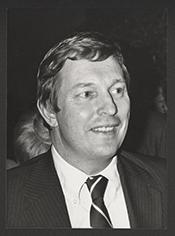
Historical · U.S. House · Missouri · District 8
R. Bailey
Former U.S. Representative · Missouri District 8 · 1981–1983 · Republican
R. Bailey represented Missouri's District 8 in the United States House of Representatives (1981–1983) for the Republican party. The page below collects sourced biographical facts, term history, committee roles, and provenance for Bailey.
Bioguide ID: B000047
Key facts
- Full name
- R. Bailey
- State
- Missouri
- District
- District 8
- Party
- Republican
- House service
- 1981–1983
- First House term
- 1981
- Status
- Left office
- Current term ends
- —
- Born
- 1940
- Bioguide ID
- B000047
- Committee assignments
- —
- Dataset version
- 1.20260605
Biographical narrative
962 words · sourced from the Wikipedia REST extract
Robert Wendell Bailey is a former American politician who served as a U.S. Representative for Missouri's 8th congressional district from 1981 until 1983. A member of the Republican Party, Bailey has had a diverse political career that includes serving in various capacities at both the state and federal levels. His early life, political beginnings, and subsequent career in public service reflect a commitment to his constituents and the Republican ideals he espoused throughout his career.
Early life and career
Wendell Bailey was born on July 30, 1940, in Missouri. He pursued higher education at Southwest Missouri State University, where he earned a degree in Business Administration. During his time at the university, he was affiliated with the Tau Kappa Epsilon fraternity, which is known for fostering leadership and community service among its members. Following his graduation, Bailey entered the business world, establishing himself as an entrepreneur by owning an automobile dealership located in Willow Springs, Missouri. This experience in business likely provided him with insights into the economic concerns of his constituents and shaped his approach to public service.
Bailey's political career began at the local level when he served as the mayor of Willow Springs, his hometown. This role allowed him to engage directly with the community and understand the challenges faced by local residents. His leadership at the municipal level paved the way for his entry into state politics. In 1972, he was elected to the Missouri House of Representatives, marking the beginning of his formal legislative career. He was successful in subsequent elections, securing re-election in 1974, 1976, and 1978, which underscored his popularity and effectiveness as a state legislator. His tenure in the Missouri House provided him with valuable experience in governance and legislative processes, which would later inform his work in Congress.
House tenure
In 1980, Wendell Bailey transitioned to national politics by winning election to the United States House of Representatives. He represented Missouri's 8th congressional district, a position that allowed him to address issues of broader significance at the federal level. However, his congressional career was relatively short-lived. Following the 1980 census, Missouri lost one of its congressional districts, resulting in the elimination of Bailey's 8th District. The majority of his district was merged with the neighboring 4th District, which was represented by Democrat Ike Skelton.
In the subsequent election, Bailey faced Skelton, who had previously held office for two terms. Despite the challenges posed by the redistricting and the Democratic advantage in the newly configured district, Bailey's campaign was notable for its competitiveness. He managed to secure a significant portion of the vote, holding Skelton to 54 percent, which was particularly impressive given that Skelton had previously garnered 60 percent of the vote in his former territory. This electoral contest highlighted Bailey's ability to connect with voters and maintain a strong Republican presence in a shifting political landscape.
After his term in the House ended on January 3, 1983, Bailey continued to be active in Missouri politics. His experience in Congress and his understanding of both state and national issues positioned him well for future political endeavors.
Legislative focus and committees
During his time in the U.S. House of Representatives, Bailey's legislative focus reflected the priorities of his constituents and the Republican Party's platform. While specific details about the bills he sponsored or the committees he served on are not provided, it can be inferred that his background in business and local governance likely influenced his policy interests. As a businessman, he may have been particularly attuned to economic issues, small business concerns, and regulatory matters that affect the business community.
Bailey's experience in the Missouri House of Representatives would have also equipped him with a strong understanding of state-level issues, which he could advocate for at the federal level. His tenure in the state legislature likely informed his approach to federal legislation, as he would have been familiar with the challenges faced by local governments and the needs of his constituents.
After leaving Congress, Bailey's political career continued with a successful bid for the office of Missouri State Treasurer in 1984. He was re-elected to this position in 1988, narrowly defeating future Missouri Governor Bob Holden. His tenure as State Treasurer allowed him to further engage with financial and economic issues, providing oversight of the state's finances and investment strategies.
Bailey's political aspirations did not end with his tenure as State Treasurer. In 1992, he ran for Governor of Missouri but did not secure the nomination, finishing third in the Republican primary. His campaign was notable for his positioning as the only pro-choice candidate in a primary field that included two candidates who were clearly anti-abortion. This stance highlighted his willingness to take a distinct position within the party on a contentious issue.
In subsequent years, Bailey continued to seek public office, narrowly losing a Republican primary for a seat in the Missouri Senate in 1996. He later captured the Republican nomination for lieutenant governor in 2000, although he was ultimately defeated in the general election by Democrat Joe Maxwell.
In the years following his political career, Bailey remained involved in public service. Reports indicated that he was working in the Kansas City, Missouri office of the Small Business Administration, serving as a regional advocate for Missouri and neighboring states, including Iowa, Kansas, and Nebraska. This role allowed him to continue supporting small businesses and advocating for economic development in the region.
Wendell Bailey's political journey reflects a commitment to public service and a dedication to the constituents he represented. From his early days as a local mayor to his time in the U.S. House of Representatives and beyond, his career illustrates the various ways in which he engaged with the political landscape of Missouri and the broader United States.
Notable legislation
Sponsored and co-sponsored legislation for R. Bailey is pending operator curation. The biographical narrative above carries the same provenance trail until per-bill rows are written.
Sources
- [1]https://en.wikipedia.org/wiki/Wendell_BaileyWikipedia · retrieved 2026-06-05
Notable quotes
Sourced quotes for R. Bailey are pending operator curation. Narrative-scope provenance remains attached below.
Sources
- [1]https://en.wikipedia.org/wiki/Wendell_BaileyWikipedia · retrieved 2026-06-05
Key positions
Curated policy positions for R. Bailey are pending operator review. The biographical narrative above carries the same provenance trail until per-topic positions are written.
Sources
- [1]https://en.wikipedia.org/wiki/Wendell_BaileyWikipedia · retrieved 2026-06-05
Terms served
- 1981–1983U.S. House · Term 1 · Republican
Sources & provenance
Every attributable claim above carries a per-section [N] marker that resolves to the corresponding URL below. Each entry records the upstream provider, the canonical URL, and the timestamp at which the source was retrieved by the ingest pipeline.
Key facts
- https://bioguide.congress.gov/search/bio/B000047bioguide · retrieved 2026-06-05
- https://www.govtrack.us/congress/members/401052govtrack · retrieved 2026-06-05
Biographical narrative
- https://en.wikipedia.org/wiki/Wendell_Baileywikipedia · retrieved 2026-06-05
Find your representative
Every U.S. state elects representatives by district. Browse Missouri’s delegation, the full former-representative roster, or explore the role and term length.
Related on The Candidate
- Preceded by Richard Ichord IIEarlier holder of the Missouri District 8 House seat · Democratic.Open
- Succeeded by Jo Ann EmersonLater holder of the Missouri District 8 House seat · Republican.Open
- Anthony IttnerFormer U.S. Representative · Missouri District 1 · RepublicanOpen
- Bill Clay Sr.Former U.S. Representative · Missouri District 1 · DemocraticOpen
- Charles ClarkFormer U.S. Representative · Missouri District 1 · RepublicanOpen
- Clare MageeFormer U.S. Representative · Missouri District 1 · DemocraticOpen