
Historical · U.S. House · Missouri · District 9
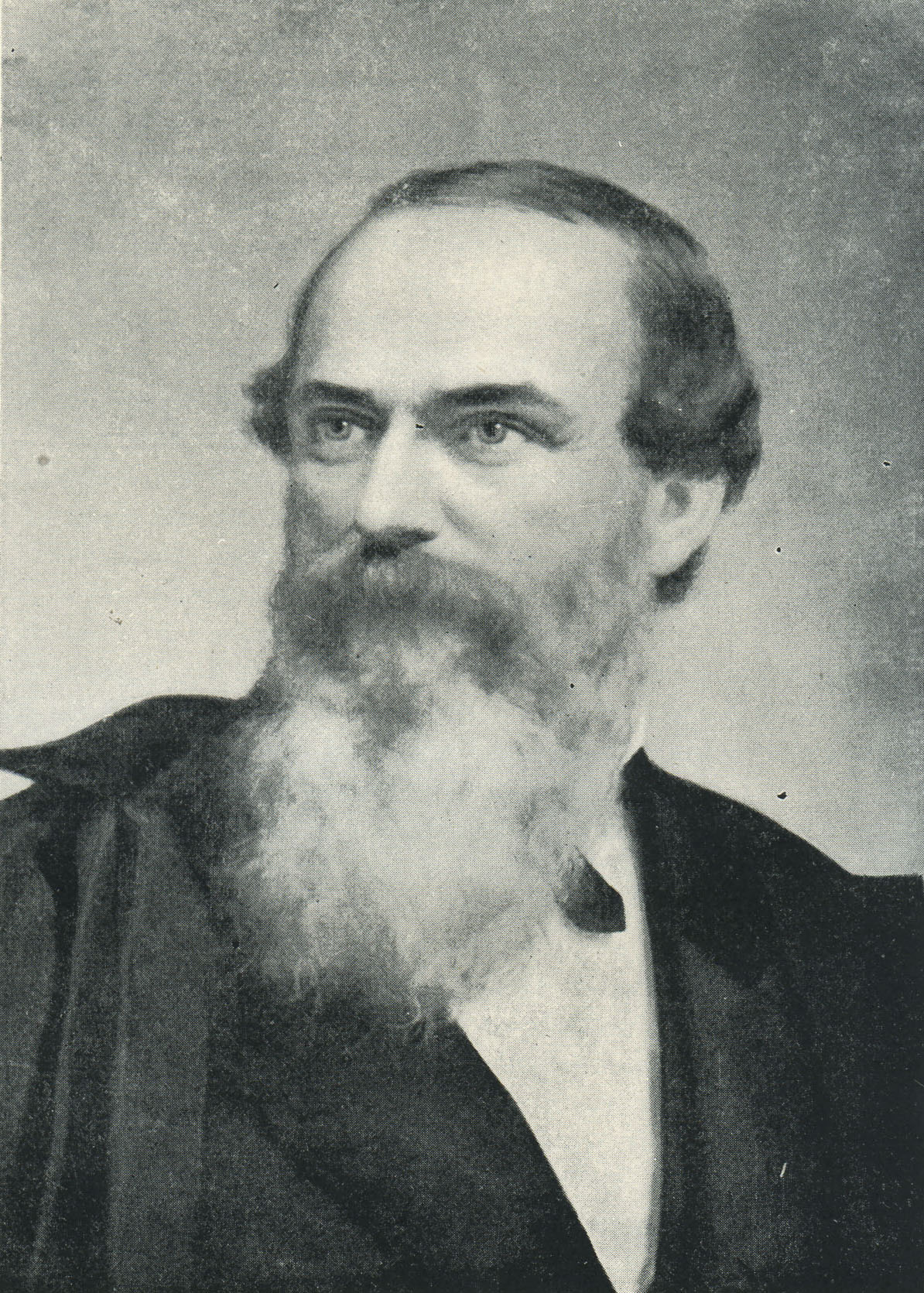
James Rollins
Former U.S. Representative · Missouri District 9 · 1861–1865 · Unionist
James Rollins represented Missouri's District 9 in the United States House of Representatives (1861–1865) for the Unionist party. The page below collects sourced biographical facts, term history, committee roles, and provenance for Rollins.
Bioguide ID: R000412
Key facts
- Full name
- James Rollins
- State
- Missouri
- District
- District 9
- Party
- Unionist
- House service
- 1861–1865
- First House term
- 1861
- Status
- Left office
- Current term ends
- —
- Born
- 1812
- Bioguide ID
- R000412
- Committee assignments
- —
- Dataset version
- 1.20260606
Biographical narrative
837 words · sourced from the Wikipedia REST extract
James Rollins was a prominent 19th-century politician and lawyer from Missouri, who served as a U.S. Representative for Missouri's 9th congressional district. A member of the Unionist Party, Rollins held office during a tumultuous period in American history, marked by the Civil War and significant social changes. He is also recognized for his contributions to education, particularly as a key figure in the establishment of the University of Missouri at Columbia, earning him the title "Father of the University of Missouri." His political career spanned several decades, during which he navigated various political affiliations and played a role in significant legislative developments, including the passage of the Thirteenth Amendment, which abolished slavery in the United States.
Early life and career
James Rollins was born on April 19, 1812, in Richmond, Kentucky, to Anthony Wayne Rollins and Sarah Harris Rodes Rollins. His father was a physician of Scotch-Irish descent, while his mother had English ancestry. Rollins received his early education at the Richmond Academy and later attended Washington College in Pennsylvania, eventually graduating from what is now Indiana University Bloomington in 1830. Shortly after his graduation, the Rollins family moved to Boone County, Missouri.
In Boone County, Rollins began his legal career by reading law in the local offices of Abiel Leonard, who would later become a Missouri state supreme court justice. During this time, he also managed his father's farm. In 1832, he enlisted in the Black Hawk War, where he served as a Major in the volunteer militia. Following the war, Rollins pursued further legal education at Transylvania University in Lexington, Kentucky, graduating in 1834 and subsequently being admitted to the Missouri bar.
Rollins married Mary Elizabeth Hickman in 1837, and the couple had eleven children, seven of whom survived to adulthood. His early political career began as a member of the Whig Party, reflecting his interests in business and resource development. In 1836, he purchased and edited a Whig newspaper, the Columbia Patriot, and attended a railroad convention in St. Louis, where he was tasked with petitioning Congress for land grants to support Missouri's railroad development.
House tenure
Rollins's political career advanced when he was elected to the General Assembly of Missouri in 1838, representing Boone County. He served multiple terms in the Missouri House of Representatives and was also elected to the Missouri Senate in 1846. His political activities included participating as a delegate at the 1844 Whig National Convention, where he helped nominate a presidential candidate. Despite his political involvement, Rollins faced challenges in his aspirations for higher office. He ran unsuccessfully for the governorship of Missouri in 1848 and again in 1857.
As the Whig Party began to dissolve in the early 1850s due to internal divisions over issues such as the Kansas-Nebraska Act, Rollins transitioned through various political affiliations. He initially ran as an independent in his 1857 gubernatorial campaign, supported by a coalition of former Whigs, Democrats, and Know-Nothings, but was narrowly defeated. His political stance was complex; while he was a large slaveholder, he opposed the extension of slavery into new territories and the secession of states from the Union.
Rollins's tenure in the U.S. House of Representatives began in 1861, during a critical period in American history marked by the Civil War. He served two terms in the House, during which he was involved in significant legislative actions. His political alignment during this time reflected the Unionist sentiment prevalent in Missouri, a border state with divided loyalties.
Legislative focus and committees
During his time in Congress, Rollins was an active participant in the legislative process, contributing to discussions and decisions that shaped the nation during and after the Civil War. One of his notable contributions was his support for the Thirteenth Amendment, which sought to abolish slavery in the United States. Rollins changed his vote to support this crucial amendment, reflecting a significant shift in his political views and aligning with the broader movement toward emancipation.
In addition to his legislative work on the Thirteenth Amendment, Rollins's focus included issues related to economic development and the welfare of his constituents in Missouri. His background in law and business informed his approach to legislation, as he sought to promote policies that would benefit the economic interests of his district and the state.
After serving two terms in the House, Rollins's congressional career concluded on March 3, 1865. Following his time in Congress, he continued to be active in Missouri's political and educational spheres. His efforts in establishing the University of Missouri at Columbia were particularly significant, as he played a pivotal role in securing funding and support for the institution, which has since become a major educational establishment in the state.
James Rollins passed away on January 9, 1888. His legacy includes his contributions to both the political landscape of Missouri and the establishment of higher education in the state. His life reflects the complexities of a politician navigating the challenges of a divided nation, as well as the evolving political ideologies of the 19th century.
Notable legislation
Sponsored and co-sponsored legislation for James Rollins is pending operator curation. The biographical narrative above carries the same provenance trail until per-bill rows are written.
Sources
- [1]https://en.wikipedia.org/wiki/James_S._RollinsWikipedia · retrieved 2026-06-06
Notable quotes
Sourced quotes for James Rollins are pending operator curation. Narrative-scope provenance remains attached below.
Sources
- [1]https://en.wikipedia.org/wiki/James_S._RollinsWikipedia · retrieved 2026-06-06
Key positions
Curated policy positions for James Rollins are pending operator review. The biographical narrative above carries the same provenance trail until per-topic positions are written.
Sources
- [1]https://en.wikipedia.org/wiki/James_S._RollinsWikipedia · retrieved 2026-06-06
Terms served
- 1861–1863U.S. House · Term 1 · Constitutional Unionist
- 1863–1865U.S. House · Term 2 · Unionist
Sources & provenance
Every attributable claim above carries a per-section [N] marker that resolves to the corresponding URL below. Each entry records the upstream provider, the canonical URL, and the timestamp at which the source was retrieved by the ingest pipeline.
Key facts
- https://bioguide.congress.gov/search/bio/R000412bioguide · retrieved 2026-06-06
- https://www.govtrack.us/congress/members/409378govtrack · retrieved 2026-06-06
Biographical narrative
- https://en.wikipedia.org/wiki/James_S._Rollinswikipedia · retrieved 2026-06-06
Find your representative
Every U.S. state elects representatives by district. Browse Missouri’s delegation, the full former-representative roster, or explore the role and term length.
Related on The Candidate
- Succeeded by George AndersonLater holder of the Missouri District 9 House seat · Republican.Open
- Anthony IttnerFormer U.S. Representative · Missouri District 1 · RepublicanOpen
- Bill Clay Sr.Former U.S. Representative · Missouri District 1 · DemocraticOpen
- Charles ClarkFormer U.S. Representative · Missouri District 1 · RepublicanOpen
- Clare MageeFormer U.S. Representative · Missouri District 1 · DemocraticOpen
- Representatives from MissouriEvery former U.S. Representative who has represented Missouri.Open