
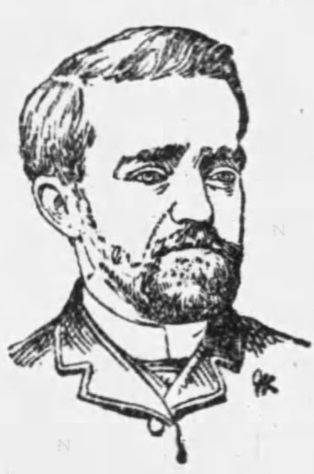
Historical · U.S. House · Missouri · District 9
John Glover
Former U.S. Representative · Missouri District 9 · 1885–1889 · Democratic
John Glover represented Missouri's District 9 in the United States House of Representatives (1885–1889) for the Democratic party. The page below collects sourced biographical facts, term history, committee roles, and provenance for Glover.
Bioguide ID: G000244
Key facts
- Full name
- John Glover
- State
- Missouri
- District
- District 9
- Party
- Democratic
- House service
- 1885–1889
- First House term
- 1885
- Status
- Left office
- Current term ends
- —
- Born
- 1852
- Bioguide ID
- G000244
- Committee assignments
- —
- Dataset version
- 1.20260606
Biographical narrative
846 words · sourced from the Wikipedia REST extract
John Glover was a U.S. Representative from Missouri, serving in the 49th and 50th Congresses from 1885 to 1889. A member of the Democratic Party, Glover's political career was marked by his involvement in local and national issues, particularly during a period of significant change in American politics. His legal background and participation in various committees during his congressional tenure contributed to his role in shaping legislation relevant to his constituents and the nation.
Early life and career
John Glover was born on June 23, 1852, in St. Louis, Missouri. He was the son of Samuel Taylor Glover and Mildred Ann Buckner Glover. Glover received his early education in the public schools of St. Louis before attending Washington University in St. Louis, where he became a member of the Beta Theta Pi fraternity. His academic pursuits laid the groundwork for his future career in law and politics.
After completing his education, Glover studied law and was admitted to the bar, beginning his legal practice at the St. Louis law firm of Glover and Shepley, which included his father as a partner. His legal expertise would later inform his political career. Glover's initial foray into politics began in March 1881 when he was elected to represent the 10th Ward on the St. Louis Democratic Committee. However, his involvement was short-lived, as he did not regularly attend meetings and was removed from the position later that year.
In 1883, Glover gained public attention when he served as part of the defense counsel for Frank James, who was tried for robbery and murder in Gallatin, Missouri. The trial concluded with James's acquittal, further establishing Glover's reputation as a lawyer engaged in high-profile cases.
House tenure
Glover's political career advanced significantly when he was elected as a Democrat to the 49th Congress in 1884. He officially began his first term in the House of Representatives on March 4, 1885. Glover was reelected to the 50th Congress in 1886, serving until March 3, 1889. During his time in Congress, he was a member of the Judiciary Committee and the Committee on Territories, where he contributed to discussions and decisions on legislative matters pertinent to his district and the nation.
His tenure was not without controversy. In 1887, Glover faced a contested reelection when Nathan Frank challenged the results of the previous election. Frank claimed that local election officials had disregarded legally cast ballots in his favor while counting illegal ballots for Glover. The U.S. House Committee on Elections ultimately ruled that Glover was entitled to retain his seat, allowing him to continue his congressional service.
Despite his reelection, Glover chose not to seek renomination in 1888. Instead, he pursued the Democratic nomination for governor of Missouri but was unsuccessful. Following his congressional career, Nathan Frank succeeded him in the House.
Legislative focus and committees
During his time in the U.S. House of Representatives, Glover's legislative focus was shaped by his committee assignments. As a member of the Judiciary Committee, he engaged in discussions related to legal and constitutional issues, which were critical during a time of evolving national policies. His role on the Committee on Territories allowed him to address matters concerning the governance and organization of U.S. territories, reflecting the expansionist sentiments of the era.
Glover's congressional career coincided with significant developments in American society, including debates over civil rights, labor issues, and territorial expansion. Although specific legislative initiatives he championed are not detailed in the available records, his participation in these committees indicates his involvement in key legislative processes that would have impacted his constituents in Missouri and the broader national landscape.
After leaving Congress, Glover returned to St. Louis to continue his legal practice until 1909, when he relocated to Denver, Colorado. His legal career continued, and he became involved in labor issues during the Colorado Labor Wars of 1903 and 1904, where he supported miners in their strikes against mine owners. This involvement demonstrated his ongoing commitment to social justice and labor rights.
Glover's later years were marked by health challenges, leading to his retirement in 1926 due to declining mental faculties. He was subsequently committed to a state hospital in Pueblo, Colorado, where he lived until his death on October 20, 1929. He was interred at Bellefontaine Cemetery in St. Louis.
Glover's personal life included his marriage to Katherine Augusta Patten in February 1887. The couple had two children, a son named Edmund and a daughter named Gladys. Following Katherine's mother's death in 1888, the Glover family became embroiled in a prolonged legal dispute with Katherine's sisters over inheritance matters. This legal battle culminated in a significant Supreme Court ruling in 1897 regarding attorney-client privilege in the context of wills.
John Glover's legacy includes his contributions to Missouri's political landscape and his involvement in significant legal cases that shaped the interpretation of laws and rights. He is also remembered as the namesake of the community of Glover, Missouri. His life reflects the complexities of American political and social issues during the late 19th century, illustrating the intersection of law, politics, and personal challenges.
Notable legislation
Sponsored and co-sponsored legislation for John Glover is pending operator curation. The biographical narrative above carries the same provenance trail until per-bill rows are written.
Sources
- [1]https://en.wikipedia.org/wiki/John_Milton_GloverWikipedia · retrieved 2026-06-06
Notable quotes
Sourced quotes for John Glover are pending operator curation. Narrative-scope provenance remains attached below.
Sources
- [1]https://en.wikipedia.org/wiki/John_Milton_GloverWikipedia · retrieved 2026-06-06
Key positions
Curated policy positions for John Glover are pending operator review. The biographical narrative above carries the same provenance trail until per-topic positions are written.
Sources
- [1]https://en.wikipedia.org/wiki/John_Milton_GloverWikipedia · retrieved 2026-06-06
Terms served
- 1885–1887U.S. House · Term 1 · Democratic
- 1887–1889U.S. House · Term 2 · Democratic
Sources & provenance
Every attributable claim above carries a per-section [N] marker that resolves to the corresponding URL below. Each entry records the upstream provider, the canonical URL, and the timestamp at which the source was retrieved by the ingest pipeline.
Key facts
- https://bioguide.congress.gov/search/bio/G000244bioguide · retrieved 2026-06-06
- https://www.govtrack.us/congress/members/404606govtrack · retrieved 2026-06-06
Biographical narrative
- https://en.wikipedia.org/wiki/John_Milton_Gloverwikipedia · retrieved 2026-06-06
Find your representative
Every U.S. state elects representatives by district. Browse Missouri’s delegation, the full former-representative roster, or explore the role and term length.
Related on The Candidate
- Preceded by James BroadheadEarlier holder of the Missouri District 9 House seat · Democratic.Open
- Succeeded by Nathan FrankLater holder of the Missouri District 9 House seat · Republican.Open
- Anthony IttnerFormer U.S. Representative · Missouri District 1 · RepublicanOpen
- Bill Clay Sr.Former U.S. Representative · Missouri District 1 · DemocraticOpen
- Charles ClarkFormer U.S. Representative · Missouri District 1 · RepublicanOpen
- Clare MageeFormer U.S. Representative · Missouri District 1 · DemocraticOpen