
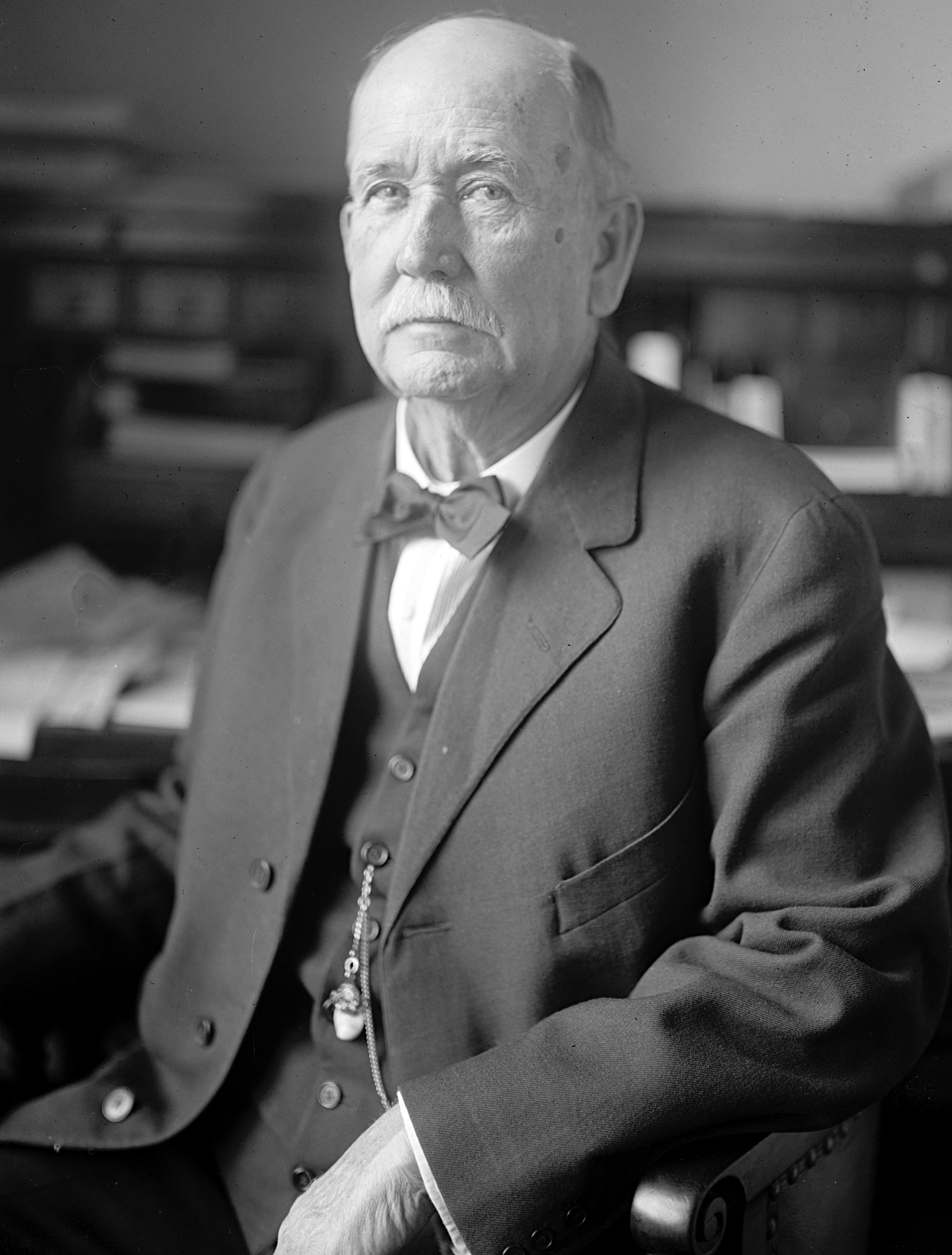
Historical · U.S. House · Missouri · At-Large
Clement Dickinson
Former U.S. Representative · Missouri At-Large · 1909–1935 · Democratic
Clement Dickinson represented Missouri's At-Large in the United States House of Representatives (1909–1935) for the Democratic party. The page below collects sourced biographical facts, term history, committee roles, and provenance for Dickinson.
Bioguide ID: D000316
Key facts
- Full name
- Clement Dickinson
- State
- Missouri
- District
- At-Large
- Party
- Democratic
- House service
- 1909–1935
- First House term
- 1909
- Status
- Left office
- Current term ends
- —
- Born
- 1849
- Bioguide ID
- D000316
- Committee assignments
- —
- Dataset version
- 1.20260606
Biographical narrative
1,041 words · sourced from the Wikipedia REST extract
Clement Dickinson was an American lawyer and politician who served as a U.S. Representative for Missouri. A member of the Democratic Party, he had a long and varied career in public service, spanning several decades and multiple terms in the U.S. House of Representatives. His legislative work and political influence were notable during a time of significant change in American politics and society. Dickinson's tenure in Congress was marked by his involvement in fiscal policy and his commitment to the interests of his constituents in Missouri.
Early life and career
Clement Cabell Dickinson was born on December 6, 1849, in the courthouse of Prince Edward County, Virginia. He was the son of Asa Dupuy Dickinson and Sallie Cabell Dickinson (née Irvine). His early education was conducted through private tutors and at local schools, which provided him with a solid foundation for his future endeavors. In June 1869, he graduated from Hampden-Sydney College, a liberal arts college in Virginia known for its emphasis on the education of young men.
Following his graduation, Dickinson embarked on a career in education, teaching in various schools across Kentucky and Virginia. His professional journey eventually led him to Clinton, Missouri, where he moved in September 1872. During his time as an educator, he also pursued the study of law, which culminated in his admission to the bar in 1875. This transition marked the beginning of his legal career, which would later intertwine with his political aspirations.
From 1877 to 1882, Dickinson served as the prosecuting attorney for Henry County, Missouri, a role that allowed him to gain valuable experience in the legal system and establish a reputation within the community. Following this position, he served as the city attorney for Clinton from 1882 to 1884. His legal background and involvement in local governance laid the groundwork for his entry into state politics.
In the early 1900s, Dickinson's political career began to take shape as he was elected to represent Henry County in the Missouri House of Representatives from 1900 to 1902. His legislative experience continued to grow when he was elected to the Missouri Senate, where he represented the 16th Senate district from 1902 to 1906. During this time, he was involved in various legislative initiatives and gained further recognition as a dedicated public servant.
In addition to his legislative roles, Dickinson also served as an administrator of the State Normal School from 1907 to 1913, contributing to the education sector in Missouri. His diverse experiences in education, law, and politics positioned him as a prominent figure in the state, ultimately leading to his candidacy for the U.S. House of Representatives.
House tenure
Clement Dickinson's first term in the United States House of Representatives began on February 1, 1910, when he filled the unexpired term of David A. De Armond, who had passed away. Dickinson represented Missouri's 6th congressional district during his initial tenure, which lasted until March 3, 1921. His time in Congress was characterized by a commitment to his constituents and a focus on fiscal responsibility.
Throughout his congressional career, Dickinson served a total of eleven terms in the House, with several nonconsecutive terms following his initial service. After his first term, he returned to Congress for additional terms from March 4, 1923, to March 3, 1929; from March 4, 1931, to 1933; and finally from 1933 until January 3, 1935. By the time he concluded his service, he had become the oldest member of Congress, although some newspapers mistakenly referred to him as the Dean of the House.
During his tenure, Dickinson was known for his fiscal policy positions, which were significant during a time of economic challenges in the United States. He was a member of the House Committee on Ways and Means, where he played a role in shaping legislation related to taxation and government spending. His voting record included opposition to toll fees for ships using the Panama Canal, reflecting his stance on issues that affected commerce and trade. Additionally, he voted against the single tax, a proposal that aimed to simplify the tax system by taxing only land value.
Dickinson's legislative contributions were informed by his extensive background in law and his understanding of the needs of his constituents. His experience in both state and local government provided him with insights into the challenges faced by his district, which he sought to address through his work in Congress.
Legislative focus and committees
Throughout his time in the House of Representatives, Clement Dickinson's legislative focus was primarily on fiscal policy and issues related to taxation. As a member of the House Committee on Ways and Means, he was involved in discussions and decisions that shaped the financial landscape of the nation. His commitment to fiscal responsibility was evident in his voting patterns and public statements regarding economic matters.
Dickinson's opposition to toll fees for ships in the Panama Canal highlighted his concern for the economic implications of such policies on trade and transportation. He recognized the importance of maintaining accessible trade routes for American commerce and sought to protect the interests of his constituents who relied on these channels for economic activity.
In addition to his work on fiscal matters, Dickinson's legislative efforts were influenced by his legal background and his experience in state politics. His understanding of the law and governance allowed him to navigate complex legislative issues effectively. He was known for his ability to engage with colleagues across party lines, fostering a collaborative environment in the House.
After leaving Congress in 1935, Dickinson returned to his legal practice in Clinton, Missouri. His career in public service had spanned several decades, and he continued to be involved in the community and legal affairs. He married Matilda "Mattie" Emily Parks, and together they had three children, including Mary Cabell Dickinson, who later became the wife of an academic administrator.
Clement Dickinson passed away on January 14, 1938, at the age of 88 in Clinton, Missouri. His contributions to American politics and law left a lasting impact on his community and the state of Missouri. He is buried at Englewood Cemetery, and his legacy as a dedicated public servant is remembered in the context of the significant historical events that shaped the United States during his lifetime.
Notable legislation
Sponsored and co-sponsored legislation for Clement Dickinson is pending operator curation. The biographical narrative above carries the same provenance trail until per-bill rows are written.
Sources
- [1]https://en.wikipedia.org/wiki/Clement_C._DickinsonWikipedia · retrieved 2026-06-06
Notable quotes
Sourced quotes for Clement Dickinson are pending operator curation. Narrative-scope provenance remains attached below.
Sources
- [1]https://en.wikipedia.org/wiki/Clement_C._DickinsonWikipedia · retrieved 2026-06-06
Key positions
Curated policy positions for Clement Dickinson are pending operator review. The biographical narrative above carries the same provenance trail until per-topic positions are written.
Sources
- [1]https://en.wikipedia.org/wiki/Clement_C._DickinsonWikipedia · retrieved 2026-06-06
Terms served
- 1909–1911U.S. House · Term 1 · Democratic
- 1911–1913U.S. House · Term 2 · Democratic
- 1913–1915U.S. House · Term 3 · Democratic
- 1915–1917U.S. House · Term 4 · Democratic
- 1917–1919U.S. House · Term 5 · Democratic
- 1919–1921U.S. House · Term 6 · Democratic
- 1923–1925U.S. House · Term 7 · Democratic
- 1925–1927U.S. House · Term 8 · Democratic
- 1927–1929U.S. House · Term 9 · Democratic
- 1931–1933U.S. House · Term 10 · Democratic
- 1933–1935U.S. House · Term 11 · Democratic
Sources & provenance
Every attributable claim above carries a per-section [N] marker that resolves to the corresponding URL below. Each entry records the upstream provider, the canonical URL, and the timestamp at which the source was retrieved by the ingest pipeline.
Key facts
- https://bioguide.congress.gov/search/bio/D000316bioguide · retrieved 2026-06-06
- https://www.govtrack.us/congress/members/403436govtrack · retrieved 2026-06-06
Biographical narrative
- https://en.wikipedia.org/wiki/Clement_C._Dickinsonwikipedia · retrieved 2026-06-06
Find your representative
Every U.S. state elects representatives by district. Browse Missouri’s delegation, the full former-representative roster, or explore the role and term length.
Related on The Candidate
- Preceded by James BurnesEarlier holder of the Missouri At-Large House seat · Democratic.Open
- Anthony IttnerFormer U.S. Representative · Missouri District 1 · RepublicanOpen
- Bill Clay Sr.Former U.S. Representative · Missouri District 1 · DemocraticOpen
- Charles ClarkFormer U.S. Representative · Missouri District 1 · RepublicanOpen
- Clare MageeFormer U.S. Representative · Missouri District 1 · DemocraticOpen
- Democratic PartyFederal candidates and office holders on the Democratic line.Open