
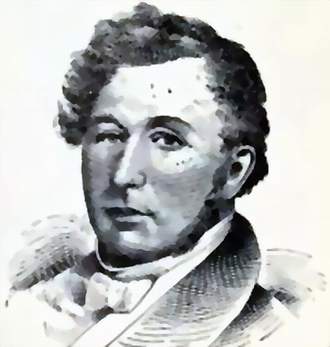
Historical · U.S. House · Missouri · At-Large
John Miller
Former U.S. Representative · Missouri At-Large · 1837–1843 · Democratic
John Miller represented Missouri's At-Large in the United States House of Representatives (1837–1843) for the Democratic party. The page below collects sourced biographical facts, term history, committee roles, and provenance for Miller.
Bioguide ID: M000735
Key facts
- Full name
- John Miller
- State
- Missouri
- District
- At-Large
- Party
- Democratic
- House service
- 1837–1843
- First House term
- 1837
- Status
- Left office
- Current term ends
- —
- Born
- 1781
- Bioguide ID
- M000735
- Committee assignments
- —
- Dataset version
- 1.20260606
Biographical narrative
905 words · sourced from the Wikipedia REST extract
John Miller was an American politician and military veteran who served as a U.S. Representative from Missouri and was the fourth Governor of Missouri. A member of the Democratic Party, he held office in the House of Representatives from 1837 until 1843, following a notable career that included significant military service during the War of 1812 and a pivotal role in Missouri's early political landscape. His tenure in public service was marked by his advocacy for education and infrastructure development in the state.
Early life and career
John Miller was born on November 25, 1781, in the vicinity of Martinsburg, Virginia, which is now part of West Virginia. Details about his early life and family background are scarce, but it is known that he moved to Ohio in 1803. In Ohio, he embarked on a career in journalism, becoming the publisher of the Western Herald. His involvement in the newspaper industry not only established his reputation but also allowed him to engage actively in local politics. Through his work, Miller gained influence and was appointed as a brigadier general in the Ohio militia, a position that would later serve him well during his military service.
With the onset of the War of 1812, Miller joined the U.S. Army in March 1812. Initially serving as a lieutenant colonel in the 17th Infantry Regiment, he was promoted to colonel in July 1812 and took command of the 19th Infantry Regiment. His leadership was particularly notable during the siege of Fort Meigs, where he led a contingent of troops in a critical engagement against British forces. Although his unit faced heavy casualties, Miller's actions were instrumental in distracting the besieging forces, allowing for reinforcements to reach the fort. After the war, he continued his military career, overseeing the northern frontier and later commanding troops during negotiations with Native American leaders in the Missouri Territory.
In 1818, Miller transitioned to a civilian role when he was appointed as the Registrar of the Howard County United States General Land Office in Franklin, Missouri. This position was significant, as Franklin was a key political hub in Missouri at the time. Miller's connections in this role helped him forge alliances with influential political figures, leading to his involvement with the "Central Clique," a group that would dominate Missouri's Democratic politics for years.
House tenure
Miller's political career advanced significantly when he was elected as the fourth Governor of Missouri, serving from 1826 to 1832. His governorship was marked by efforts to relocate the state capital from St. Charles to Jefferson City, which he believed would better serve the state's needs. He also advocated for the establishment of a state prison in Jefferson City, reinforcing its status as the permanent seat of government. During his time as governor, Miller faced challenges related to Native American relations, including conflicts that arose during his second term.
After completing his governorship, Miller was elected to the United States House of Representatives, where he served three consecutive terms from 1837 to 1843. His election to Congress came during a period of significant political change in the United States, as the Democratic Party was solidifying its influence. Miller's experience in state politics and his connections within the party likely contributed to his successful election to the House.
During his time in Congress, Miller participated in various legislative discussions and decisions that shaped the direction of national policy. His background in both military and state governance provided him with a unique perspective on issues facing the nation. He was involved in the legislative process during a time when the United States was expanding westward, and his experiences in the military and as governor informed his views on matters related to land and territorial governance.
Legislative focus and committees
Throughout his congressional tenure, John Miller focused on issues pertinent to his constituents and the broader national landscape. His military background likely influenced his perspectives on defense and veterans' affairs, as well as his understanding of the complexities of governance in a rapidly expanding nation. While specific legislative achievements during his time in Congress are not detailed, it can be inferred that his experiences as a military leader and governor shaped his contributions to discussions around infrastructure, education, and public welfare.
Miller's commitment to education was evident during his governorship, where he advocated for the use of funds from land sales to support public education initiatives. This advocacy laid the groundwork for the eventual establishment of the University of Missouri in 1839, reflecting his belief in the importance of education for the state's future. His legislative priorities in Congress may have included similar themes, as the nation grappled with the challenges of growth and development.
Miller's time in the House of Representatives concluded on March 3, 1843, marking the end of his formal political career. After leaving Congress, he continued to engage with the community and remained a respected figure in Missouri politics. His contributions to the state and the nation were shaped by his diverse experiences as a soldier, journalist, and public servant, leaving a legacy that would influence future generations.
John Miller passed away on March 18, 1846, leaving behind a complex legacy as a military leader, governor, and congressman. His life and career reflect the evolving landscape of American politics during the early 19th century, characterized by the interplay of local and national interests, as well as the challenges of governance in a growing nation.
Notable legislation
Sponsored and co-sponsored legislation for John Miller is pending operator curation. The biographical narrative above carries the same provenance trail until per-bill rows are written.
Sources
- [1]https://en.wikipedia.org/wiki/John_Miller_(Missouri_politician)Wikipedia · retrieved 2026-06-06
Notable quotes
Sourced quotes for John Miller are pending operator curation. Narrative-scope provenance remains attached below.
Sources
- [1]https://en.wikipedia.org/wiki/John_Miller_(Missouri_politician)Wikipedia · retrieved 2026-06-06
Key positions
Curated policy positions for John Miller are pending operator review. The biographical narrative above carries the same provenance trail until per-topic positions are written.
Sources
- [1]https://en.wikipedia.org/wiki/John_Miller_(Missouri_politician)Wikipedia · retrieved 2026-06-06
Terms served
- 1837–1839U.S. House · Term 1 · Democratic
- 1839–1841U.S. House · Term 2 · Democratic
- 1841–1843U.S. House · Term 3 · Democratic
Sources & provenance
Every attributable claim above carries a per-section [N] marker that resolves to the corresponding URL below. Each entry records the upstream provider, the canonical URL, and the timestamp at which the source was retrieved by the ingest pipeline.
Key facts
- https://bioguide.congress.gov/search/bio/M000735bioguide · retrieved 2026-06-06
- https://www.govtrack.us/congress/members/407715govtrack · retrieved 2026-06-06
Biographical narrative
- https://en.wikipedia.org/wiki/John_Miller_(Missouri_politician)wikipedia · retrieved 2026-06-06
Find your representative
Every U.S. state elects representatives by district. Browse Missouri’s delegation, the full former-representative roster, or explore the role and term length.
Related on The Candidate
- Preceded by William AshleyEarlier holder of the Missouri At-Large House seat · Jacksonian.Open
- Succeeded by Gustavus BowerLater holder of the Missouri At-Large House seat · Democratic.Open
- Anthony IttnerFormer U.S. Representative · Missouri District 1 · RepublicanOpen
- Bill Clay Sr.Former U.S. Representative · Missouri District 1 · DemocraticOpen
- Charles ClarkFormer U.S. Representative · Missouri District 1 · RepublicanOpen
- Clare MageeFormer U.S. Representative · Missouri District 1 · DemocraticOpen