
Historical · U.S. House · Missouri · At-Large
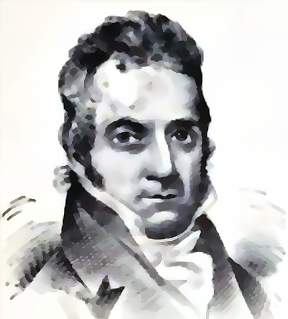
Rufus Easton
Former U.S. Representative · Missouri At-Large · 1813–1817
Rufus Easton represented Missouri's At-Large in the United States House of Representatives (1813–1817). The page below collects sourced biographical facts, term history, committee roles, and provenance for Easton.
Bioguide ID: E000022
Key facts
- Full name
- Rufus Easton
- State
- Missouri
- District
- At-Large
- Party
- —
- House service
- 1813–1817
- First House term
- 1813
- Status
- Left office
- Current term ends
- —
- Born
- 1774
- Bioguide ID
- E000022
- Committee assignments
- —
- Dataset version
- 1.20260606
Biographical narrative
1,007 words · sourced from the Wikipedia REST extract
Rufus Easton was an American attorney and politician who served as a U.S. Representative for the Missouri Territory, playing a significant role in the early governance of the region prior to its statehood. He was also a prominent figure in the establishment of Alton, Illinois, and contributed to the development of postal services in St. Louis. Easton's political career was marked by his involvement in various legal and governmental positions, as well as his engagement in local land speculation and banking.
Early life and career
Rufus Easton was born on May 4, 1774, in Washington, Litchfield County, Connecticut. He was the son of Joseph and Mehitable (Baker) Easton. Easton pursued a legal education under the tutelage of Ephraim Kirby, a notable figure in the legal community of Litchfield County. After completing his studies, he relocated to Rome, New York, where he established a law practice. In 1799, he married Alby, and the couple subsequently moved to the Indiana Territory in 1803, settling briefly in Vincennes.
While in Vincennes, Easton formed friendships with prominent local figures Edward Hempstead and John Scott. These relationships proved beneficial when he joined William Henry Harrison's expedition aimed at establishing a territorial government in St. Louis, which was then part of the District of Louisiana, in 1804. This expedition marked the beginning of Easton's long-term involvement in the governance and development of the region.
In 1815, Easton purchased land near the Mississippi River and founded the town of Alton, Illinois, naming it after his firstborn son, Alton Rufus Easton. Alton is situated at the confluence of the Mississippi and Missouri rivers, an area historically significant as the launch point for the Lewis and Clark Expedition. Despite his efforts to establish the town, Easton faced financial difficulties due to land speculation, which plagued him for the remainder of his life.
House tenure
Rufus Easton's political career began in earnest when he received two federal appointments from President Thomas Jefferson shortly after his arrival in St. Louis. He was appointed as a Territorial Judge for the United States territorial court and also became the first Postmaster of St. Louis in 1805. His tenure in these roles coincided with a tumultuous period in the western United States, marked by political intrigue and the Burr Conspiracy. Although Easton had correspondence with Aaron Burr, he denied any involvement in Burr's conspiratorial activities and ultimately reported Burr's plot to President Jefferson. This action led to a series of retaliatory measures against Easton, including charges of official misconduct that resulted in his removal from the bench in February 1806.
Despite these challenges, Easton continued his legal practice and postmaster duties, making significant contributions to the postal system in St. Louis. He is noted for hand-writing the first St. Louis postmark on April 21, 1810, and for overseeing the construction of the city's first post office building. Easton served as postmaster until January 1815, during which time he also held a commission as a Colonel in the local militia, although he was not actively involved in the War of 1812.
In November 1812, the first territorial legislature was elected, along with a non-voting delegate to the U.S. Congress. Easton initially ran for this delegate position but was defeated by Edward Hempstead. He shifted his focus to banking, becoming a commissioner of the Bank of St. Louis in 1813 and later serving as its director in 1818. However, the Panic of 1819 severely impacted the bank, leading to its closure within a year.
Easton successfully ran for the position of territorial delegate to Congress in September 1814. During his term, he was active in addressing various issues pertinent to the Missouri Territory, including public land sales, the development of lead mines in Washington County, and land grants for war veterans. He was instrumental in securing funding for the establishment of fourteen additional post offices in the territory. Notably, Easton became the first Congressional sponsor of federal disaster aid, advocating for assistance to victims of the New Madrid earthquakes.
After serving his term, Easton faced electoral defeat in 1816 against John Scott. His political career in the House of Representatives concluded with his last term ending on March 3, 1817.
Legislative focus and committees
During his time in the U.S. House of Representatives, Rufus Easton focused on several key areas that were vital to the development of the Missouri Territory. His legislative efforts included advocating for the sale of public lands, which was crucial for the economic growth of the region. He recognized the importance of land ownership and development in fostering a stable and prosperous community.
Easton also took a keen interest in the lead mining industry, particularly in Washington County, which was an emerging sector in the territory's economy. By supporting legislation that facilitated mining operations, he aimed to enhance the economic prospects of the region and provide opportunities for its residents.
Another significant aspect of Easton's legislative agenda was his commitment to veterans' affairs. He worked on measures to grant lands to war veterans, recognizing their service and the sacrifices they made for the country. This focus on veterans' rights reflected a broader national sentiment of the time, as many regions sought to honor those who had served in the military.
Easton's efforts to expand postal services in the Missouri Territory were also noteworthy. By securing funding for additional post offices, he aimed to improve communication and connectivity within the territory, which was essential for both economic and social development. His role as a former postmaster provided him with unique insights into the needs of the community regarding postal services.
In summary, Rufus Easton's tenure in the U.S. House of Representatives was characterized by his dedication to addressing the pressing needs of the Missouri Territory. His legislative focus on land sales, mining, veterans' affairs, and postal services underscored his commitment to fostering growth and stability in the region. Although his political career was relatively brief, Easton's contributions to the early governance of Missouri and his involvement in local development initiatives left a lasting impact on the area.
Notable legislation
Sponsored and co-sponsored legislation for Rufus Easton is pending operator curation. The biographical narrative above carries the same provenance trail until per-bill rows are written.
Sources
- [1]https://en.wikipedia.org/wiki/Rufus_EastonWikipedia · retrieved 2026-06-06
Notable quotes
Sourced quotes for Rufus Easton are pending operator curation. Narrative-scope provenance remains attached below.
Sources
- [1]https://en.wikipedia.org/wiki/Rufus_EastonWikipedia · retrieved 2026-06-06
Key positions
Curated policy positions for Rufus Easton are pending operator review. The biographical narrative above carries the same provenance trail until per-topic positions are written.
Sources
- [1]https://en.wikipedia.org/wiki/Rufus_EastonWikipedia · retrieved 2026-06-06
Terms served
- 1813–1815U.S. House · Term 1
- 1815–1817U.S. House · Term 2
Sources & provenance
Every attributable claim above carries a per-section [N] marker that resolves to the corresponding URL below. Each entry records the upstream provider, the canonical URL, and the timestamp at which the source was retrieved by the ingest pipeline.
Key facts
- https://bioguide.congress.gov/search/bio/E000022bioguide · retrieved 2026-06-06
- https://www.govtrack.us/congress/members/403718govtrack · retrieved 2026-06-06
Biographical narrative
- https://en.wikipedia.org/wiki/Rufus_Eastonwikipedia · retrieved 2026-06-06
Find your representative
Every U.S. state elects representatives by district. Browse Missouri’s delegation, the full former-representative roster, or explore the role and term length.
Related on The Candidate
- Succeeded by William AshleyLater holder of the Missouri At-Large House seat · Jacksonian.Open
- Anthony IttnerFormer U.S. Representative · Missouri District 1 · RepublicanOpen
- Bill Clay Sr.Former U.S. Representative · Missouri District 1 · DemocraticOpen
- Charles ClarkFormer U.S. Representative · Missouri District 1 · RepublicanOpen
- Clare MageeFormer U.S. Representative · Missouri District 1 · DemocraticOpen
- Representatives from MissouriEvery former U.S. Representative who has represented Missouri.Open