
Historical · U.S. House · Montana · District 1
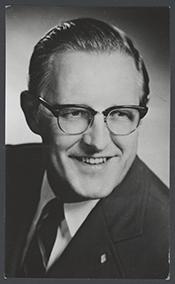
Dick Shoup
Former U.S. Representative · Montana District 1 · 1971–1975 · Republican
Dick Shoup represented Montana's District 1 in the United States House of Representatives (1971–1975) for the Republican party. The page below collects sourced biographical facts, term history, committee roles, and provenance for Shoup.
Bioguide ID: S000383
Key facts
- Full name
- Dick Shoup
- State
- Montana
- District
- District 1
- Party
- Republican
- House service
- 1971–1975
- First House term
- 1971
- Status
- Left office
- Current term ends
- —
- Born
- 1923
- Bioguide ID
- S000383
- Committee assignments
- —
- Dataset version
- 1.20260605
Biographical narrative
942 words · sourced from the Wikipedia REST extract
Richard Gardner "Dick" Shoup was a U.S. Representative from Montana, serving in the House of Representatives from 1971 to 1975. A member of the Republican Party, Shoup represented Montana's 1st congressional district during his time in office. His political career was preceded by a diverse background that included military service, local government roles, and business ownership. Shoup's legislative focus included issues such as cancer research, veterans' affairs, energy development, and agricultural product labeling.
Early life and career
Dick Shoup was born on November 29, 1923, in Salmon, Idaho. He grew up in the region and attended public schools in Salmon. After completing his secondary education, Shoup pursued higher education at the University of Montana in Missoula, where he earned a Bachelor of Science degree in 1950. His academic background laid the foundation for his later endeavors in both business and public service.
Shoup's early career was marked by military service. He enlisted in the United States Army during World War II, serving in the European Theater as part of the Field Artillery from 1943 to 1946. Following his service in World War II, he continued his military commitment by participating in the Korean War from 1951 to 1952. This military experience contributed to his understanding of national issues, particularly those affecting veterans.
After returning from military service, Shoup transitioned into the business sector. He worked in the agriculture service department of Montana Flour Mills from 1953 to 1954. Subsequently, he became the owner-operator of a laundry and dry cleaning business, a role he maintained from 1954 until 1967. This entrepreneurial experience provided him with insights into small business operations and the challenges faced by local enterprises.
Shoup's entry into politics began at the local level. He was elected as an alderman on the Missoula City Council, serving from 1963 to 1967. During this time, he also held the position of president of the council from 1965 to 1967. His leadership in local government paved the way for his subsequent election as the mayor of Missoula, a role he occupied from 1967 to 1970. In addition to his mayoral duties, Shoup was involved in various civic activities, including serving on the Governor's Crime Commission and the Montana League of Cities and Towns.
House tenure
Shoup's political career advanced to the national stage when he was elected to the U.S. House of Representatives as a Republican. He served in the Ninety-second and Ninety-third Congresses from January 3, 1971, to January 3, 1975. During his time in Congress, Shoup was involved in a range of legislative activities and represented the interests of his constituents in Montana's 1st congressional district.
His tenure in the House was characterized by a focus on several key issues. Shoup was particularly concerned with the Conquest of Cancer Act, which aimed to enhance research and funding for cancer treatment and prevention. He also advocated for the rights and recognition of soldiers who were missing in action during the Vietnam War, reflecting his commitment to veterans' affairs and military families. Additionally, Shoup was engaged in discussions around energy development, recognizing the importance of energy resources for the state of Montana and the nation.
Another significant aspect of Shoup's legislative agenda was the proper labeling of beef products. This issue was particularly relevant to Montana, a state with a strong agricultural sector. Shoup's efforts in this area aimed to ensure transparency and consumer protection in the food industry.
Despite his active involvement in Congress, Shoup's bid for reelection in 1974 was unsuccessful, marking the end of his congressional career. He was unable to secure a position in the Ninety-fourth Congress, concluding his time in federal office on January 3, 1975.
Legislative focus and committees
During his time in the House of Representatives, Dick Shoup served on various committees that aligned with his legislative interests and the needs of his constituents. His focus on health-related issues, particularly cancer research, was reflected in his support for legislation aimed at enhancing medical research and treatment options. The Conquest of Cancer Act was a central piece of his legislative agenda, highlighting his commitment to addressing critical health challenges.
Shoup's advocacy for veterans was another defining aspect of his congressional tenure. His efforts to address the concerns of soldiers missing in action during the Vietnam War underscored his dedication to military families and veterans' rights. This focus resonated with many constituents who valued the sacrifices made by service members.
In addition to health and veterans' issues, Shoup's interest in energy development was significant, given Montana's natural resources. He recognized the potential for energy production in the state and sought to promote policies that would benefit both the economy and the environment. His engagement in discussions around energy policy reflected broader national conversations about energy independence and resource management.
Agricultural concerns were also prominent in Shoup's legislative focus. His advocacy for proper labeling of beef products was indicative of his commitment to the agricultural community in Montana. This issue was particularly relevant to the state's economy, which relied heavily on agriculture and livestock production. By addressing labeling practices, Shoup aimed to protect consumers and support local farmers.
Following his congressional career, Shoup continued to be active in various capacities. He served as a director of the Union Pacific Railroad from 1975 to 1984, contributing his experience in public service and business to the transportation sector. Shoup passed away on November 25, 1995, leaving behind a legacy of public service that spanned local, state, and national levels. His contributions to Montana and the United States reflect a commitment to addressing the needs of his constituents and advocating for important issues during a transformative period in American history.
Notable legislation
Sponsored and co-sponsored legislation for Dick Shoup is pending operator curation. The biographical narrative above carries the same provenance trail until per-bill rows are written.
Sources
- [1]https://en.wikipedia.org/wiki/Richard_G._ShoupWikipedia · retrieved 2026-06-05
Notable quotes
Sourced quotes for Dick Shoup are pending operator curation. Narrative-scope provenance remains attached below.
Sources
- [1]https://en.wikipedia.org/wiki/Richard_G._ShoupWikipedia · retrieved 2026-06-05
Key positions
Curated policy positions for Dick Shoup are pending operator review. The biographical narrative above carries the same provenance trail until per-topic positions are written.
Sources
- [1]https://en.wikipedia.org/wiki/Richard_G._ShoupWikipedia · retrieved 2026-06-05
Terms served
- 1971–1973U.S. House · Term 1 · Republican
- 1973–1975U.S. House · Term 2 · Republican
Sources & provenance
Every attributable claim above carries a per-section [N] marker that resolves to the corresponding URL below. Each entry records the upstream provider, the canonical URL, and the timestamp at which the source was retrieved by the ingest pipeline.
Key facts
- https://bioguide.congress.gov/search/bio/S000383bioguide · retrieved 2026-06-05
- https://www.govtrack.us/congress/members/409877govtrack · retrieved 2026-06-05
Biographical narrative
- https://en.wikipedia.org/wiki/Richard_G._Shoupwikipedia · retrieved 2026-06-05
Find your representative
Every U.S. state elects representatives by district. Browse Montana’s delegation, the full former-representative roster, or explore the role and term length.
Related on The Candidate
- Preceded by Arnold OlsenEarlier holder of the Montana District 1 House seat · Democratic.Open
- Succeeded by John WilliamsLater holder of the Montana District 1 House seat · Democratic.Open
- Albert CampbellFormer U.S. Representative · Montana District 1 · DemocraticOpen
- Caldwell EdwardsFormer U.S. Representative · Montana District 1 · PopulistOpen
- Charles HartmanFormer U.S. Representative · Montana District 1 · Silver RepublicanOpen
- Republican PartyFederal candidates and office holders on the Republican line.Open