
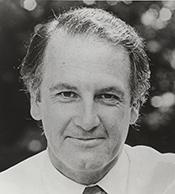
Historical · U.S. House · Montana · District 1
John Williams
Former U.S. Representative · Montana District 1 · 1979–1997 · Democratic
John Williams represented Montana's District 1 in the United States House of Representatives (1979–1997) for the Democratic party. The page below collects sourced biographical facts, term history, committee roles, and provenance for Williams.
Bioguide ID: W000520
Key facts
- Full name
- John Williams
- State
- Montana
- District
- District 1
- Party
- Democratic
- House service
- 1979–1997
- First House term
- 1979
- Status
- Left office
- Current term ends
- —
- Born
- 1937
- Bioguide ID
- W000520
- Committee assignments
- —
- Dataset version
- 1.20260605
Biographical narrative
904 words · sourced from the Wikipedia REST extract
Pat Williams is a former U.S. Representative who served Montana's 1st congressional district from 1979 until 1997. A member of the Democratic Party, Williams is recognized for being Montana's longest-serving Congressman. His political career is marked by significant involvement in arts funding and education, as well as various legislative initiatives that shaped his time in office.
Early life and career
Pat Williams was born on October 30, 1937, in Helena, Montana. He pursued higher education at several institutions, including the University of Montana in Missoula, William Jewell College, and the University of Denver, where he earned a Bachelor of Arts degree. His early career included service in the National Guard, where he was active from 1961 to 1969 in both Colorado and Montana. In addition to his military service, Williams worked as a teacher in Butte, Montana, which contributed to his understanding of educational issues that would later inform his legislative priorities.
Williams's political career began in 1966 when he was elected to the Montana House of Representatives, representing District 23 in Silver Bow County. He successfully won reelection in 1968, demonstrating his ability to connect with constituents. Following his tenure in the state legislature, he served as the executive assistant to U.S. Representative John Melcher from 1969 to 1971. His involvement in state politics continued as he was appointed to the Governor's Employment and Training Council from 1972 to 1978 and participated in the Montana Reapportionment Commission from 1972 to 1973.
In the early 1970s, Williams sought to elevate his political career by running for the Democratic nomination for Montana's 1st District in 1974. However, he was unsuccessful in the primary against Max Baucus, who later became a U.S. Senator. After Baucus announced his retirement in 1978 to pursue a Senate seat, Williams capitalized on the opportunity and won the Democratic primary against Dorothy Bradley. He subsequently defeated Republican candidate Jim Waltermire in the general election, marking the beginning of his long tenure in the U.S. House of Representatives.
House tenure
Pat Williams began his first term in the U.S. House of Representatives on January 3, 1979. Over the course of his nine terms in office, he became known for his advocacy on various issues, particularly those related to the arts and education. His approach to governance was characterized by a commitment to public service and a focus on the needs of his constituents in Montana.
Throughout his time in Congress, Williams was involved in numerous legislative initiatives and served on various committees. His role in the House allowed him to influence policy in areas that were important to his district and the nation. Williams's tenure was marked by a dedication to addressing the challenges faced by rural communities, as well as advocating for federal support for the arts.
In addition to his legislative work, Williams was known for his grassroots campaigning style, which included extensive door-to-door outreach. This approach helped him maintain a strong connection with voters and contributed to his electoral success over the years. His ability to engage with constituents and address their concerns was a hallmark of his political career.
Williams's time in the House came to an end on January 3, 1997, after he chose not to seek reelection. His departure marked the conclusion of a significant chapter in Montana's political history, as he had become a prominent figure in the state's representation at the national level.
Legislative focus and committees
During his time in Congress, Pat Williams was particularly noted for his advocacy for the National Endowment for the Arts (NEA). His support for federal arts funding became a defining aspect of his legislative legacy. Williams was a vocal champion for the NEA during a period of intense debate over federal support for the arts, particularly during the Culture Wars of the late 1980s and early 1990s.
As the chair of the House Education and Labor's Postsecondary Education subcommittee, Williams played a crucial role in overseeing the reauthorization of the NEA. He was involved in negotiations surrounding controversial artworks that had received NEA funding, which sparked significant public outcry and political backlash. In response to these challenges, Williams worked to develop a compromise bill aimed at restructuring the NEA's grant-making process while ensuring continued federal support for the arts.
His efforts culminated in the Williams-Coleman compromise, which sought to address concerns about obscenity in art while maintaining funding for state and local arts agencies. This legislation was seen as a significant achievement in balancing the interests of artists, the public, and political opponents of the NEA.
Williams's commitment to the arts did not go unnoticed, as he faced criticism from opponents who labeled him with derogatory nicknames. Despite this, he remained steadfast in his support for freedom of expression and the importance of the arts in society. His advocacy continued even after leaving Congress, as he engaged with state legislators in Montana to promote arts policy and funding.
In recognition of his contributions to the arts, Williams received the Governor’s Arts Award in 2010 from Montana Governor Brian Schweitzer. This honor reflected his lasting impact on arts funding and policy in the state.
Overall, Pat Williams's legislative focus encompassed a range of issues, with a particular emphasis on education and the arts. His tenure in the U.S. House of Representatives was marked by a commitment to public service, advocacy for the arts, and a dedication to addressing the needs of his constituents in Montana.
Notable legislation
Sponsored and co-sponsored legislation for John Williams is pending operator curation. The biographical narrative above carries the same provenance trail until per-bill rows are written.
Sources
- [1]https://en.wikipedia.org/wiki/Pat_Williams_(Montana_politician)Wikipedia · retrieved 2026-06-05
Notable quotes
Sourced quotes for John Williams are pending operator curation. Narrative-scope provenance remains attached below.
Sources
- [1]https://en.wikipedia.org/wiki/Pat_Williams_(Montana_politician)Wikipedia · retrieved 2026-06-05
Key positions
Curated policy positions for John Williams are pending operator review. The biographical narrative above carries the same provenance trail until per-topic positions are written.
Sources
- [1]https://en.wikipedia.org/wiki/Pat_Williams_(Montana_politician)Wikipedia · retrieved 2026-06-05
Terms served
- 1979–1981U.S. House · Term 1 · Democratic
- 1981–1983U.S. House · Term 2 · Democratic
- 1983–1985U.S. House · Term 3 · Democratic
- 1985–1987U.S. House · Term 4 · Democratic
- 1987–1989U.S. House · Term 5 · Democratic
- 1989–1991U.S. House · Term 6 · Democratic
- 1991–1993U.S. House · Term 7 · Democratic
- 1993–1995U.S. House · Term 8 · Democratic
- 1995–1997U.S. House · Term 9 · Democratic
Sources & provenance
Every attributable claim above carries a per-section [N] marker that resolves to the corresponding URL below. Each entry records the upstream provider, the canonical URL, and the timestamp at which the source was retrieved by the ingest pipeline.
Key facts
- https://bioguide.congress.gov/search/bio/W000520bioguide · retrieved 2026-06-05
- https://www.govtrack.us/congress/members/411677govtrack · retrieved 2026-06-05
Biographical narrative
- https://en.wikipedia.org/wiki/Pat_Williams_(Montana_politician)wikipedia · retrieved 2026-06-05
Find your representative
Every U.S. state elects representatives by district. Browse Montana’s delegation, the full former-representative roster, or explore the role and term length.
Related on The Candidate
- Preceded by Dick ShoupEarlier holder of the Montana District 1 House seat · Republican.Open
- Albert CampbellFormer U.S. Representative · Montana District 1 · DemocraticOpen
- Arnold OlsenFormer U.S. Representative · Montana District 1 · DemocraticOpen
- Caldwell EdwardsFormer U.S. Representative · Montana District 1 · PopulistOpen
- Charles HartmanFormer U.S. Representative · Montana District 1 · Silver RepublicanOpen
- Democratic PartyFederal candidates and office holders on the Democratic line.Open