
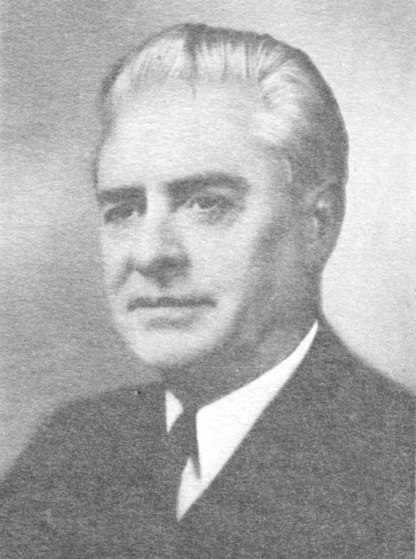
Historical · U.S. House · Montana · District 2
James O’Connor
Former U.S. Representative · Montana District 2 · 1937–1947 · Democratic
James O’Connor represented Montana's District 2 in the United States House of Representatives (1937–1947) for the Democratic party. The page below collects sourced biographical facts, term history, committee roles, and provenance for O’Connor.
Bioguide ID: O000029
Key facts
- Full name
- James O’Connor
- State
- Montana
- District
- District 2
- Party
- Democratic
- House service
- 1937–1947
- First House term
- 1937
- Status
- Left office
- Current term ends
- —
- Born
- 1878
- Bioguide ID
- O000029
- Committee assignments
- —
- Dataset version
- 1.20260605
Biographical narrative
859 words · sourced from the Wikipedia REST extract
James O’Connor was a U.S. Representative from Montana, serving in the House of Representatives from 1937 until his death in 1945. A member of the Democratic Party, O’Connor represented Montana's 2nd congressional district and was known for his involvement in various legislative matters, particularly those concerning Indian affairs. His political career was marked by a commitment to his constituents and a focus on issues relevant to the state of Montana during a time of significant national change.
Early life and career
James O’Connor was born on May 7, 1878, on a farm near California Junction, Iowa. He received his early education in Iowa, where he attended both grade school and normal school. O’Connor pursued higher education at the University of Nebraska–Lincoln, graduating from its law department in 1904. Following his graduation, he was admitted to the bar and began practicing law in Livingston, Montana, in 1905. His professional career extended beyond law; he was also involved in stock raising, ranching, and banking, reflecting a diverse set of interests and skills.
In 1912, O’Connor was appointed as a judge for Montana's sixth judicial district, showcasing his legal expertise and commitment to public service. His political career began to take shape when he was elected to the Montana House of Representatives, where he served from 1917 to 1918 and held the position of Speaker of the House. This role allowed him to gain valuable experience in legislative processes and governance.
O’Connor's career also included a stint as special counsel for the Federal Trade Commission in Washington, D.C., in 1918. Additionally, he contributed to local education by serving on the Park County High School Board for several years. His early political endeavors laid the groundwork for his later success in national politics.
In 1934, following the death of U.S. Senator Thomas J. Walsh, O’Connor sought the Democratic nomination for the vacant Senate seat. He faced significant competition from James E. Murray and John E. Erickson, the latter of whom was the sitting Governor of Montana. Although O’Connor did not win the nomination, he finished ahead of Erickson, indicating his political viability in the state.
House tenure
O’Connor's congressional career began in 1937 when he was elected to represent Montana's 2nd congressional district. He won the Democratic primary and subsequently defeated the Republican nominee, T. S. Stockdahl, in a decisive victory. His initial election marked the beginning of a significant tenure in the House of Representatives, where he would serve five terms until his death in 1945.
His first re-election campaign in 1938 was notably challenging, as it occurred during a period when Republicans gained a substantial number of seats nationwide. Despite this, O’Connor managed to secure a narrow victory over his opponent, W. C. Husband. He continued to build on his political support, winning re-election in 1940 against Melvin N. Hoiness by a considerable margin. In 1942, he faced a closer contest against F. F. Haynes, but still emerged victorious, demonstrating his resilience as a candidate.
O’Connor's political stance during his time in office included a strong isolationist position, particularly in the lead-up to World War II. He notably opposed measures to provide aid to Britain in 1941, reflecting a viewpoint that was not uncommon among certain segments of the American public at that time.
In 1944, O’Connor was re-elected for his fifth term, defeating Haynes once again. This victory came shortly before his untimely death, which occurred on January 15, 1945, just weeks after he began his new term. His passing marked the end of a significant chapter in Montana's political history.
Legislative focus and committees
Throughout his tenure in the House of Representatives, O’Connor was involved in various legislative matters, with a particular focus on issues affecting Native American communities. He served as the Chairman of the House Committee on Indian Affairs during the 78th United States Congress, from 1943 to 1945. In this role, he was responsible for overseeing legislation and policies related to Native American tribes, which were critical issues for many constituents in Montana.
O’Connor's work on the committee reflected his commitment to addressing the needs and concerns of Native American populations, as well as his broader interest in social justice and equity. His leadership in this area was significant, as it came during a time when the federal government was reevaluating its policies and relationships with Native American tribes.
In addition to his work on Indian affairs, O’Connor's legislative activities encompassed a wide range of issues pertinent to his constituents in Montana. His background in law and his experience in local governance informed his approach to legislation, as he sought to advocate for the interests of his state at the national level.
O’Connor's contributions to the House of Representatives were characterized by a dedication to public service and a focus on the pressing issues of his time. His legacy includes not only his legislative achievements but also his role in shaping the political landscape of Montana during a transformative period in American history. After his death, he was interred in Mount Calvary Cemetery in Livingston, Montana, leaving behind a record of public service that would be remembered by his constituents and colleagues alike.
Notable legislation
Sponsored and co-sponsored legislation for James O’Connor is pending operator curation. The biographical narrative above carries the same provenance trail until per-bill rows are written.
Sources
- [1]https://en.wikipedia.org/wiki/James_F._O'ConnorWikipedia · retrieved 2026-06-05
Notable quotes
Sourced quotes for James O’Connor are pending operator curation. Narrative-scope provenance remains attached below.
Sources
- [1]https://en.wikipedia.org/wiki/James_F._O'ConnorWikipedia · retrieved 2026-06-05
Key positions
Curated policy positions for James O’Connor are pending operator review. The biographical narrative above carries the same provenance trail until per-topic positions are written.
Sources
- [1]https://en.wikipedia.org/wiki/James_F._O'ConnorWikipedia · retrieved 2026-06-05
Terms served
- 1937–1939U.S. House · Term 1 · Democratic
- 1939–1941U.S. House · Term 2 · Democratic
- 1941–1943U.S. House · Term 3 · Democratic
- 1943–1945U.S. House · Term 4 · Democratic
- 1945–1947U.S. House · Term 5 · Democratic
Sources & provenance
Every attributable claim above carries a per-section [N] marker that resolves to the corresponding URL below. Each entry records the upstream provider, the canonical URL, and the timestamp at which the source was retrieved by the ingest pipeline.
Key facts
- https://bioguide.congress.gov/search/bio/O000029bioguide · retrieved 2026-06-05
- https://www.govtrack.us/congress/members/408277govtrack · retrieved 2026-06-05
Biographical narrative
- https://en.wikipedia.org/wiki/James_F._O'Connorwikipedia · retrieved 2026-06-05
Find your representative
Every U.S. state elects representatives by district. Browse Montana’s delegation, the full former-representative roster, or explore the role and term length.
Related on The Candidate
- Preceded by Roy AyersEarlier holder of the Montana District 2 House seat · Democratic.Open
- Succeeded by Orvin FjareLater holder of the Montana District 2 House seat · Republican.Open
- Albert CampbellFormer U.S. Representative · Montana District 1 · DemocraticOpen
- Arnold OlsenFormer U.S. Representative · Montana District 1 · DemocraticOpen
- Caldwell EdwardsFormer U.S. Representative · Montana District 1 · PopulistOpen
- Charles HartmanFormer U.S. Representative · Montana District 1 · Silver RepublicanOpen