
Historical · U.S. House · Montana · District 2
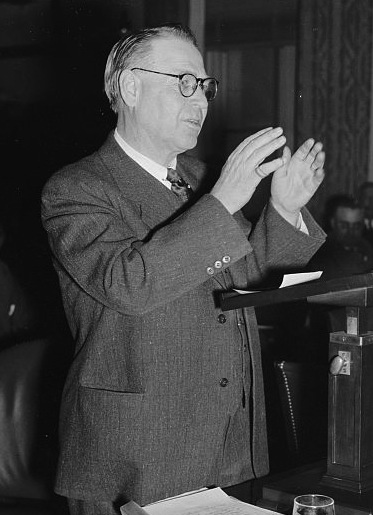
Roy Ayers
Former U.S. Representative · Montana District 2 · 1933–1937 · Democratic
Roy Ayers represented Montana's District 2 in the United States House of Representatives (1933–1937) for the Democratic party. The page below collects sourced biographical facts, term history, committee roles, and provenance for Ayers.
Bioguide ID: A000352
Key facts
- Full name
- Roy Ayers
- State
- Montana
- District
- District 2
- Party
- Democratic
- House service
- 1933–1937
- First House term
- 1933
- Status
- Left office
- Current term ends
- —
- Born
- 1882
- Bioguide ID
- A000352
- Committee assignments
- —
- Dataset version
- 1.20260605
Biographical narrative
961 words · sourced from the Wikipedia REST extract
Roy Elmer Ayers was a prominent figure in early 20th-century Montana politics, serving as a U.S. Representative and later as the 11th governor of Montana. A member of the Democratic Party, Ayers was notable for being the first governor of Montana born in the territory that would become the state. His political career spanned several decades, during which he held various positions in local and state government, reflecting his deep engagement with the political landscape of Montana.
Early life and career
Roy Ayers was born on November 9, 1882, on a ranch located near Lewistown in what was then the Territory of Montana. Growing up in a rural environment, he attended local schools, which provided him with a foundational education. He later graduated from Lewistown High School, showcasing an early commitment to his education. Following high school, Ayers pursued higher education at Valparaiso University, where he studied law and graduated from its law department in 1903. Upon completing his studies, he was admitted to the bar the same year, marking the beginning of his legal career.
Ayers commenced his practice in Lewistown, where he not only engaged in law but also became involved in ranching and livestock raising, reflecting the agrarian roots of his upbringing. His dual career in law and ranching allowed him to establish a significant presence in the community. In 1905, he married Ellen Simpson, and the couple would go on to have three children, further solidifying his ties to the region.
His early political career began when he served as the attorney for Fergus County from 1905 to 1909. This role provided him with valuable experience in the legal and political arenas. Following this position, he was appointed as the Judge of the Tenth Judicial District of Montana, serving from 1913 to 1921. His judicial experience was further complemented by his service during World War I, where he acted as the chairman of the Fergus County Exemption Board, overseeing the draft process during a critical time in American history.
In January 1922, Ayers was appointed as a Justice of the Montana Supreme Court, a position he held until his resignation in November of the same year. After stepping down from the bench, he returned to ranching and resumed his legal practice in Lewistown. Despite his legal and judicial accomplishments, Ayers sought higher political office and ran for governor of Montana in 1924. However, he was unsuccessful in the Democratic primary, losing to John E. Erickson, who subsequently won the general election. Ayers attempted to secure the gubernatorial nomination again in 1928 but faced a narrow defeat by Erickson once more, this time by less than a thousand votes.
House tenure
Ayers's political fortunes changed in 1932 when he was elected to the United States House of Representatives, representing Montana's 2nd congressional district. He won this election by defeating the incumbent Republican Congressman Scott Leavitt, marking his entry into federal politics. His tenure in the House began in 1933, and he quickly established himself as a member of the Democratic Party during a time of significant national challenges, including the Great Depression.
In 1934, Ayers successfully sought re-election, defeating Republican nominee Stanley Felt in what was described as a landslide victory. His time in the House was characterized by a focus on issues pertinent to his constituents and the broader national agenda. Rather than pursue a third term in Congress, Ayers opted to run for governor again in 1936. He successfully navigated the Democratic primary, narrowly defeating the incumbent governor Elmer Holt. In the general election, Ayers faced former Lieutenant Governor Frank Hazelbaker, the Republican nominee, and managed to secure a victory, thus beginning his term as governor.
Legislative focus and committees
During his time in the U.S. House of Representatives, Ayers was involved in various legislative matters that reflected the priorities of his constituents and the Democratic Party's platform. His legislative focus included issues related to economic recovery and social welfare, which were critical during the Great Depression. Ayers's background in law and his experience as a judge likely informed his approach to legislation, emphasizing the importance of legal frameworks in addressing social issues.
In addition to his legislative work, Ayers was active in party politics, serving as a delegate to the Democratic National Conventions in 1920 and 1940. His participation in these conventions underscored his commitment to the Democratic Party and his influence within Montana's political landscape. He also attended every State Democratic Convention from 1906 to 1940, further demonstrating his long-standing involvement in state and national politics.
After his congressional tenure, Ayers transitioned to the role of governor, where he oversaw significant changes in state governance. His administration was marked by the expansion of the state bureaucracy and the implementation of new powers for the governor's office, which allowed for more effective management of state resources. Under his leadership, Montana eliminated its state deficit and worked to lower state bond interest rates, contributing to the financial stability of the state during a challenging economic period.
However, Ayers's governorship was not without controversy. In 1940, he faced allegations related to the misappropriation of foodstuffs from state facilities, which raised questions about his administration's integrity. Despite these challenges, he remained a significant figure in Montana politics until he sought re-election in 1940, where he narrowly won the Democratic primary but was ultimately defeated in the general election by Sam C. Ford.
Following his political career, Ayers returned to ranching, a profession that had been a significant part of his life before entering politics. He passed away on May 23, 1955, in Lewistown, Montana, where he was interred at the Lewistown City Cemetery. His life and career reflect the complexities of early 20th-century American politics, particularly in the context of Montana's development as a state.
Notable legislation
Sponsored and co-sponsored legislation for Roy Ayers is pending operator curation. The biographical narrative above carries the same provenance trail until per-bill rows are written.
Sources
- [1]https://en.wikipedia.org/wiki/Roy_E._AyersWikipedia · retrieved 2026-06-05
Notable quotes
Sourced quotes for Roy Ayers are pending operator curation. Narrative-scope provenance remains attached below.
Sources
- [1]https://en.wikipedia.org/wiki/Roy_E._AyersWikipedia · retrieved 2026-06-05
Key positions
Curated policy positions for Roy Ayers are pending operator review. The biographical narrative above carries the same provenance trail until per-topic positions are written.
Sources
- [1]https://en.wikipedia.org/wiki/Roy_E._AyersWikipedia · retrieved 2026-06-05
Terms served
- 1933–1935U.S. House · Term 1 · Democratic
- 1935–1937U.S. House · Term 2 · Democratic
Sources & provenance
Every attributable claim above carries a per-section [N] marker that resolves to the corresponding URL below. Each entry records the upstream provider, the canonical URL, and the timestamp at which the source was retrieved by the ingest pipeline.
Key facts
- https://bioguide.congress.gov/search/bio/A000352bioguide · retrieved 2026-06-05
- https://www.govtrack.us/congress/members/401003govtrack · retrieved 2026-06-05
Biographical narrative
- https://en.wikipedia.org/wiki/Roy_E._Ayerswikipedia · retrieved 2026-06-05
Find your representative
Every U.S. state elects representatives by district. Browse Montana’s delegation, the full former-representative roster, or explore the role and term length.
Related on The Candidate
- Preceded by Scott LeavittEarlier holder of the Montana District 2 House seat · Republican.Open
- Succeeded by James O’ConnorLater holder of the Montana District 2 House seat · Democratic.Open
- Albert CampbellFormer U.S. Representative · Montana District 1 · DemocraticOpen
- Arnold OlsenFormer U.S. Representative · Montana District 1 · DemocraticOpen
- Caldwell EdwardsFormer U.S. Representative · Montana District 1 · PopulistOpen
- Charles HartmanFormer U.S. Representative · Montana District 1 · Silver RepublicanOpen