
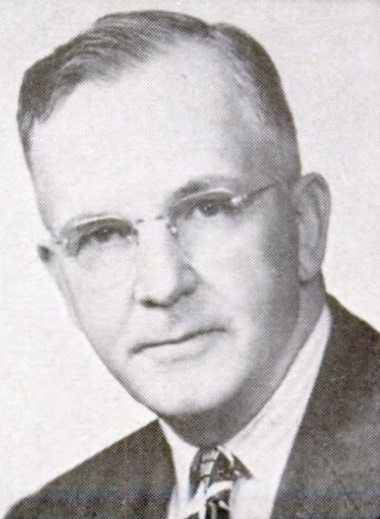
Historical · U.S. House · Montana · District 2
Wesley D’Ewart
Former U.S. Representative · Montana District 2 · 1945–1955 · Republican
Wesley D’Ewart represented Montana's District 2 in the United States House of Representatives (1945–1955) for the Republican party. The page below collects sourced biographical facts, term history, committee roles, and provenance for D’Ewart.
Bioguide ID: D000281
Key facts
- Full name
- Wesley D’Ewart
- State
- Montana
- District
- District 2
- Party
- Republican
- House service
- 1945–1955
- First House term
- 1945
- Status
- Left office
- Current term ends
- —
- Born
- 1889
- Bioguide ID
- D000281
- Committee assignments
- —
- Dataset version
- 1.20260605
Biographical narrative
967 words · sourced from the Wikipedia REST extract
Wesley D’Ewart was a prominent Republican politician who served as a U.S. Representative for Montana's 2nd congressional district from 1945 until 1955. His political career spanned a decade during which he was involved in various legislative activities and served on several committees. D’Ewart's background in ranching and public service, combined with his political experience at both the state and federal levels, shaped his approach to governance and policy-making. After leaving Congress, he continued to influence Montana politics and public policy until his retirement.
Early life and career
Wesley Abner D'Ewart was born on October 1, 1889, in Worcester, Massachusetts. He was the son of William John D'Ewart and Mary Elizabeth Barnard. D'Ewart's early education took place at Washington State College in Pullman, where he likely developed a foundation for his future career in public service. In 1910, seeking new opportunities and a different lifestyle, he relocated to Wilsall, Montana, settling in Park County. This move marked the beginning of his long-standing connection to the state and its communities.
Before entering the political arena, D’Ewart engaged in ranching, which provided him with firsthand experience of the agricultural and rural issues that would later influence his legislative priorities. Additionally, he worked for the U.S. Forest Service, where he gained insights into land management and conservation, themes that would resonate throughout his political career. His background in ranching and public service equipped him with a unique perspective on the needs and challenges faced by his constituents in Montana.
D’Ewart's political journey began in 1936 when he was elected to the Montana House of Representatives. He served in this capacity for three years, during which he likely honed his legislative skills and built a network of political connections. In 1940, he transitioned to the Montana Senate, where he served from 1941 until 1945. His time in the state legislature allowed him to address local issues and establish himself as a dedicated public servant committed to the interests of Montanans.
House tenure
D’Ewart's congressional career commenced following the death of Congressman James F. O'Connor, who had represented Montana's 2nd congressional district. In response to O'Connor's passing on January 15, 1945, a special election was held, and D’Ewart emerged victorious, officially taking office on June 5, 1945. His initial election to the House of Representatives marked a significant milestone in his political career, as he transitioned from state politics to the national stage.
Throughout his tenure in the House, D’Ewart was re-elected multiple times, demonstrating his ability to connect with voters and address their concerns. In 1946, he faced Democratic nominee John J. Holmes in the election and won by a substantial margin, reflecting his growing popularity. The following election in 1948 proved to be more competitive, as he narrowly defeated Willard E. Fraser to secure re-election. D’Ewart continued to build on his electoral success, winning re-election in both 1950 and 1952 against Holmes once again.
In 1954, D’Ewart made the decision to run for the United States Senate, challenging incumbent Democratic Senator James E. Murray. This election was marked by intense competition and was closely contested. Ultimately, D’Ewart was defeated by a narrow margin, concluding his congressional career when his last term ended on January 3, 1955. His time in the House was characterized by a commitment to his constituents and an active engagement in legislative processes.
Legislative focus and committees
During his time in the House of Representatives, D’Ewart was involved in various legislative initiatives and served on several committees that reflected his interests and expertise. His background in ranching and land management informed his legislative priorities, particularly regarding agricultural and natural resource issues. He was known for advocating for policies that supported the interests of farmers and ranchers in Montana, as well as addressing broader issues related to land use and conservation.
D’Ewart contributed to significant legislative reports, including those related to the Fort Hall Indian irrigation project in Idaho and the Revised Organic Act of the Virgin Islands. These publications indicate his engagement with complex issues that affected both local and national interests. His work on these reports demonstrated his ability to navigate intricate legislative matters and advocate for the needs of diverse communities.
In addition to his legislative responsibilities, D’Ewart's post-congressional career included roles in the federal government. After leaving the House, he served as an assistant to the United States Secretary of Agriculture from January to September 1955, overseeing lands and reclamation. He then became the Assistant Secretary of the Department of the Interior from October 1955 to July 1956. His expertise in land management continued to be a focal point of his career, as he later served as a special representative for the Secretary of Agriculture from August 1956 to October 1958.
D’Ewart's political aspirations did not end with his congressional tenure. In 1960, he sought to succeed Governor J. Hugo Aronson, who chose not to seek re-election. However, D’Ewart faced a challenging primary election against former State Senator Donald Grant Nutter, ultimately losing by a narrow margin. This defeat marked the end of his attempts to return to elected office, although he remained active in the Republican Party and continued to influence Montana politics.
In his later years, D’Ewart retired to Wilsall, Montana, where he remained engaged in political activities as an activist and strategist. He closely followed Montana elections and contributed to the Republican Party's efforts in various capacities. His involvement extended to serving as a director of the National Water Resources Association and participating in the Western States Water Council from 1966 to 1969. D’Ewart passed away on September 2, 1973, in Livingston, Montana, and was laid to rest at Mountain View Cemetery in Livingston. His papers and contributions to public service are preserved in the archives of Montana State University Library, reflecting his enduring legacy in Montana's political history.
Notable legislation
Sponsored and co-sponsored legislation for Wesley D’Ewart is pending operator curation. The biographical narrative above carries the same provenance trail until per-bill rows are written.
Sources
- [1]https://en.wikipedia.org/wiki/Wesley_A._D'EwartWikipedia · retrieved 2026-06-05
Notable quotes
Sourced quotes for Wesley D’Ewart are pending operator curation. Narrative-scope provenance remains attached below.
Sources
- [1]https://en.wikipedia.org/wiki/Wesley_A._D'EwartWikipedia · retrieved 2026-06-05
Key positions
Curated policy positions for Wesley D’Ewart are pending operator review. The biographical narrative above carries the same provenance trail until per-topic positions are written.
Sources
- [1]https://en.wikipedia.org/wiki/Wesley_A._D'EwartWikipedia · retrieved 2026-06-05
Terms served
- 1945–1947U.S. House · Term 1 · Republican
- 1947–1949U.S. House · Term 2 · Republican
- 1949–1951U.S. House · Term 3 · Republican
- 1951–1953U.S. House · Term 4 · Republican
- 1953–1955U.S. House · Term 5 · Republican
Sources & provenance
Every attributable claim above carries a per-section [N] marker that resolves to the corresponding URL below. Each entry records the upstream provider, the canonical URL, and the timestamp at which the source was retrieved by the ingest pipeline.
Key facts
- https://bioguide.congress.gov/search/bio/D000281bioguide · retrieved 2026-06-05
- https://www.govtrack.us/congress/members/403144govtrack · retrieved 2026-06-05
Biographical narrative
- https://en.wikipedia.org/wiki/Wesley_A._D'Ewartwikipedia · retrieved 2026-06-05
Find your representative
Every U.S. state elects representatives by district. Browse Montana’s delegation, the full former-representative roster, or explore the role and term length.
Related on The Candidate
- Preceded by Roy AyersEarlier holder of the Montana District 2 House seat · Democratic.Open
- Succeeded by Orvin FjareLater holder of the Montana District 2 House seat · Republican.Open
- Albert CampbellFormer U.S. Representative · Montana District 1 · DemocraticOpen
- Arnold OlsenFormer U.S. Representative · Montana District 1 · DemocraticOpen
- Caldwell EdwardsFormer U.S. Representative · Montana District 1 · PopulistOpen
- Charles HartmanFormer U.S. Representative · Montana District 1 · Silver RepublicanOpen