
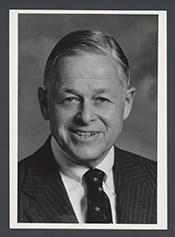
Historical · U.S. House · North Carolina · District 11
James Clarke
Former U.S. Representative · North Carolina District 11 · 1983–1991 · Democratic
James Clarke represented North Carolina's District 11 in the United States House of Representatives (1983–1991) for the Democratic party. The page below collects sourced biographical facts, term history, committee roles, and provenance for Clarke.
Bioguide ID: C000462
Key facts
- Full name
- James Clarke
- State
- North Carolina
- District
- District 11
- Party
- Democratic
- House service
- 1983–1991
- First House term
- 1983
- Status
- Left office
- Current term ends
- —
- Born
- 1917
- Bioguide ID
- C000462
- Committee assignments
- —
- Dataset version
- 1.20260605
Biographical narrative
867 words · sourced from the Wikipedia REST extract
James McC. Clarke was a prominent North Carolina politician and farmer who served as a Democratic member of the United States House of Representatives. His political career spanned over a decade, during which he represented North Carolina's 11th congressional district. Clarke was known for his commitment to environmental advocacy and his competitive electoral battles, particularly with Republican opponent Bill Hendon. His tenure in Congress lasted from 1983 until 1991, after which he retired from public office.
Early life and career
James McC. Clarke was born on June 12, 1917, in Manchester, Vermont. He spent much of his formative years in Asheville, North Carolina, where he developed a strong connection to the region. Clarke pursued higher education at Princeton University, graduating in 1939 with an A.B. in history. His academic work included a senior thesis that examined college life at Princeton, reflecting his interest in historical narratives.
Following his graduation, Clarke served in the United States Navy during World War II, where he attained the rank of Lieutenant. His service in the Pacific theater lasted from 1942 to 1945, a period that would shape his perspectives and experiences. After the war, he returned to North Carolina, where he transitioned into agriculture, working as a dairy farmer and orchardist. His involvement in the farming community deepened over the years, and in 1956, he became the president of the Farmers Federation Cooperative, an organization that represented the interests of farmers in the region.
Clarke's early career in agriculture laid the groundwork for his later political endeavors. His experiences as a farmer provided him with insights into the challenges faced by rural communities, which would inform his legislative priorities in Congress.
House tenure
Clarke's political career began in earnest in 1976 when he was elected to the North Carolina House of Representatives as a member of the Democratic Party. His legislative experience expanded in 1980 when he was elected to the North Carolina Senate. These positions allowed him to build a reputation as a dedicated public servant and advocate for his constituents.
In 1982, Clarke made the transition to federal politics by winning election to the United States House of Representatives, representing North Carolina's 11th congressional district. His initial victory was marked by a narrow margin against the incumbent Republican, Bill Hendon, which set the stage for a series of closely contested elections. Clarke was reelected to the 100th and 101st Congresses, serving a total of three terms in the House.
Throughout his congressional career, Clarke became known for his environmental advocacy. He focused on policies that aimed to protect natural resources and promote sustainable practices. His commitment to these issues resonated with many constituents, contributing to his electoral successes.
Clarke's rivalry with Bill Hendon became a notable aspect of his political narrative. Their contests were characterized by their competitiveness, with Clarke initially defeating Hendon in 1982 by a slim margin. However, in the 1984 election, Hendon reclaimed his seat, defeating Clarke by a narrow two-point margin. The back-and-forth nature of their contests continued, with Clarke managing to defeat Hendon again in 1986 by just one percentage point. This rivalry captured national attention, highlighting the significance of their political battles in North Carolina.
Despite his electoral victories, Clarke faced increasing challenges in subsequent elections. In 1988, he narrowly retained his seat against Republican challenger Charles H. Taylor, who came within a percentage point of unseating him. The 1990 election proved to be decisive, as Taylor ultimately defeated Clarke, marking the end of Clarke's congressional career. At the age of 73, Clarke chose to retire from politics following this loss, concluding a significant chapter in his public service.
Legislative focus and committees
During his time in the House of Representatives, Clarke's legislative focus primarily revolved around environmental issues. He was known for advocating policies that aimed to safeguard natural resources and promote sustainable agricultural practices. His background as a farmer informed his approach to legislation, as he sought to balance the needs of agricultural communities with environmental conservation efforts.
Clarke's committee assignments during his tenure in Congress allowed him to engage with various legislative matters. While specific details of his committee memberships are not provided, it is common for representatives to serve on committees that align with their interests and the needs of their constituents. Given Clarke's focus on environmental issues, it is likely that he participated in committees related to agriculture, natural resources, and environmental protection.
His advocacy for the environment was not only a personal commitment but also a reflection of the values held by many of his constituents in North Carolina. The state, with its diverse ecosystems and agricultural landscape, presented unique challenges and opportunities for environmental policy. Clarke's efforts to address these issues contributed to the broader national conversation on environmental protection during the 1980s.
In summary, James McC. Clarke's career as a U.S. Representative was marked by his dedication to public service, environmental advocacy, and a competitive political landscape. His experiences as a farmer and his commitment to his constituents shaped his legislative priorities and defined his time in office. After concluding his congressional tenure in 1991, Clarke left a legacy of public service that continued to influence the political landscape in North Carolina.
Notable legislation
Sponsored and co-sponsored legislation for James Clarke is pending operator curation. The biographical narrative above carries the same provenance trail until per-bill rows are written.
Sources
- [1]https://en.wikipedia.org/wiki/James_M._ClarkeWikipedia · retrieved 2026-06-05
Notable quotes
Sourced quotes for James Clarke are pending operator curation. Narrative-scope provenance remains attached below.
Sources
- [1]https://en.wikipedia.org/wiki/James_M._ClarkeWikipedia · retrieved 2026-06-05
Key positions
Curated policy positions for James Clarke are pending operator review. The biographical narrative above carries the same provenance trail until per-topic positions are written.
Sources
- [1]https://en.wikipedia.org/wiki/James_M._ClarkeWikipedia · retrieved 2026-06-05
Terms served
- 1983–1985U.S. House · Term 1 · Democratic
- 1987–1989U.S. House · Term 2 · Democratic
- 1989–1991U.S. House · Term 3 · Democratic
Sources & provenance
Every attributable claim above carries a per-section [N] marker that resolves to the corresponding URL below. Each entry records the upstream provider, the canonical URL, and the timestamp at which the source was retrieved by the ingest pipeline.
Key facts
- https://bioguide.congress.gov/search/bio/C000462bioguide · retrieved 2026-06-05
- https://www.govtrack.us/congress/members/402600govtrack · retrieved 2026-06-05
Biographical narrative
- https://en.wikipedia.org/wiki/James_M._Clarkewikipedia · retrieved 2026-06-05
Find your representative
Every U.S. state elects representatives by district. Browse North Carolina’s delegation, the full former-representative roster, or explore the role and term length.
Related on The Candidate
- Preceded by Vonno Gudger Jr.Earlier holder of the North Carolina District 11 House seat · Democratic.Open
- Succeeded by Charles TaylorLater holder of the North Carolina District 11 House seat · Republican.Open
- Alfred GatlinFormer U.S. Representative · North Carolina District 1 · Crawford RepublicanOpen
- Clinton CobbFormer U.S. Representative · North Carolina District 1 · RepublicanOpen
- Eva ClaytonFormer U.S. Representative · North Carolina District 1 · DemocraticOpen
- Frank Ballance Jr.Former U.S. Representative · North Carolina District 1 · DemocraticOpen