
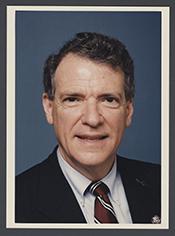
Historical · U.S. House · North Carolina · District 11
Charles Taylor
Former U.S. Representative · North Carolina District 11 · 1991–2007 · Republican
Charles Taylor represented North Carolina's District 11 in the United States House of Representatives (1991–2007) for the Republican party. The page below collects sourced biographical facts, term history, committee roles, and provenance for Taylor.
Bioguide ID: T000067
Key facts
- Full name
- Charles Taylor
- State
- North Carolina
- District
- District 11
- Party
- Republican
- House service
- 1991–2007
- First House term
- 1991
- Status
- Left office
- Current term ends
- —
- Born
- 1941
- Bioguide ID
- T000067
- Committee assignments
- —
- Dataset version
- 1.20260605
Biographical narrative
911 words · sourced from the Wikipedia REST extract
Charles H. Taylor is a former American politician and businessman who served as a member of the United States House of Representatives, representing North Carolina's 11th congressional district from 1991 until 2007. A member of the Republican Party, Taylor's tenure in Congress was marked by his conservative positions and involvement in various legislative issues, particularly those affecting his district in the Blue Ridge Mountains.
Early life and career
Charles H. Taylor was born on January 23, 1941, in Brevard, North Carolina. He pursued higher education at Wake Forest University, where he earned a Bachelor of Arts degree in 1963, followed by a Juris Doctor from Wake Forest University School of Law in 1966. After completing his education, Taylor began his political career in the North Carolina General Assembly, serving as a Republican representative from Transylvania County. His legislative career at the state level spanned from 1967 to 1975, during which he held positions in both the State House from 1967 to 1973 and the State Senate from 1973 to 1975. Following his time in the General Assembly, Taylor returned to his business interests before making his entry into federal politics.
In 1988, Taylor sought to enter Congress by challenging the Democratic incumbent, Jamie Clarke. Although he lost that election by a narrow margin of just over 1,500 votes, he remained determined to secure a seat in the House. In 1990, he ran again against Clarke and successfully won the election by a margin of approximately 2,700 votes. This victory marked the beginning of his eight terms in the House of Representatives, during which he would represent a district that encompasses much of North Carolina's mountainous terrain.
House tenure
Taylor's first term in Congress began in 1991. He quickly became known as a member of the "Gang of Seven," a group of first-term Republican Representatives who aimed to expose the House banking scandal of 1992. His efforts in this regard contributed to a broader push for reform and accountability within the House. Throughout his time in office, Taylor was consistently reelected, even in challenging political climates. Notably, in 1992, he secured 54 percent of the vote in his reelection bid, despite the fact that Bill Clinton, a Democrat, carried the district in the presidential election.
Taylor's congressional career continued until January 3, 2007, when he completed his last term. His final election in 2006 was contested against Democratic challenger Heath Shuler, a former NFL quarterback. Shuler won the election, receiving 54 percent of the vote compared to Taylor's 46 percent. Following this defeat, Taylor announced that he would not seek a rematch in the 2008 elections.
Legislative focus and committees
Throughout his time in Congress, Taylor was recognized as one of the more conservative members of the House, holding a lifetime rating of 92 from the American Conservative Union. He was an active member of the Republican Study Committee, a caucus that included conservative Republican congressmen. His legislative focus included a range of issues, particularly those related to environmental policy, federal spending, and trade.
Taylor served as the Chairman of the Subcommittee on Interior, Environment, and Related Agencies within the U.S. House Committee on Appropriations. In this role, he was involved in discussions surrounding environmental legislation and funding. He was also known for his association with the National Wilderness Institute, an organization that advocated for timber companies and sought to promote private property rights while reducing environmental regulations.
In terms of fiscal policy, Taylor garnered attention in 2005 and 2006 for his stance on funding for a memorial to United Flight 93, which crashed during the September 11 attacks. He initially opposed full federal funding for the memorial, advocating for a funding model that would rely more heavily on private donations. After facing significant pressure from various stakeholders, including the President, Taylor ultimately relented and allowed the funding to proceed.
Taylor's approach to infrastructure spending included support for a controversial road project through the Great Smoky Mountains National Park. This project aimed to fulfill a long-standing agreement with the federal government and was intended to improve access to ancestral cemeteries and attract tourism. However, it faced criticism from environmental advocates who argued that it would disrupt one of the largest roadless areas east of the Mississippi River.
On trade issues, Taylor was vocal in his opposition to agreements such as the Central American Free Trade Agreement (CAFTA), which he believed would negatively impact his district. His district had experienced significant job losses in the textile and furniture industries due to offshoring, and he expressed concerns about the implications of such trade policies. Notably, during the final vote on CAFTA, Taylor's voting card malfunctioned, leading to a situation where he was unable to officially register his opposition.
In addition to his legislative work, Taylor was involved in international initiatives, particularly in fostering educational exchanges. He initiated programs for Russian students and secured federal funding to support international trade and small business education in western North Carolina. His efforts included earmarks in federal budgets to facilitate these programs, which aimed to enhance cultural and business ties between the United States and Russia.
Taylor's tenure in the House of Representatives was characterized by a commitment to conservative principles and a focus on issues pertinent to his constituents in North Carolina's 11th congressional district. His legislative actions and positions reflected his background in business and politics, as well as his dedication to the interests of his district throughout his eight terms in Congress.
Notable legislation
Sponsored and co-sponsored legislation for Charles Taylor is pending operator curation. The biographical narrative above carries the same provenance trail until per-bill rows are written.
Sources
- [1]https://en.wikipedia.org/wiki/Charles_Taylor_(North_Carolina_politician)Wikipedia · retrieved 2026-06-05
Notable quotes
Sourced quotes for Charles Taylor are pending operator curation. Narrative-scope provenance remains attached below.
Sources
- [1]https://en.wikipedia.org/wiki/Charles_Taylor_(North_Carolina_politician)Wikipedia · retrieved 2026-06-05
Key positions
Curated policy positions for Charles Taylor are pending operator review. The biographical narrative above carries the same provenance trail until per-topic positions are written.
Sources
- [1]https://en.wikipedia.org/wiki/Charles_Taylor_(North_Carolina_politician)Wikipedia · retrieved 2026-06-05
Terms served
- 1991–1993U.S. House · Term 1 · Republican
- 1993–1995U.S. House · Term 2 · Republican
- 1995–1997U.S. House · Term 3 · Republican
- 1997–1999U.S. House · Term 4 · Republican
- 1999–2001U.S. House · Term 5 · Republican
- 2001–2003U.S. House · Term 6 · Republican
- 2003–2005U.S. House · Term 7 · Republican
- 2005–2007U.S. House · Term 8 · Republican
Sources & provenance
Every attributable claim above carries a per-section [N] marker that resolves to the corresponding URL below. Each entry records the upstream provider, the canonical URL, and the timestamp at which the source was retrieved by the ingest pipeline.
Key facts
- https://bioguide.congress.gov/search/bio/T000067bioguide · retrieved 2026-06-05
- http://www.house.gov/charlestaylorhouse.gov · retrieved 2026-06-05
Biographical narrative
- https://en.wikipedia.org/wiki/Charles_Taylor_(North_Carolina_politician)wikipedia · retrieved 2026-06-05
Find your representative
Every U.S. state elects representatives by district. Browse North Carolina’s delegation, the full former-representative roster, or explore the role and term length.
Related on The Candidate
- Preceded by James ClarkeEarlier holder of the North Carolina District 11 House seat · Democratic.Open
- Succeeded by Heath ShulerLater holder of the North Carolina District 11 House seat · Democratic.Open
- Alfred GatlinFormer U.S. Representative · North Carolina District 1 · Crawford RepublicanOpen
- Clinton CobbFormer U.S. Representative · North Carolina District 1 · RepublicanOpen
- Eva ClaytonFormer U.S. Representative · North Carolina District 1 · DemocraticOpen
- Frank Ballance Jr.Former U.S. Representative · North Carolina District 1 · DemocraticOpen