
Historical · U.S. House · North Carolina · District 11
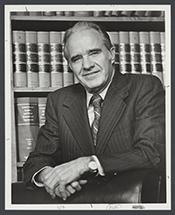
Roy Taylor
Former U.S. Representative · North Carolina District 11 · 1959–1977 · Democratic
Roy Taylor represented North Carolina's District 11 in the United States House of Representatives (1959–1977) for the Democratic party. The page below collects sourced biographical facts, term history, committee roles, and provenance for Taylor.
Bioguide ID: T000099
Key facts
- Full name
- Roy Taylor
- State
- North Carolina
- District
- District 11
- Party
- Democratic
- House service
- 1959–1977
- First House term
- 1959
- Status
- Left office
- Current term ends
- —
- Born
- 1910
- Bioguide ID
- T000099
- Committee assignments
- —
- Dataset version
- 1.20260605
Biographical narrative
899 words · sourced from the Wikipedia REST extract
Roy A. Taylor was a notable figure in American politics, serving as a U.S. Representative for North Carolina's 11th congressional district. A member of the Democratic Party, Taylor's congressional career spanned nearly two decades, during which he participated in significant legislative efforts and represented the interests of his constituents. His tenure in the House of Representatives was marked by a commitment to progressive policies, although he also expressed critical views on certain movements advocating for social change.
Early life and career
Roy Arthur Taylor was born on January 31, 1910, in Vader, Washington. His early education laid the foundation for his later pursuits in law and politics. Taylor graduated from Asheville-Biltmore College in Asheville, North Carolina, in 1929, and continued his academic journey at Maryville College in Maryville, Tennessee, where he earned his degree in 1931. His legal education culminated with a Juris Doctor degree from Asheville University Law School in 1936, which prepared him for a career in law.
Following his graduation, Taylor entered private legal practice, establishing himself in the legal community. His professional career was briefly interrupted by his service in the United States Navy during World War II, where he served from 1943 to 1946. This military experience not only contributed to his personal development but also influenced his perspectives on public service and civic responsibility.
In addition to his legal career, Taylor became involved in state politics. He served as a member of the North Carolina House of Representatives during several sessions of the General Assembly, specifically in 1947, 1949, 1951, and 1953. This early political experience provided him with valuable insights into legislative processes and the needs of his constituents, setting the stage for his future endeavors at the federal level.
House tenure
Taylor's entry into the U.S. House of Representatives began with a special election to fill the vacancy left by the passing of Representative David M. Hall. Elected as a Democrat to the Eighty-sixth Congress, Taylor officially took office on June 25, 1960. His election marked the beginning of a lengthy and impactful congressional career, during which he was re-elected to eight successive terms, serving until January 3, 1977. Over the course of his nine terms in office, Taylor became a prominent figure in North Carolina politics and a voice for his constituents in Washington, D.C.
Throughout his tenure, Taylor participated in various legislative initiatives and debates, contributing to discussions on a wide range of issues affecting the nation. His long-standing service in the House allowed him to build relationships with colleagues and gain influence within the Democratic Party. Taylor's experience in the North Carolina House of Representatives likely provided him with a solid understanding of the legislative process, which he applied during his time in Congress.
Despite his lengthy service, Taylor chose not to seek re-election for the Ninety-fifth Congress in 1976, marking the end of his formal political career. His decision to step away from politics came after nearly two decades of dedicated service, during which he had established himself as a significant player in the legislative arena.
Legislative focus and committees
During his time in Congress, Roy A. Taylor was known for his support of progressive legislation, particularly in areas related to housing, healthcare, and poverty alleviation. He voted in favor of various laws aimed at improving the living conditions of Americans and addressing social issues. His legislative focus reflected a commitment to enhancing the welfare of his constituents and advocating for policies that aligned with the Democratic Party's platform during the 1960s and 1970s.
Taylor's support for progressive legislation included backing measures to raise the federal minimum wage and initiatives designed to alleviate poverty. His voting record indicated a strong alignment with the goals of the Great Society programs initiated by President Lyndon B. Johnson, which sought to eliminate poverty and racial injustice in America. Taylor's participation in these efforts demonstrated his dedication to addressing the challenges faced by many Americans during a time of significant social change.
However, Taylor's views were not without controversy. In 1968, he publicly expressed opposition to the Poor People’s Campaign, a movement aimed at addressing poverty and economic inequality. He argued that the approach taken by the campaign's advocates was counterproductive, suggesting that a more measured and calm approach was necessary for progress. This stance highlighted the complexities of his political philosophy, as he balanced support for progressive policies with a belief in more traditional methods of advocacy.
In recognition of his contributions to public service and the legal field, Taylor received an honorary Doctor of Law degree from the University of North Carolina at Asheville in 1986. This accolade underscored his impact on both the legal and political landscapes of North Carolina.
After leaving Congress, Taylor continued to be involved in his community and remained a respected figure in North Carolina. He passed away on November 28, 1995, in Black Mountain, North Carolina. His legacy is preserved through his contributions to the legislative process and his commitment to public service, as well as through his interment at Mountain View Memorial Gardens in Black Mountain.
Roy A. Taylor's life and career reflect a dedication to the principles of democracy and public service. His tenure in the U.S. House of Representatives was characterized by a focus on progressive legislation and a commitment to addressing the needs of his constituents, making him a notable figure in North Carolina's political history.
Notable legislation
Sponsored and co-sponsored legislation for Roy Taylor is pending operator curation. The biographical narrative above carries the same provenance trail until per-bill rows are written.
Sources
- [1]https://en.wikipedia.org/wiki/Roy_A._TaylorWikipedia · retrieved 2026-06-05
Notable quotes
Sourced quotes for Roy Taylor are pending operator curation. Narrative-scope provenance remains attached below.
Sources
- [1]https://en.wikipedia.org/wiki/Roy_A._TaylorWikipedia · retrieved 2026-06-05
Key positions
Curated policy positions for Roy Taylor are pending operator review. The biographical narrative above carries the same provenance trail until per-topic positions are written.
Sources
- [1]https://en.wikipedia.org/wiki/Roy_A._TaylorWikipedia · retrieved 2026-06-05
Terms served
- 1959–1961U.S. House · Term 1 · Democratic
- 1961–1963U.S. House · Term 2 · Democratic
- 1963–1965U.S. House · Term 3 · Democratic
- 1965–1967U.S. House · Term 4 · Democratic
- 1967–1969U.S. House · Term 5 · Democratic
- 1969–1971U.S. House · Term 6 · Democratic
- 1971–1973U.S. House · Term 7 · Democratic
- 1973–1975U.S. House · Term 8 · Democratic
- 1975–1977U.S. House · Term 9 · Democratic
Sources & provenance
Every attributable claim above carries a per-section [N] marker that resolves to the corresponding URL below. Each entry records the upstream provider, the canonical URL, and the timestamp at which the source was retrieved by the ingest pipeline.
Key facts
- https://bioguide.congress.gov/search/bio/T000099bioguide · retrieved 2026-06-05
- https://www.govtrack.us/congress/members/410682govtrack · retrieved 2026-06-05
Biographical narrative
- https://en.wikipedia.org/wiki/Roy_A._Taylorwikipedia · retrieved 2026-06-05
Find your representative
Every U.S. state elects representatives by district. Browse North Carolina’s delegation, the full former-representative roster, or explore the role and term length.
Related on The Candidate
- Preceded by Woodrow JonesEarlier holder of the North Carolina District 11 House seat · Democratic.Open
- Succeeded by Vonno Gudger Jr.Later holder of the North Carolina District 11 House seat · Democratic.Open
- Alfred GatlinFormer U.S. Representative · North Carolina District 1 · Crawford RepublicanOpen
- Clinton CobbFormer U.S. Representative · North Carolina District 1 · RepublicanOpen
- Eva ClaytonFormer U.S. Representative · North Carolina District 1 · DemocraticOpen
- Frank Ballance Jr.Former U.S. Representative · North Carolina District 1 · DemocraticOpen