
Historical · U.S. House · North Carolina · District 11
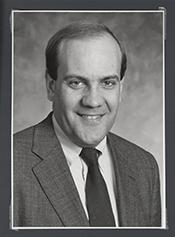
William Hendon
Former U.S. Representative · North Carolina District 11 · 1981–1987 · Republican
William Hendon represented North Carolina's District 11 in the United States House of Representatives (1981–1987) for the Republican party. The page below collects sourced biographical facts, term history, committee roles, and provenance for Hendon.
Bioguide ID: H000490
Key facts
- Full name
- William Hendon
- State
- North Carolina
- District
- District 11
- Party
- Republican
- House service
- 1981–1987
- First House term
- 1981
- Status
- Left office
- Current term ends
- —
- Born
- 1944
- Bioguide ID
- H000490
- Committee assignments
- —
- Dataset version
- 1.20260605
Biographical narrative
903 words · sourced from the Wikipedia REST extract
William Martin Hendon, commonly known as Bill Hendon, was an American politician and author who served as a Republican U.S. Representative for North Carolina's 11th congressional district. Hendon held office for two terms in the early to mid-1980s, during a time of significant political change in the United States. He is recognized for his role as a POW/MIA activist, advocating for the rights and recognition of American soldiers who were unaccounted for following the Vietnam War. His political career was marked by a notable rivalry with Democratic opponent Jamie Clarke, which captured national attention. After leaving Congress, Hendon continued to influence public discourse through his writings and activism until his passing in 2018.
Early life and career
Bill Hendon was born on November 9, 1944. His early life and formative years are not extensively documented in public records, but it is known that he developed a strong interest in politics and public service. Before entering the political arena, Hendon pursued various professional endeavors that laid the groundwork for his future career. His political ambitions culminated in the late 1970s when he began to establish himself within the Republican Party in North Carolina.
In 1980, Hendon launched a campaign for the U.S. House of Representatives, seeking to represent North Carolina's 11th congressional district. At that time, the district had been represented by a Democrat, V. Lamar Gudger, for two consecutive terms. Hendon's campaign was notable for its focus on local issues and his commitment to the Republican platform, which resonated with voters in the district. His victory in this election was significant as it marked the first time a Republican had held the seat since 1929, indicating a shift in the political landscape of the region.
House tenure
Hendon's tenure in the U.S. House of Representatives began in January 1981, when he was sworn in as a member of the 97th Congress. During his first term, he focused on various legislative issues relevant to his constituents and the broader national agenda. His political career in Congress was characterized by a competitive rivalry with Democrat Jamie Clarke, who would become a key opponent in Hendon's subsequent electoral battles.
In the 1982 elections, Hendon sought re-election but faced a narrow defeat to Clarke, losing by a margin of less than 1,500 votes. This loss was a setback for Hendon, but he remained active in political circles and continued to build his support base. In 1984, he ran for office again and successfully reclaimed his seat, defeating Clarke by a slim margin of two percentage points. This victory was likely bolstered by the national political climate, particularly the popularity of President Ronald Reagan, whose administration was experiencing a landslide victory in that election cycle.
The rivalry between Hendon and Clarke continued into the 1986 elections, where they faced off for a third time. This election proved to be highly competitive, with Hendon ultimately losing to Clarke by a margin of just one percentage point. Despite encouragement from supporters to run for a fourth term in 1988, Hendon chose not to pursue another campaign, marking the end of his congressional career.
During his time in Congress, Hendon served in the 97th and 99th Congresses, spanning from 1981 to 1987. His legislative efforts were influenced by the political dynamics of the time, as well as his personal convictions regarding issues such as national defense and veterans' affairs. Although specific details of his legislative achievements are not extensively documented, his role as a Republican representative during a period of significant political transition is noteworthy.
Legislative focus and committees
Throughout his congressional tenure, Bill Hendon was known for his advocacy on issues related to veterans and the treatment of American soldiers who were missing in action (MIA) or prisoners of war (POW). His commitment to these causes stemmed from his belief that the U.S. government had a moral obligation to account for and support those who had served in the military, particularly in the context of the Vietnam War.
Hendon’s focus on POW/MIA issues became a defining aspect of his post-political career. After leaving Congress, he co-authored a book titled "An Enormous Crime," which was published in 2007. The book, co-written with attorney Elizabeth Stewart, argued that American soldiers were abandoned in Indochina following the Vietnam War and that successive U.S. administrations had covered up this reality. The publication gained attention and sparked discussions about the treatment of veterans and the government's accountability regarding military personnel.
In addition to his writing, Hendon remained an active voice in the POW/MIA community, participating in various advocacy efforts and public discussions. His activism was characterized by a commitment to raising awareness about the plight of unaccounted soldiers and seeking justice for their families. This dedication to the issue persisted until his death in 2018.
Hendon’s contributions to the discourse surrounding veterans' affairs and POW/MIA issues were recognized within the community, and he was often involved in events and discussions aimed at addressing these critical topics. His legacy as a congressman and activist reflects a broader narrative of the challenges faced by veterans and the ongoing efforts to ensure their rights and recognition.
Bill Hendon passed away on June 20, 2018, after a prolonged illness. He spent his final days in hospice care in Forest City, North Carolina. His life and career remain significant in the context of North Carolina politics and the ongoing dialogue surrounding veterans' issues in the United States.
Notable legislation
Sponsored and co-sponsored legislation for William Hendon is pending operator curation. The biographical narrative above carries the same provenance trail until per-bill rows are written.
Sources
- [1]https://en.wikipedia.org/wiki/Bill_HendonWikipedia · retrieved 2026-06-05
Notable quotes
Sourced quotes for William Hendon are pending operator curation. Narrative-scope provenance remains attached below.
Sources
- [1]https://en.wikipedia.org/wiki/Bill_HendonWikipedia · retrieved 2026-06-05
Key positions
Curated policy positions for William Hendon are pending operator review. The biographical narrative above carries the same provenance trail until per-topic positions are written.
Sources
- [1]https://en.wikipedia.org/wiki/Bill_HendonWikipedia · retrieved 2026-06-05
Terms served
- 1981–1983U.S. House · Term 1 · Republican
- 1985–1987U.S. House · Term 2 · Republican
Sources & provenance
Every attributable claim above carries a per-section [N] marker that resolves to the corresponding URL below. Each entry records the upstream provider, the canonical URL, and the timestamp at which the source was retrieved by the ingest pipeline.
Key facts
- https://bioguide.congress.gov/search/bio/H000490bioguide · retrieved 2026-06-05
- https://www.govtrack.us/congress/members/405353govtrack · retrieved 2026-06-05
Biographical narrative
- https://en.wikipedia.org/wiki/Bill_Hendonwikipedia · retrieved 2026-06-05
Find your representative
Every U.S. state elects representatives by district. Browse North Carolina’s delegation, the full former-representative roster, or explore the role and term length.
Related on The Candidate
- Preceded by Vonno Gudger Jr.Earlier holder of the North Carolina District 11 House seat · Democratic.Open
- Succeeded by Charles TaylorLater holder of the North Carolina District 11 House seat · Republican.Open
- Alfred GatlinFormer U.S. Representative · North Carolina District 1 · Crawford RepublicanOpen
- Clinton CobbFormer U.S. Representative · North Carolina District 1 · RepublicanOpen
- Eva ClaytonFormer U.S. Representative · North Carolina District 1 · DemocraticOpen
- Frank Ballance Jr.Former U.S. Representative · North Carolina District 1 · DemocraticOpen