
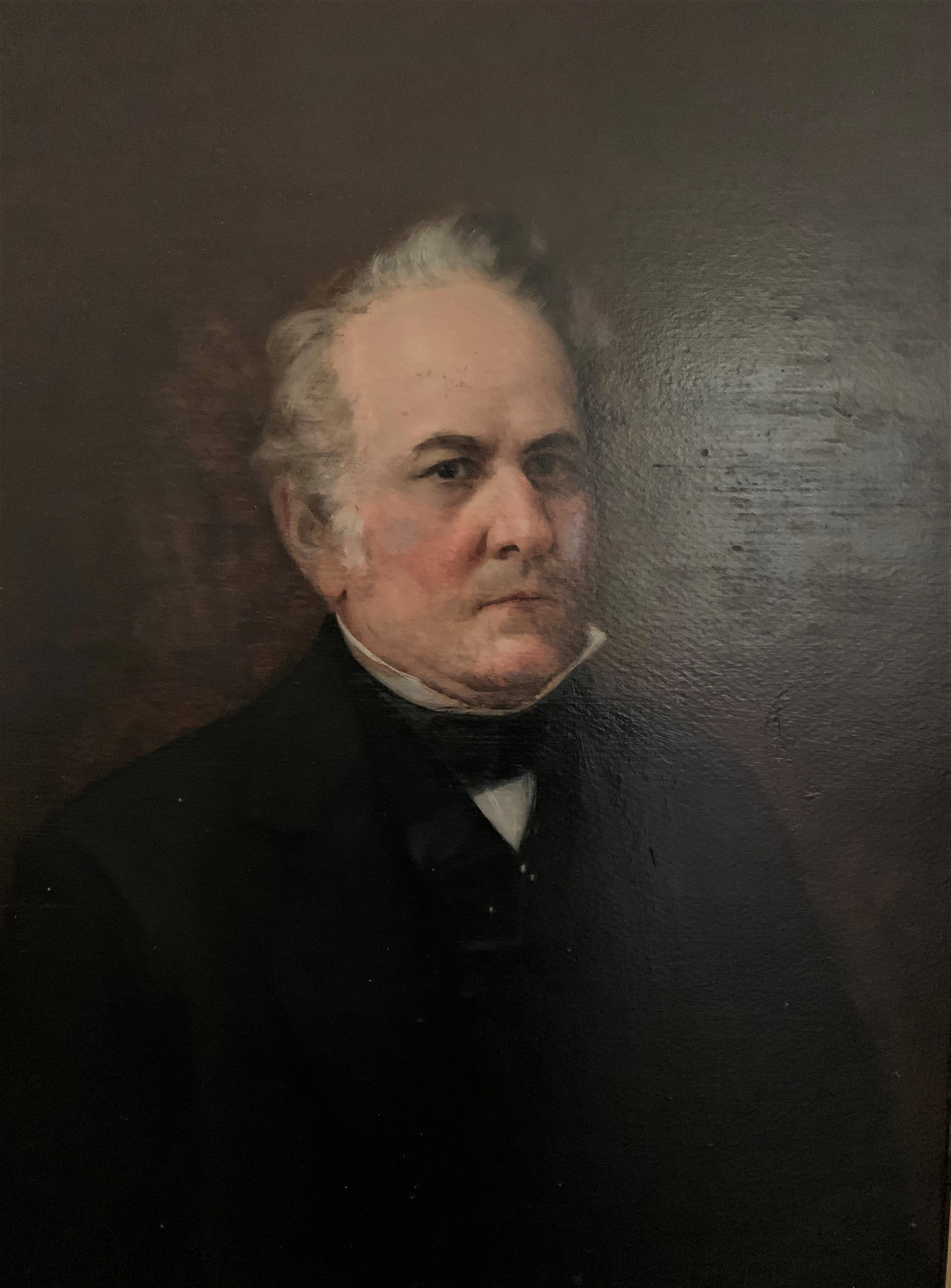
Historical · U.S. House · North Carolina · District 13
Lewis Williams
Former U.S. Representative · North Carolina District 13 · 1815–1843 · Whig
Lewis Williams represented North Carolina's District 13 in the United States House of Representatives (1815–1843) for the Whig party. The page below collects sourced biographical facts, term history, committee roles, and provenance for Williams.
Bioguide ID: W000527
Key facts
- Full name
- Lewis Williams
- State
- North Carolina
- District
- District 13
- Party
- Whig
- House service
- 1815–1843
- First House term
- 1815
- Status
- Left office
- Current term ends
- —
- Born
- 1782
- Bioguide ID
- W000527
- Committee assignments
- —
- Dataset version
- 1.20260606
Biographical narrative
949 words · sourced from the Wikipedia REST extract
Lewis Williams was a prominent political figure in the early 19th century, serving as a U.S. Representative for North Carolina's 13th congressional district. His congressional career spanned nearly three decades, from 1815 until his death in 1842. Williams was affiliated with several political parties during his tenure, reflecting the shifting political landscape of the time. He was a member of the Jeffersonian Republicans, later aligning with various factions including the Crawford Republicans, supporters of John Quincy Adams, Anti-Jacksonians, and ultimately the Whig Party. His legislative contributions included chairing significant committees and introducing important resolutions, notably the establishment of the House Committee on Agriculture.
Early life and career
Lewis Williams was born on February 1, 1782, in Surry County, North Carolina, which is now part of Forsyth County. His early education took place at the University of North Carolina at Chapel Hill, where he graduated in 1808. This academic background provided him with a foundation that would later support his political career. Following his graduation, Williams entered public service, first making his mark in the North Carolina House of Commons, where he was elected in 1812. His term in the state legislature lasted from 1813 to 1814, during which he gained valuable experience in governance and legislative processes.
In 1814, Williams transitioned to national politics when he was elected to the 14th United States Congress. His election marked the beginning of a long and influential career in the U.S. House of Representatives. As a member of the Jeffersonian Republican Party at that time, he aligned himself with the political philosophies that emphasized agrarian interests and a limited federal government. His early political career coincided with significant national events, including the War of 1812, which shaped the political climate of the United States and influenced the priorities of its lawmakers.
House tenure
Williams's congressional career was marked by a remarkable longevity, spanning 14 consecutive terms in the House of Representatives from 1815 until his death in 1842. This extensive tenure is notable, as it reflects both his electoral success and the trust placed in him by his constituents. Throughout his time in office, Williams navigated a rapidly changing political landscape characterized by the realignment of party affiliations and the emergence of new political ideologies.
During his time in Congress, Williams served under five different party labels, illustrating the fluid nature of political allegiances during this period. Initially a Jeffersonian Republican, he later became associated with the Crawford Republicans, who were aligned with Secretary of War William H. Crawford. Following this, he supported John Quincy Adams, a stance that placed him at odds with the growing popularity of Andrew Jackson and his followers. This alignment with the Anti-Jacksonian faction ultimately led to Williams's affiliation with the Whig Party, which emerged in opposition to Jacksonian policies.
Williams's leadership abilities were recognized through his appointment to various committee positions. He chaired the Committee on Claims during the 15th through 21st Congresses, a role that involved overseeing issues related to claims against the federal government. His leadership in this committee was significant, as it dealt with matters that affected many constituents and stakeholders. Additionally, he served as chair of the Committee on Territories during the 23rd Congress, a position that allowed him to influence legislation concerning the governance and organization of U.S. territories.
Throughout his congressional career, Williams was known for his dedication to his constituents and his commitment to addressing their needs. His ability to maintain electoral support over such a lengthy period is indicative of his effectiveness as a representative and his responsiveness to the concerns of the people he served.
Legislative focus and committees
Williams's legislative focus reflected the priorities of his constituents and the broader national interests of the time. His work in Congress was characterized by a commitment to agricultural issues, which were central to the economy of North Carolina and the nation. Recognizing the importance of agriculture, he introduced the resolution that led to the establishment of the United States House Committee on Agriculture. This committee played a crucial role in addressing the needs and interests of farmers and agricultural producers, highlighting Williams's understanding of the economic foundations of his constituency.
In addition to his focus on agricultural issues, Williams's tenure in Congress was marked by his involvement in various legislative matters that impacted the development and governance of U.S. territories. As chair of the Committee on Territories, he was involved in discussions and decisions that shaped the future of newly acquired lands and their integration into the Union. This role was particularly significant during a time when the United States was expanding westward, and the governance of new territories was a pressing issue.
Williams's legislative contributions were shaped by the political dynamics of his time, including the tensions between different political factions and the evolving nature of American society. His ability to navigate these complexities and maintain a focus on the needs of his constituents was a hallmark of his congressional service.
Lewis Williams passed away on February 23, 1842, while still in office, marking the end of a significant chapter in North Carolina's political history. He is buried in Panther Creek Cemetery near Lewisville, North Carolina. His legacy includes not only his long service in the U.S. House of Representatives but also his contributions to the development of agricultural policy and territorial governance during a formative period in American history. Williams's family also had a notable political presence; he was the brother of Robert Williams, who served as a U.S. Congressman from North Carolina, and John Williams, who was a U.S. Senator from Tennessee. This familial connection underscores the broader political engagement of the Williams family in the early years of the United States.
Notable legislation
Sponsored and co-sponsored legislation for Lewis Williams is pending operator curation. The biographical narrative above carries the same provenance trail until per-bill rows are written.
Sources
- [1]https://en.wikipedia.org/wiki/Lewis_Williams_(politician)Wikipedia · retrieved 2026-06-06
Notable quotes
Sourced quotes for Lewis Williams are pending operator curation. Narrative-scope provenance remains attached below.
Sources
- [1]https://en.wikipedia.org/wiki/Lewis_Williams_(politician)Wikipedia · retrieved 2026-06-06
Key positions
Curated policy positions for Lewis Williams are pending operator review. The biographical narrative above carries the same provenance trail until per-topic positions are written.
Sources
- [1]https://en.wikipedia.org/wiki/Lewis_Williams_(politician)Wikipedia · retrieved 2026-06-06
Terms served
- 1815–1817U.S. House · Term 1 · Republican
- 1817–1819U.S. House · Term 2 · Republican
- 1819–1821U.S. House · Term 3 · Republican
- 1821–1823U.S. House · Term 4 · Republican
- 1823–1825U.S. House · Term 5 · Whig
- 1825–1827U.S. House · Term 6 · Adams
- 1827–1829U.S. House · Term 7 · Adams
- 1829–1831U.S. House · Term 8 · Whig
- 1831–1833U.S. House · Term 9 · Whig
- 1833–1835U.S. House · Term 10 · Whig
- 1835–1837U.S. House · Term 11 · Whig
- 1837–1839U.S. House · Term 12 · Whig
- 1839–1841U.S. House · Term 13 · Whig
- 1841–1843U.S. House · Term 14 · Whig
Sources & provenance
Every attributable claim above carries a per-section [N] marker that resolves to the corresponding URL below. Each entry records the upstream provider, the canonical URL, and the timestamp at which the source was retrieved by the ingest pipeline.
Key facts
- https://bioguide.congress.gov/search/bio/W000527bioguide · retrieved 2026-06-06
- https://www.govtrack.us/congress/members/411684govtrack · retrieved 2026-06-06
Biographical narrative
- https://en.wikipedia.org/wiki/Lewis_Williams_(politician)wikipedia · retrieved 2026-06-06
Find your representative
Every U.S. state elects representatives by district. Browse North Carolina’s delegation, the full former-representative roster, or explore the role and term length.
Related on The Candidate
- Preceded by Meshack FranklinEarlier holder of the North Carolina District 13 House seat · Republican.Open
- Succeeded by Brad MillerLater holder of the North Carolina District 13 House seat · Democratic.Open
- Alfred GatlinFormer U.S. Representative · North Carolina District 1 · Crawford RepublicanOpen
- Clinton CobbFormer U.S. Representative · North Carolina District 1 · RepublicanOpen
- Eva ClaytonFormer U.S. Representative · North Carolina District 1 · DemocraticOpen
- Frank Ballance Jr.Former U.S. Representative · North Carolina District 1 · DemocraticOpen