
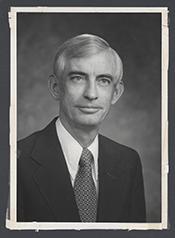
Historical · U.S. House · North Carolina · District 3
Charles Whitley
Former U.S. Representative · North Carolina District 3 · 1977–1987 · Democratic
Charles Whitley represented North Carolina's District 3 in the United States House of Representatives (1977–1987) for the Democratic party. The page below collects sourced biographical facts, term history, committee roles, and provenance for Whitley.
Bioguide ID: W000419
Key facts
- Full name
- Charles Whitley
- State
- North Carolina
- District
- District 3
- Party
- Democratic
- House service
- 1977–1987
- First House term
- 1977
- Status
- Left office
- Current term ends
- —
- Born
- 1927
- Bioguide ID
- W000419
- Committee assignments
- —
- Dataset version
- 1.20260605
Biographical narrative
948 words · sourced from the Wikipedia REST extract
Charles O. Whitley Sr. was a Democratic politician who served as a U.S. Representative for North Carolina's 3rd congressional district from 1977 until 1987. His tenure in Congress was marked by a commitment to public service and a focus on various legislative issues relevant to his constituents. Born in Siler City, North Carolina, Whitley’s educational and professional background laid a strong foundation for his political career, which included five terms in the House of Representatives. After leaving Congress, he transitioned to a role in political consulting before passing away in 2002.
Early life and career
Charles Orville Whitley was born on January 3, 1927, in Siler City, North Carolina. He completed his secondary education at Siler City High School, graduating in 1943. Following high school, Whitley served in the United States Army from 1944 to 1946, a period that coincided with the final years of World War II. This military service likely influenced his later political perspectives and commitment to public service.
After his time in the military, Whitley pursued higher education. He attended Wake Forest University, where he earned his undergraduate degree in 1949. He continued his academic journey by obtaining a law degree in 1950, which equipped him with the legal knowledge necessary for his future career. In 1974, he furthered his education by earning a Master of Arts degree from George Washington University, reflecting his dedication to lifelong learning and professional development.
Whitley began his professional career as a lawyer, practicing in Mount Olive, North Carolina. His legal expertise allowed him to engage with the community in various capacities. He taught business law classes at Mount Olive Junior College, contributing to the education of future generations. In 1961, he was appointed as the town attorney for Mount Olive, a role that involved providing legal counsel to the local government. That same year, he joined the staff of Congressman David N. Henderson, gaining valuable experience in legislative processes and constituent services. This position likely provided him with insights into the workings of Congress and the importance of representation, which would inform his own political aspirations.
In 1976, Whitley decided to run for Congress himself. His campaign was successful, and he was elected as a Democrat to the 95th United States Congress, marking the beginning of his legislative career. His background in law and local government, combined with his experience in Henderson's office, prepared him for the challenges of serving in the House of Representatives.
House tenure
Whitley's congressional career spanned five terms, beginning on January 3, 1977, and concluding on January 3, 1987. Throughout his time in office, he was re-elected four times, demonstrating a level of support from his constituents that allowed him to maintain his position in a competitive political landscape. His tenure coincided with significant national and regional developments, including economic changes, social movements, and shifts in political dynamics.
During the 1982 midterm elections, Whitley faced a notable opponent in Eugene McDaniel, a former Naval Aviator and Vietnam War POW. Whitley's campaign was successful, as he secured a significant victory, reflecting his strong connection with voters in his district. This election was indicative of his ability to navigate the political landscape and resonate with the electorate.
Whitley chose not to seek re-election in 1986, opting instead to retire from Congress. His decision to step away from elected office marked the end of a significant chapter in his life, as he transitioned to a role in political consulting. This move allowed him to continue contributing to the political sphere, albeit in a different capacity, leveraging his experience and knowledge to assist others in navigating the complexities of political campaigns and governance.
Legislative focus and committees
Throughout his time in Congress, Whitley was involved in various legislative initiatives and served on multiple committees, although specific details about the committees he was a part of are not provided. His legislative focus likely reflected the interests and needs of his constituents in North Carolina's 3rd congressional district, which encompasses a diverse range of communities and economic activities.
As a member of the Democratic Party, Whitley aligned with the party's broader goals and priorities during a period of significant political and social change in the United States. His legislative efforts may have included addressing issues such as economic development, education, healthcare, and civil rights, which were prominent topics during his time in office. The 1970s and 1980s were marked by a growing awareness of social justice issues, and Whitley's background and experiences may have informed his approach to these matters.
Whitley's commitment to public service extended beyond his legislative duties. He was known to engage with his constituents, listening to their concerns and advocating for their needs within the federal government. This connection to the community was a vital aspect of his role as a representative, as it allowed him to effectively serve the interests of those who elected him.
After leaving Congress, Whitley continued to influence the political landscape through his work in political consulting. His experience as a former congressman provided him with unique insights into the electoral process and the intricacies of governance. He utilized this knowledge to assist candidates and political organizations, contributing to the ongoing development of political strategies and campaigns.
Whitley passed away on October 27, 2002, in Durham, North Carolina. His legacy includes not only his contributions to the legislative process but also his impact on the lives of those he represented. He is remembered as a dedicated public servant who navigated the complexities of politics with a focus on the needs of his constituents. Additionally, he is noted as the grandfather of civil rights activist Annie E. Clark, highlighting a familial connection to ongoing social justice efforts.
Notable legislation
Sponsored and co-sponsored legislation for Charles Whitley is pending operator curation. The biographical narrative above carries the same provenance trail until per-bill rows are written.
Sources
- [1]https://en.wikipedia.org/wiki/Charles_WhitleyWikipedia · retrieved 2026-06-05
Notable quotes
Sourced quotes for Charles Whitley are pending operator curation. Narrative-scope provenance remains attached below.
Sources
- [1]https://en.wikipedia.org/wiki/Charles_WhitleyWikipedia · retrieved 2026-06-05
Key positions
Curated policy positions for Charles Whitley are pending operator review. The biographical narrative above carries the same provenance trail until per-topic positions are written.
Sources
- [1]https://en.wikipedia.org/wiki/Charles_WhitleyWikipedia · retrieved 2026-06-05
Terms served
- 1977–1979U.S. House · Term 1 · Democratic
- 1979–1981U.S. House · Term 2 · Democratic
- 1981–1983U.S. House · Term 3 · Democratic
- 1983–1985U.S. House · Term 4 · Democratic
- 1985–1987U.S. House · Term 5 · Democratic
Sources & provenance
Every attributable claim above carries a per-section [N] marker that resolves to the corresponding URL below. Each entry records the upstream provider, the canonical URL, and the timestamp at which the source was retrieved by the ingest pipeline.
Key facts
- https://bioguide.congress.gov/search/bio/W000419bioguide · retrieved 2026-06-05
- https://www.govtrack.us/congress/members/411578govtrack · retrieved 2026-06-05
Biographical narrative
- https://en.wikipedia.org/wiki/Charles_Whitleywikipedia · retrieved 2026-06-05
Find your representative
Every U.S. state elects representatives by district. Browse North Carolina’s delegation, the full former-representative roster, or explore the role and term length.
Related on The Candidate
- Preceded by David HendersonEarlier holder of the North Carolina District 3 House seat · Democratic.Open
- Succeeded by H. LancasterLater holder of the North Carolina District 3 House seat · Democratic.Open
- Alfred GatlinFormer U.S. Representative · North Carolina District 1 · Crawford RepublicanOpen
- Clinton CobbFormer U.S. Representative · North Carolina District 1 · RepublicanOpen
- Eva ClaytonFormer U.S. Representative · North Carolina District 1 · DemocraticOpen
- Frank Ballance Jr.Former U.S. Representative · North Carolina District 1 · DemocraticOpen