
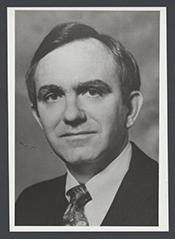
Historical · U.S. House · North Carolina · District 3
H. Lancaster
Former U.S. Representative · North Carolina District 3 · 1987–1995 · Democratic
H. Lancaster represented North Carolina's District 3 in the United States House of Representatives (1987–1995) for the Democratic party. The page below collects sourced biographical facts, term history, committee roles, and provenance for Lancaster.
Bioguide ID: L000045
Key facts
- Full name
- H. Lancaster
- State
- North Carolina
- District
- District 3
- Party
- Democratic
- House service
- 1987–1995
- First House term
- 1987
- Status
- Left office
- Current term ends
- —
- Born
- 1943
- Bioguide ID
- L000045
- Committee assignments
- —
- Dataset version
- 1.20260605
Biographical narrative
939 words · sourced from the Wikipedia REST extract
H. Martin Lancaster is a former U.S. Representative who served North Carolina's 3rd congressional district from 1987 until 1995. A member of the Democratic Party, Lancaster's political career spanned various roles, including significant positions in state and federal government. He is also recognized for his contributions to the North Carolina Community College System, where he served as president after his congressional tenure.
Early life and career
H. Martin Lancaster was born on March 24, 1943, in rural Wayne County, North Carolina. Growing up on a tobacco farm, he experienced the challenges and responsibilities of agricultural life, which shaped his understanding of the community's needs. His early education took place in a small local school, where he actively participated in church youth activities, fostering a sense of civic engagement from a young age. In 1957, Lancaster began his involvement in politics by serving as a Page in the North Carolina House of Representatives, later advancing to the position of Chief Page in 1959.
In 1961, Lancaster enrolled at the University of North Carolina at Chapel Hill, where he pursued a degree in law. He distinguished himself as a Law Alumni Scholar, allowing him to enter law school after completing his junior year. He graduated with a law degree in 1967. Following his education, Lancaster joined the United States Navy, where he served as a judge advocate for three years. His military service included eighteen months aboard the USS Hancock (CV-19) during the Vietnam War. After completing his active duty, he continued to serve in the Navy Reserve until 1993.
Upon returning to North Carolina after his military service, Lancaster established a law practice with a fellow graduate from law school. His legal career coincided with his growing interest in public service, leading to his appointment by Governor Jim Hunt as Chairman of the North Carolina Arts Council in 1977. He held this position for four years, during which he gained valuable experience in public administration and policy-making. This role marked the beginning of his political career, which included eight years in the North Carolina House of Representatives before he transitioned to national politics.
House tenure
H. Martin Lancaster was elected to the U.S. House of Representatives in 1986, beginning his first term in January 1987. Over the course of his congressional career, he served a total of four terms, representing North Carolina's 3rd congressional district. Lancaster's tenure in Congress was marked by his active participation in several key committees, including the Armed Services, Small Business, Agriculture, and Merchant Marine & Fisheries Committees. His primary focus was on the Armed Services Committee, reflecting his background and interest in military and defense issues.
Lancaster's re-election campaigns were generally successful, as he was able to secure his position without significant challenges for most of his time in office. However, in 1994, he faced a formidable opponent in Walter B. Jones, Jr., a Republican who had previously served as a Democratic state representative before switching parties. The political landscape in North Carolina had shifted, particularly following redistricting that brought a portion of Jones' former constituency into Lancaster's district. The election was competitive, and Lancaster's association with President Bill Clinton, particularly regarding socially liberal policies, became a focal point of the campaign. Ultimately, Lancaster lost the election to Jones by a margin that reflected the broader national trend of Republican gains during that election cycle.
Following his departure from Congress in January 1995, Lancaster continued to engage in public service. He briefly worked for Governor Jim Hunt, addressing federal issues before being appointed by President Clinton to assist with the ratification of the Chemical Weapons Convention. Later that year, he was nominated to become the Assistant Secretary of the Army for Civil Works, a role for which he was confirmed by the U.S. Senate in January 1996. In this capacity, Lancaster was responsible for policy development and advocacy related to the Army Corps of Engineers, engaging with various government entities, including the Office of Management and Budget and Congress.
Legislative focus and committees
During his time in the U.S. House of Representatives, H. Martin Lancaster focused on a range of legislative issues, particularly those related to military affairs and community development. His work on the Armed Services Committee allowed him to contribute to discussions and decisions regarding national defense, military readiness, and veterans' affairs. Lancaster's legal background and military experience provided him with a unique perspective on these issues, enabling him to advocate effectively for the needs of service members and their families.
In addition to his work on military matters, Lancaster was involved in small business initiatives, agricultural policies, and maritime issues through his participation in relevant committees. His role on the Small Business Committee highlighted his commitment to supporting local economies and fostering entrepreneurship, while his work on the Agriculture Committee reflected the importance of farming and rural development in North Carolina.
After leaving Congress, Lancaster's commitment to education and community development continued through his leadership role as President of the North Carolina Community College System, a position he assumed in 1997. He focused on increasing funding for community colleges and enhancing their role in workforce development, particularly in high-tech industries. His efforts contributed to significant advancements in community college infrastructure and educational opportunities in North Carolina.
In recognition of his contributions to public service and education, Lancaster was named an Honorary Officer of the Most Excellent Order of the British Empire by Queen Elizabeth II in 2011, acknowledging his work in Northern Ireland. His career reflects a dedication to public service, education, and community engagement, leaving a lasting impact on the institutions and individuals he served throughout his life.
Notable legislation
Sponsored and co-sponsored legislation for H. Lancaster is pending operator curation. The biographical narrative above carries the same provenance trail until per-bill rows are written.
Sources
- [1]https://en.wikipedia.org/wiki/Martin_LancasterWikipedia · retrieved 2026-06-05
Notable quotes
Sourced quotes for H. Lancaster are pending operator curation. Narrative-scope provenance remains attached below.
Sources
- [1]https://en.wikipedia.org/wiki/Martin_LancasterWikipedia · retrieved 2026-06-05
Key positions
Curated policy positions for H. Lancaster are pending operator review. The biographical narrative above carries the same provenance trail until per-topic positions are written.
Sources
- [1]https://en.wikipedia.org/wiki/Martin_LancasterWikipedia · retrieved 2026-06-05
Terms served
- 1987–1989U.S. House · Term 1 · Democratic
- 1989–1991U.S. House · Term 2 · Democratic
- 1991–1993U.S. House · Term 3 · Democratic
- 1993–1995U.S. House · Term 4 · Democratic
Sources & provenance
Every attributable claim above carries a per-section [N] marker that resolves to the corresponding URL below. Each entry records the upstream provider, the canonical URL, and the timestamp at which the source was retrieved by the ingest pipeline.
Key facts
- https://bioguide.congress.gov/search/bio/L000045bioguide · retrieved 2026-06-05
- https://www.govtrack.us/congress/members/406554govtrack · retrieved 2026-06-05
Biographical narrative
- https://en.wikipedia.org/wiki/Martin_Lancasterwikipedia · retrieved 2026-06-05
Find your representative
Every U.S. state elects representatives by district. Browse North Carolina’s delegation, the full former-representative roster, or explore the role and term length.
Related on The Candidate
- Preceded by Charles WhitleyEarlier holder of the North Carolina District 3 House seat · Democratic.Open
- Succeeded by Walter Jones Jr.Later holder of the North Carolina District 3 House seat · Republican.Open
- Alfred GatlinFormer U.S. Representative · North Carolina District 1 · Crawford RepublicanOpen
- Clinton CobbFormer U.S. Representative · North Carolina District 1 · RepublicanOpen
- Eva ClaytonFormer U.S. Representative · North Carolina District 1 · DemocraticOpen
- Frank Ballance Jr.Former U.S. Representative · North Carolina District 1 · DemocraticOpen