
Historical · U.S. House · North Carolina · District 3
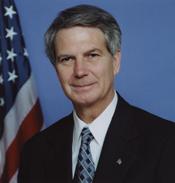
Walter Jones Jr.
Former U.S. Representative · North Carolina District 3 · 1995–2019 · Republican
Walter Jones Jr. represented North Carolina's District 3 in the United States House of Representatives (1995–2019) for the Republican party. The page below collects sourced biographical facts, term history, committee roles, and provenance for Jr..
Bioguide ID: J000255
Key facts
- Full name
- Walter Jones Jr.
- State
- North Carolina
- District
- District 3
- Party
- Republican
- House service
- 1995–2019
- First House term
- 1995
- Status
- Left office
- Current term ends
- —
- Born
- 1943
- Bioguide ID
- J000255
- Committee assignments
- —
- Dataset version
- 1.20260605
Biographical narrative
911 words · sourced from the Wikipedia REST extract
Walter B. Jones was an American politician who served as a U.S. Representative for North Carolina's 3rd congressional district from 1995 until his death in 2019. A member of the Republican Party, Jones was known for his long tenure in Congress, during which he represented the coastal regions of North Carolina, including the Outer Banks and areas near the Pamlico Sound. His political career spanned over two decades, during which he became recognized for his willingness to diverge from party lines on various issues.
Early life and career
Walter Beaman Jones Jr. was born on February 10, 1943, in Farmville, North Carolina. He was the son of Walter B. Jones Sr., who served as a Democratic congressman for North Carolina's 1st congressional district, and Doris Long Jones. Growing up in a politically active family, Jones was influenced by his father's career in public service. He attended Hargrave Military Academy in Chatham, Virginia, before pursuing higher education at Atlantic Christian College, now known as Barton College, where he earned a Bachelor of Arts degree in 1966.
Following his graduation, Jones served in the North Carolina National Guard from 1967 to 1971. After his military service, he took on a role as an executive in his family's business supply company, where he gained experience in the business sector. This background in both education and business would later inform his approach to governance and policy-making.
Jones entered politics in 1982 when he was elected to the North Carolina House of Representatives as a member of the Democratic Party. He represented Pitt County and served five terms until 1992. During his time in the state legislature, he was recognized for his advocacy of campaign finance reform and lobbying reform, issues that were significant in the political landscape of North Carolina at the time.
House tenure
In 1992, following the retirement of his father from Congress, Jones sought to succeed him in North Carolina's 1st congressional district. He initially ranked first in the Democratic primary, receiving 38% of the vote; however, he did not secure the necessary 40% to win the nomination outright. In the subsequent run-off election, he was defeated by Eva Clayton, who garnered support from several defeated primary candidates and the African American community.
In 1994, Jones switched his party affiliation to the Republican Party and ran for North Carolina's 3rd congressional district, which included a significant portion of his father's former territory. His campaign against incumbent Democrat Martin Lancaster was competitive, particularly after Jones highlighted Lancaster's association with President Bill Clinton, whose policies were unpopular among many conservative voters in the district. Jones won the election, marking a significant political shift as he became the first Republican to represent a substantial part of Eastern North Carolina in the House since Reconstruction.
Throughout his congressional career, Jones was re-elected multiple times, often with substantial margins. From 1994 to 2004, he consistently received at least 61% of the vote in general elections. His most challenging race occurred in 2000 when he faced a well-funded opponent but still managed to secure 61% of the vote, aided by the popularity of George W. Bush in the district. In 2006, despite a challenging national political climate for Republicans, Jones was re-elected with 69% of the vote.
His tenure included significant electoral challenges, particularly regarding his stance on the Iraq War. Initially supportive of U.S. involvement, Jones later became a vocal critic, arguing that the Bush administration had misled Congress regarding the justification for the war. This shift in position led to primary challenges, notably in 2008, when he faced opposition from within his party but ultimately prevailed in both the primary and general elections.
Jones continued to win re-election in subsequent years, defeating various opponents and maintaining a strong presence in his district. In 2018, he was re-elected to his final term unopposed, reflecting his established position within the political landscape of North Carolina.
Legislative focus and committees
During his time in the U.S. House of Representatives, Jones was known for his independent voting record, which sometimes diverged from the Republican Party's mainstream positions. He maintained a lifetime rating of 84.69 from the American Conservative Union, although his voting patterns became more moderate in the years leading up to his death. Jones was a member of the Liberty Caucus, reflecting his libertarian-leaning tendencies, and he often advocated for issues such as civil liberties and government transparency.
Jones's legislative focus included a range of topics, from military and foreign affairs to domestic issues such as minimum wage and campaign finance reform. He was critical of the Bush administration's handling of the Iraq War and the firing of federal prosecutors, aligning himself with Democratic colleagues on certain issues. His willingness to challenge party leadership was evident when he voted against the Republican Path to Prosperity budget proposal in 2011, which resulted in his removal from key committee roles.
Throughout the Trump presidency, Jones continued to voice concerns about the administration, calling for investigations into alleged Russian interference in the 2016 elections and demanding the release of Trump's tax returns. His independent stance and willingness to speak out on controversial issues distinguished him from many of his Republican colleagues.
Walter B. Jones passed away on February 10, 2019, the same day he celebrated his 76th birthday. His long career in public service left a notable impact on North Carolina's political landscape, characterized by his commitment to his constituents and his willingness to prioritize principle over party loyalty.
Notable legislation
Sponsored and co-sponsored legislation for Walter Jones Jr. is pending operator curation. The biographical narrative above carries the same provenance trail until per-bill rows are written.
Sources
- [1]https://en.wikipedia.org/wiki/Walter_B._Jones_Jr.Wikipedia · retrieved 2026-06-05
Notable quotes
Sourced quotes for Walter Jones Jr. are pending operator curation. Narrative-scope provenance remains attached below.
Sources
- [1]https://en.wikipedia.org/wiki/Walter_B._Jones_Jr.Wikipedia · retrieved 2026-06-05
Key positions
Curated policy positions for Walter Jones Jr. are pending operator review. The biographical narrative above carries the same provenance trail until per-topic positions are written.
Sources
- [1]https://en.wikipedia.org/wiki/Walter_B._Jones_Jr.Wikipedia · retrieved 2026-06-05
Terms served
- 1995–1997U.S. House · Term 1 · Republican
- 1997–1999U.S. House · Term 2 · Republican
- 1999–2001U.S. House · Term 3 · Republican
- 2001–2003U.S. House · Term 4 · Republican
- 2003–2005U.S. House · Term 5 · Republican
- 2005–2007U.S. House · Term 6 · Republican
- 2007–2009U.S. House · Term 7 · Republican
- 2009–2011U.S. House · Term 8 · Republican
- 2011–2013U.S. House · Term 9 · Republican
- 2013–2015U.S. House · Term 10 · Republican
- 2015–2017U.S. House · Term 11 · Republican
- 2017–2019U.S. House · Term 12 · Republican
- 2019–2019U.S. House · Term 13 · Republican
Sources & provenance
Every attributable claim above carries a per-section [N] marker that resolves to the corresponding URL below. Each entry records the upstream provider, the canonical URL, and the timestamp at which the source was retrieved by the ingest pipeline.
Key facts
- https://bioguide.congress.gov/search/bio/J000255bioguide · retrieved 2026-06-05
- https://jones.house.govhouse.gov · retrieved 2026-06-05
Biographical narrative
- https://en.wikipedia.org/wiki/Walter_B._Jones_Jr.wikipedia · retrieved 2026-06-05
Find your representative
Every U.S. state elects representatives by district. Browse North Carolina’s delegation, the full former-representative roster, or explore the role and term length.
Related on The Candidate
- Preceded by H. LancasterEarlier holder of the North Carolina District 3 House seat · Democratic.Open
- Alfred GatlinFormer U.S. Representative · North Carolina District 1 · Crawford RepublicanOpen
- Clinton CobbFormer U.S. Representative · North Carolina District 1 · RepublicanOpen
- Eva ClaytonFormer U.S. Representative · North Carolina District 1 · DemocraticOpen
- Frank Ballance Jr.Former U.S. Representative · North Carolina District 1 · DemocraticOpen
- Republican PartyFederal candidates and office holders on the Republican line.Open