
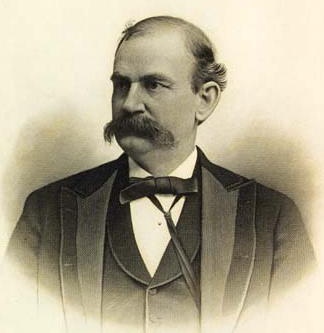
Historical · U.S. House · North Carolina · District 3
Wharton Green
Former U.S. Representative · North Carolina District 3 · 1883–1887 · Democratic
Wharton Green represented North Carolina's District 3 in the United States House of Representatives (1883–1887) for the Democratic party. The page below collects sourced biographical facts, term history, committee roles, and provenance for Green.
Bioguide ID: G000419
Key facts
- Full name
- Wharton Green
- State
- North Carolina
- District
- District 3
- Party
- Democratic
- House service
- 1883–1887
- First House term
- 1883
- Status
- Left office
- Current term ends
- —
- Born
- 1831
- Bioguide ID
- G000419
- Committee assignments
- —
- Dataset version
- 1.20260606
Biographical narrative
879 words · sourced from the Wikipedia REST extract
Wharton Jackson Green was a U.S. Congressman from North Carolina who served in the House of Representatives during the mid-19th century. A member of the Democratic Party, he held office from 1883 until 1887, representing North Carolina's 3rd congressional district. In addition to his political career, Green was an officer in the Confederate States Army during the American Civil War. His life spanned significant historical events, and he was involved in various pursuits, including law, agriculture, and literature, after his time in Congress.
Early life and career
Wharton Green was born on February 28, 1831, in St. Marks, Florida. He received his early education from private tutors, which laid the foundation for his later academic pursuits. Green attended several educational institutions, including Georgetown College and Lovejoy's Academy in Raleigh, North Carolina. He also briefly enrolled at the United States Military Academy at West Point, New York, but did not complete his studies there. Instead, he shifted his focus to the study of law, attending the University of Virginia in Charlottesville and later Cumberland University in Lebanon, Tennessee. He was admitted to the bar in 1854, marking the beginning of his legal career.
After becoming a lawyer, Green initially practiced in Washington, D.C., but he soon turned his attention to agriculture. In 1859, he began managing a plantation named Esmeralda in Warren County, North Carolina. This transition to agricultural pursuits would later influence his interests and activities, particularly in the realm of viticulture.
With the onset of the American Civil War, Green enlisted in the Confederate Army in 1861. His military service saw him rise through the ranks to the position of lieutenant colonel of the Second North Carolina Battalion. He later served on the staff of Brigadier General Junius Daniel. Green's military career was marked by significant events, including his wounding and subsequent capture at the Battle of Gettysburg in July 1863. Following his capture, he spent the remainder of the war in Johnson's Island, a prisoner-of-war camp.
After the Civil War, Green returned to North Carolina, where he settled at a location known as Tokay Vineyard, near Fayetteville. His post-war life included a renewed interest in viticulture, reflecting his agricultural background. In addition to his agricultural endeavors, Green was politically active within the Democratic Party. He participated as a delegate in several Democratic National Conventions throughout the late 19th century, specifically in 1868, 1872, 1876, and 1888. His involvement in these conventions highlighted his commitment to the party and its principles during a time of significant political change in the United States.
House tenure
Wharton Green's political career in the U.S. House of Representatives began when he was elected as a Democrat to the Forty-eighth Congress, which commenced on March 4, 1883. He was subsequently re-elected to the Forty-ninth Congress, serving until March 3, 1887. During his time in Congress, Green represented North Carolina's 3rd congressional district, engaging in legislative activities that reflected the interests and concerns of his constituents.
As a member of the House, Green participated in various debates and discussions pertinent to the issues of his time. His tenure coincided with a period of reconstruction and recovery following the Civil War, as well as the ongoing development of the United States as a nation. However, specific details regarding the legislation he supported or opposed, as well as his voting record, are not documented in the available sources.
Green's congressional career came to an end when he was not renominated for a subsequent term in 1886. Following his departure from Congress, he chose to retire from public service and redirect his focus toward personal interests, including his vineyard and literary pursuits.
Legislative focus and committees
While specific details about Wharton Green's legislative focus and committee assignments during his time in Congress are not extensively documented, it is known that he was involved in the political landscape of post-Civil War America. His background as a lawyer and his experiences during the war likely influenced his perspectives on various legislative matters.
Green's participation in the Democratic National Conventions suggests that he was engaged with broader party issues and strategies, which may have informed his legislative priorities while serving in the House. His involvement in these conventions indicates a commitment to the Democratic Party's platform and a desire to influence national policy.
After concluding his congressional service, Green returned to his agricultural interests and literary endeavors. He published an autobiography titled "Recollections and Reflections: An Auto of Half a Century and More" in 1906, which reflects on his life experiences, including his time in Congress and his military service. This work contributes to the understanding of his perspectives and the historical context in which he lived.
Wharton Green passed away on August 6, 1910, at his home in Tokay, near Fayetteville, North Carolina. He was laid to rest in Cross Creek Cemetery in Fayetteville. His legacy includes not only his political contributions but also his familial connections, as he was the son of Texas Revolution general Thomas Jefferson Green and the grandson of U.S. Senator Jesse Wharton. His family ties extended to notable figures in the Confederate Army, including his cousin, General Matt Whitaker Ransom. Green's life reflects the complexities of a period marked by conflict, recovery, and the evolving political landscape of the United States.
Notable legislation
Sponsored and co-sponsored legislation for Wharton Green is pending operator curation. The biographical narrative above carries the same provenance trail until per-bill rows are written.
Sources
- [1]https://en.wikipedia.org/wiki/Wharton_J._GreenWikipedia · retrieved 2026-06-06
Notable quotes
Sourced quotes for Wharton Green are pending operator curation. Narrative-scope provenance remains attached below.
Sources
- [1]https://en.wikipedia.org/wiki/Wharton_J._GreenWikipedia · retrieved 2026-06-06
Key positions
Curated policy positions for Wharton Green are pending operator review. The biographical narrative above carries the same provenance trail until per-topic positions are written.
Sources
- [1]https://en.wikipedia.org/wiki/Wharton_J._GreenWikipedia · retrieved 2026-06-06
Terms served
- 1883–1885U.S. House · Term 1 · Democratic
- 1885–1887U.S. House · Term 2 · Democratic
Sources & provenance
Every attributable claim above carries a per-section [N] marker that resolves to the corresponding URL below. Each entry records the upstream provider, the canonical URL, and the timestamp at which the source was retrieved by the ingest pipeline.
Key facts
- https://bioguide.congress.gov/search/bio/G000419bioguide · retrieved 2026-06-06
- https://www.govtrack.us/congress/members/404767govtrack · retrieved 2026-06-06
Biographical narrative
- https://en.wikipedia.org/wiki/Wharton_J._Greenwikipedia · retrieved 2026-06-06
Find your representative
Every U.S. state elects representatives by district. Browse North Carolina’s delegation, the full former-representative roster, or explore the role and term length.
Related on The Candidate
- Preceded by John ShackelfordEarlier holder of the North Carolina District 3 House seat · Democratic.Open
- Succeeded by Charles McClammyLater holder of the North Carolina District 3 House seat · Democratic.Open
- Alfred GatlinFormer U.S. Representative · North Carolina District 1 · Crawford RepublicanOpen
- Clinton CobbFormer U.S. Representative · North Carolina District 1 · RepublicanOpen
- Eva ClaytonFormer U.S. Representative · North Carolina District 1 · DemocraticOpen
- Frank Ballance Jr.Former U.S. Representative · North Carolina District 1 · DemocraticOpen