
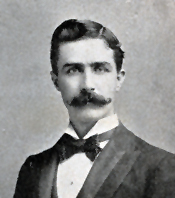
Historical · U.S. House · North Carolina · District 5
Thomas Settle
Former U.S. Representative · North Carolina District 5 · 1893–1897 · Republican
Thomas Settle represented North Carolina's District 5 in the United States House of Representatives (1893–1897) for the Republican party. The page below collects sourced biographical facts, term history, committee roles, and provenance for Settle.
Bioguide ID: S000253
Key facts
- Full name
- Thomas Settle
- State
- North Carolina
- District
- District 5
- Party
- Republican
- House service
- 1893–1897
- First House term
- 1893
- Status
- Left office
- Current term ends
- —
- Born
- 1865
- Bioguide ID
- S000253
- Committee assignments
- —
- Dataset version
- 1.20260606
Biographical narrative
902 words · sourced from the Wikipedia REST extract
Thomas Settle was an American lawyer and politician who served as a U.S. Representative for North Carolina's 5th congressional district from 1893 to 1897. A member of the Republican Party, Settle was part of a prominent political family in North Carolina, being the son of a judge and politician and the grandson of another U.S. Representative. His legal career and political endeavors were marked by his commitment to public service, although his time in Congress was relatively brief. After his congressional tenure, Settle continued to engage in legal practice and sought higher political office, including a run for Governor of North Carolina.
Early life and career
Thomas Settle was born on March 10, 1865, near Wentworth in Rockingham County, North Carolina. He was raised in a politically active family, which likely influenced his future career in law and politics. His father, Thomas Settle Sr., was a notable figure in North Carolina's legal and political landscape, serving as a judge and holding various political offices. Additionally, his grandfather, Thomas Settle (1789–1857), was also a U.S. Representative, establishing a legacy of public service within the family.
Settle received his early education in public schools before attending Georgetown University, where he furthered his studies. After completing his education, he returned to North Carolina to study law in Greensboro. He successfully passed the bar examination in 1885, which allowed him to begin his legal practice in Wentworth. His legal career commenced at a time when the region was undergoing significant social and economic changes, and he quickly established himself as a capable attorney.
In 1886, Settle was appointed as the solicitor for the ninth judicial district of North Carolina, a position he held until 1894. This role involved overseeing legal proceedings and prosecuting cases within the district, providing him with valuable experience in the legal system and enhancing his reputation as a skilled lawyer. His work as a solicitor likely contributed to his understanding of the legal and political issues facing North Carolina, laying the groundwork for his subsequent political career.
House tenure
Settle's political career took a significant turn when he was elected as a Republican to the Fifty-third Congress, which began on March 4, 1893. He served in this capacity until March 3, 1897, representing North Carolina's 5th congressional district. His election to Congress came during a period of political realignment in the United States, as the Republican Party was gaining strength in the South following the Civil War and Reconstruction era.
During his time in Congress, Settle was involved in various legislative activities and served on several committees. Notably, he was appointed chairman of the Committee on Expenditures on Public Buildings during the Fifty-fourth Congress. This committee was responsible for overseeing government spending related to public buildings, an important aspect of federal infrastructure and development. His leadership in this role indicated his engagement with issues related to government efficiency and public works.
Despite his efforts and contributions during his congressional tenure, Settle faced challenges in securing re-election. He ran for a second term in 1896 but was unsuccessful in his bid to continue serving in Congress. The political landscape was competitive, and his defeat marked the end of his formal legislative career at the federal level.
Legislative focus and committees
Throughout his time in the House of Representatives, Settle's legislative focus reflected the priorities of the Republican Party during the 1890s. The era was characterized by significant economic and social changes, including debates over tariffs, economic policies, and the role of government in regulating commerce and public works. As a member of the Committee on Expenditures on Public Buildings, Settle was directly involved in discussions surrounding government spending and infrastructure development, which were critical issues of the time.
Settle's background as a lawyer and his experience as a solicitor likely informed his approach to legislative matters. His legal training would have provided him with a strong understanding of the implications of legislation and the importance of effective governance. While specific legislative initiatives or bills he supported are not detailed in the available records, his role as committee chairman suggests that he was actively engaged in shaping policies related to public infrastructure and government accountability.
After his congressional service, Settle returned to the practice of law, relocating to Asheville, North Carolina. His legal career continued to evolve, and in 1909, he was appointed by the Department of Justice as a special attorney to the United States Court of Customs in New York City. This position allowed him to further his legal expertise in a specialized area of law, focusing on customs and trade issues.
In addition to his legal work, Settle sought to continue his political career. He ran for the governorship of North Carolina in 1912 as the Republican nominee. However, he faced significant competition and ultimately finished third in the election, trailing behind the Democratic candidate and a Progressive Party nominee. This attempt to secure a higher office reflected his ongoing commitment to public service and engagement in the political arena.
Settle's life came to an end on January 20, 1919, in Asheville, North Carolina. He was interred in Oakdale Cemetery in Wilmington, North Carolina, marking the conclusion of a life dedicated to law and public service. His legacy, rooted in a family tradition of political involvement, remains a part of North Carolina's historical narrative, reflecting the complexities of American politics in the late 19th and early 20th centuries.
Notable legislation
Sponsored and co-sponsored legislation for Thomas Settle is pending operator curation. The biographical narrative above carries the same provenance trail until per-bill rows are written.
Sources
- [1]https://en.wikipedia.org/wiki/Thomas_Settle_(1865%E2%80%931919)Wikipedia · retrieved 2026-06-06
Notable quotes
Sourced quotes for Thomas Settle are pending operator curation. Narrative-scope provenance remains attached below.
Sources
- [1]https://en.wikipedia.org/wiki/Thomas_Settle_(1865%E2%80%931919)Wikipedia · retrieved 2026-06-06
Key positions
Curated policy positions for Thomas Settle are pending operator review. The biographical narrative above carries the same provenance trail until per-topic positions are written.
Sources
- [1]https://en.wikipedia.org/wiki/Thomas_Settle_(1865%E2%80%931919)Wikipedia · retrieved 2026-06-06
Terms served
- 1893–1895U.S. House · Term 1 · Republican
- 1895–1897U.S. House · Term 2 · Republican
Sources & provenance
Every attributable claim above carries a per-section [N] marker that resolves to the corresponding URL below. Each entry records the upstream provider, the canonical URL, and the timestamp at which the source was retrieved by the ingest pipeline.
Key facts
- https://bioguide.congress.gov/search/bio/S000253bioguide · retrieved 2026-06-06
- https://www.govtrack.us/congress/members/409755govtrack · retrieved 2026-06-06
Biographical narrative
- https://en.wikipedia.org/wiki/Thomas_Settle_(1865%E2%80%931919)wikipedia · retrieved 2026-06-06
Find your representative
Every U.S. state elects representatives by district. Browse North Carolina’s delegation, the full former-representative roster, or explore the role and term length.
Related on The Candidate
- Preceded by Archibald WilliamsEarlier holder of the North Carolina District 5 House seat · Democratic.Open
- Succeeded by William KitchinLater holder of the North Carolina District 5 House seat · Democratic.Open
- Alfred GatlinFormer U.S. Representative · North Carolina District 1 · Crawford RepublicanOpen
- Clinton CobbFormer U.S. Representative · North Carolina District 1 · RepublicanOpen
- Eva ClaytonFormer U.S. Representative · North Carolina District 1 · DemocraticOpen
- Frank Ballance Jr.Former U.S. Representative · North Carolina District 1 · DemocraticOpen