
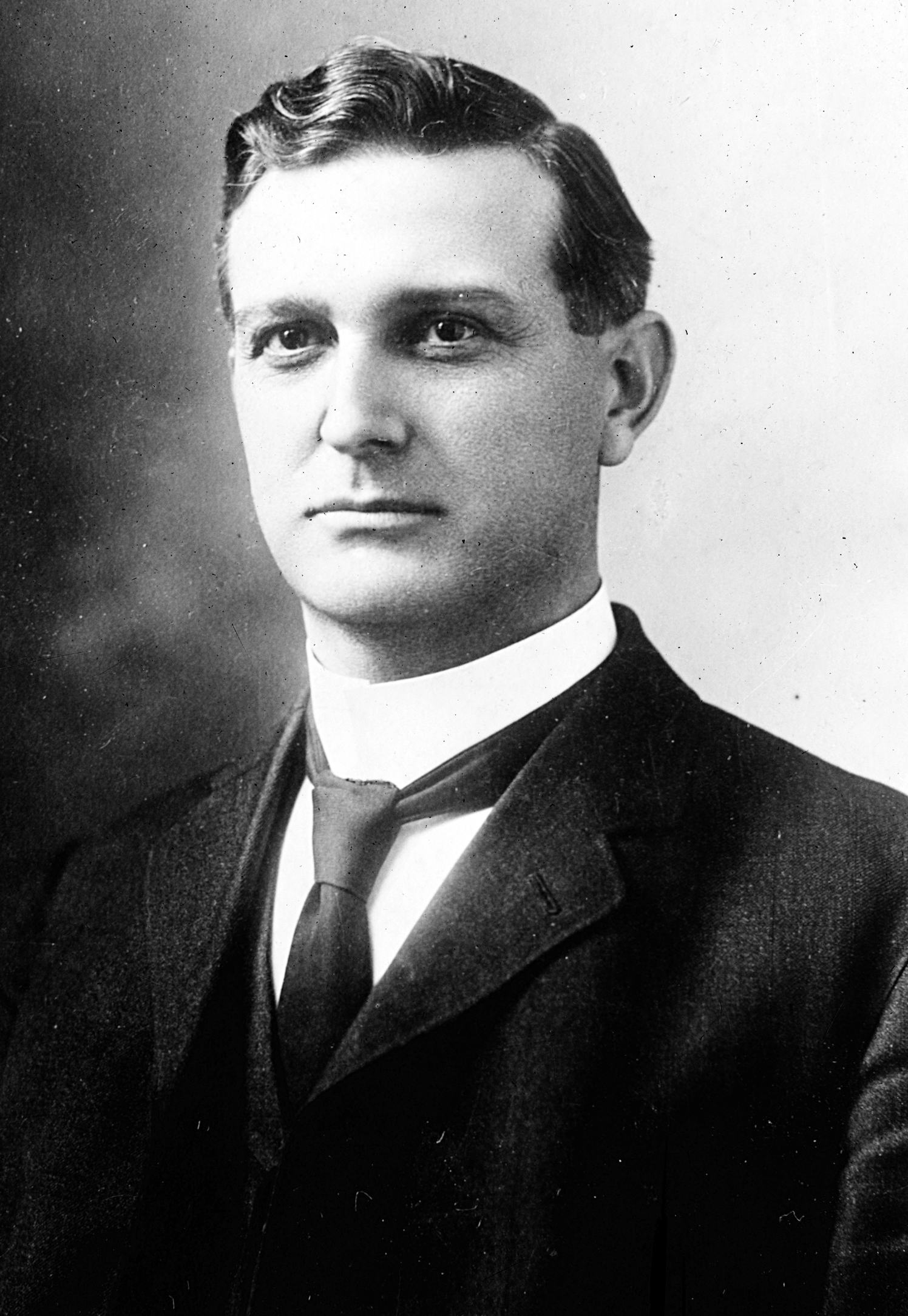
Historical · U.S. House · North Carolina · District 5
William Kitchin
Former U.S. Representative · North Carolina District 5 · 1897–1909 · Democratic
William Kitchin represented North Carolina's District 5 in the United States House of Representatives (1897–1909) for the Democratic party. The page below collects sourced biographical facts, term history, committee roles, and provenance for Kitchin.
Bioguide ID: K000252
Key facts
- Full name
- William Kitchin
- State
- North Carolina
- District
- District 5
- Party
- Democratic
- House service
- 1897–1909
- First House term
- 1897
- Status
- Left office
- Current term ends
- —
- Born
- 1866
- Bioguide ID
- K000252
- Committee assignments
- —
- Dataset version
- 1.20260606
Biographical narrative
931 words · sourced from the Wikipedia REST extract
William Kitchin was an American attorney and politician who served as a U.S. Representative for North Carolina's 5th congressional district from 1897 until 1909. A member of the Democratic Party, Kitchin's political career is marked by his involvement in significant events and legislation during a transformative period in American history. He was born on October 9, 1866, in Scotland Neck, North Carolina, and later became the 52nd governor of North Carolina, serving from 1909 to 1913. Kitchin's legacy is intertwined with both his legislative contributions and the controversial aspects of his political actions.
Early life and career
William Walton Kitchin was born to William H. Kitchin and Maria Figures Arrington in Scotland Neck, North Carolina. He was raised in a family that had a notable political presence, being the brother of Claude Kitchin and the uncle of Alvin Paul Kitchin, both of whom also served in the United States Congress. Kitchin received his early education at Vine Hill Academy in Scotland Neck before attending Wake Forest College, where he graduated in 1884. He furthered his education by studying law at the University of North Carolina at Chapel Hill, successfully passing the North Carolina Bar examination in 1887.
Following his admission to the bar, Kitchin began practicing law in Roxboro, North Carolina. His legal career was complemented by his personal life; on December 22, 1892, he married Sue Musette Satterfield, with whom he had six children. The Kitchin family was prominent in their community, and Kitchin built the Governor William W. and Musette Satterfield Kitchin House in Roxboro, which stands as a testament to his family's legacy.
Kitchin's initial foray into politics came in 1892 when he ran for the North Carolina Senate but was unsuccessful. However, he soon found success in national politics, being elected to the U.S. House of Representatives in 1896. His political career would span six terms in the House, beginning in 1897 and concluding in 1909.
House tenure
During his time in the House of Representatives, Kitchin was involved in several significant events and legislative actions. His tenure coincided with a period of considerable social and political upheaval in the South, particularly regarding race relations. Kitchin was associated with the Wilmington insurrection of 1898, a violent coup led by white supremacists that resulted in the expulsion of black and white political leaders from the city of Wilmington, North Carolina. This event was marked by the destruction of property owned by black citizens and the loss of numerous lives. Kitchin's involvement in this insurrection reflects the racial tensions and political struggles of the era.
In addition to his participation in the Wilmington insurrection, Kitchin played a role in the passage of a state constitutional amendment in 1900 that imposed restrictions on the voting rights of African Americans in North Carolina. This amendment was part of a broader effort by white politicians to disenfranchise black voters in the post-Reconstruction South. Kitchin's actions during this time were criticized by contemporaries, including George Henry White, an African American congressman, who condemned Kitchin's efforts to undermine the rights of African Americans.
Kitchin's legislative focus included issues pertinent to his constituents, such as transportation and postal services. In 1906, he proposed an amendment to the appropriations bill for the Post Office Department that aimed to eliminate a subsidy for the Southern Railway's Fast Mail service, which directly benefited his district. This amendment led to the discontinuation of the last fast mail train in the United States that received such a subsidy, and it later became a point of contention in Kitchin's political career.
After serving six terms in the House, Kitchin's congressional career came to an end in 1909. His political aspirations continued, and he subsequently ran for governor of North Carolina, a position he held from 1909 to 1913. His tenure as governor was marked by various reforms and initiatives aimed at improving public education, health services, and the stability of the state's banking system.
Legislative focus and committees
Throughout his congressional career, Kitchin's legislative focus was primarily on issues affecting his constituents and the broader interests of North Carolina. His involvement in transportation and postal services highlighted his commitment to improving infrastructure in his district. Kitchin's proposal to eliminate the subsidy for the Southern Railway's Fast Mail service demonstrated his willingness to make decisions that he believed would benefit the public interest, even if they were politically risky.
In addition to transportation, Kitchin's legislative work often intersected with the social issues of his time, particularly those related to race and civil rights. His participation in the Wilmington insurrection and support for voting restrictions on African Americans positioned him as a controversial figure in the context of racial politics in the South. These actions had lasting implications for the political landscape of North Carolina and the rights of African Americans in the region.
Kitchin's political career was characterized by a blend of local and national issues, and he served on various committees during his time in the House. His legislative contributions reflected the complexities of his era, as he navigated the challenges of representing his constituents while also engaging with the broader political dynamics of the time.
After leaving Congress, Kitchin continued to influence North Carolina politics as governor and later returned to practicing law until his retirement due to health issues. He passed away on November 9, 1924, and is buried in the Scotland Neck Baptist Cemetery. Kitchin's life and career remain a reflection of the historical context of the late 19th and early 20th centuries in the United States, particularly regarding issues of race, politics, and governance.
Notable legislation
Sponsored and co-sponsored legislation for William Kitchin is pending operator curation. The biographical narrative above carries the same provenance trail until per-bill rows are written.
Sources
- [1]https://en.wikipedia.org/wiki/William_Walton_KitchinWikipedia · retrieved 2026-06-06
Notable quotes
Sourced quotes for William Kitchin are pending operator curation. Narrative-scope provenance remains attached below.
Sources
- [1]https://en.wikipedia.org/wiki/William_Walton_KitchinWikipedia · retrieved 2026-06-06
Key positions
Curated policy positions for William Kitchin are pending operator review. The biographical narrative above carries the same provenance trail until per-topic positions are written.
Sources
- [1]https://en.wikipedia.org/wiki/William_Walton_KitchinWikipedia · retrieved 2026-06-06
Terms served
- 1897–1899U.S. House · Term 1 · Democratic
- 1899–1901U.S. House · Term 2 · Democratic
- 1901–1903U.S. House · Term 3 · Democratic
- 1903–1905U.S. House · Term 4 · Democratic
- 1905–1907U.S. House · Term 5 · Democratic
- 1907–1909U.S. House · Term 6 · Democratic
Sources & provenance
Every attributable claim above carries a per-section [N] marker that resolves to the corresponding URL below. Each entry records the upstream provider, the canonical URL, and the timestamp at which the source was retrieved by the ingest pipeline.
Key facts
- https://bioguide.congress.gov/search/bio/K000252bioguide · retrieved 2026-06-06
- https://www.govtrack.us/congress/members/406411govtrack · retrieved 2026-06-06
Biographical narrative
- https://en.wikipedia.org/wiki/William_Walton_Kitchinwikipedia · retrieved 2026-06-06
Find your representative
Every U.S. state elects representatives by district. Browse North Carolina’s delegation, the full former-representative roster, or explore the role and term length.
Related on The Candidate
- Preceded by Thomas SettleEarlier holder of the North Carolina District 5 House seat · Republican.Open
- Succeeded by John MoreheadLater holder of the North Carolina District 5 House seat · Republican.Open
- Alfred GatlinFormer U.S. Representative · North Carolina District 1 · Crawford RepublicanOpen
- Clinton CobbFormer U.S. Representative · North Carolina District 1 · RepublicanOpen
- Eva ClaytonFormer U.S. Representative · North Carolina District 1 · DemocraticOpen
- Frank Ballance Jr.Former U.S. Representative · North Carolina District 1 · DemocraticOpen