
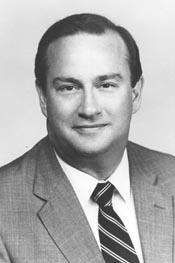
Historical · U.S. House · North Carolina · District 6
Charles Britt
Former U.S. Representative · North Carolina District 6 · 1983–1985 · Democratic
Charles Britt represented North Carolina's District 6 in the United States House of Representatives (1983–1985) for the Democratic party. The page below collects sourced biographical facts, term history, committee roles, and provenance for Britt.
Bioguide ID: B000845
Key facts
- Full name
- Charles Britt
- State
- North Carolina
- District
- District 6
- Party
- Democratic
- House service
- 1983–1985
- First House term
- 1983
- Status
- Left office
- Current term ends
- —
- Born
- 1942
- Bioguide ID
- B000845
- Committee assignments
- —
- Dataset version
- 1.20260605
Biographical narrative
982 words · sourced from the Wikipedia REST extract
Charles Robin Britt is a former American politician and lawyer who served as a U.S. Representative for North Carolina's 6th congressional district. A member of the Democratic Party, Britt held office from 1983 until 1985. His political career was characterized by a focus on local issues and community engagement, reflecting the interests of his constituents in Greensboro and surrounding areas. After his tenure in Congress, Britt continued to be involved in public service and community organizations, contributing to various initiatives in North Carolina.
Early life and career
Robin Britt was born on June 29, 1942, in Asheville, North Carolina. Growing up in a state known for its rich history and diverse culture, Britt's early life in Asheville likely influenced his later commitment to public service and community engagement. He completed his secondary education at Enka High School, graduating in 1959. Following high school, Britt pursued higher education at the University of North Carolina at Chapel Hill, where he earned a Bachelor of Arts degree in 1963. His academic journey continued at the same institution, where he later obtained a Juris Doctor degree, furthering his legal education with a Master of Laws (LL.M.) from New York University in 1976.
Britt's professional career began when he was admitted to the North Carolina bar in 1973, allowing him to practice law in the state. He established his legal career in Greensboro, North Carolina, where he became known for his dedication to his clients and the community. In addition to his legal practice, Britt served in the United States Naval Reserve from 1963 until 1984, reflecting a commitment to military service and national defense. His experiences in the Navy may have shaped his perspectives on various issues, including those related to veterans and military families.
Britt's entry into politics began with his involvement in the Democratic Party at the state level. In 1980, he was a delegate to the North Carolina State Democratic convention, which provided him with valuable experience in political organization and grassroots campaigning. This involvement laid the groundwork for his future candidacy for the U.S. House of Representatives.
House tenure
In 1982, Robin Britt successfully ran for the U.S. House of Representatives, representing North Carolina's 6th congressional district, which includes Greensboro and its surrounding areas. His election campaign focused on local issues and the needs of his constituents, allowing him to connect with voters effectively. Britt's victory came at a time when the political landscape was shifting, and he managed to defeat the incumbent Republican representative, Eugene Johnston, marking a significant achievement in his political career.
Britt's term in Congress began in 1983, during which he participated in various legislative activities and worked to address the concerns of his district. His tenure was marked by a commitment to public service and a focus on issues relevant to his constituents. However, his time in office was relatively brief. In 1984, Britt sought re-election but faced a challenging political environment. He was narrowly defeated by State Representative Howard Coble, a Republican, in a race that was influenced by the national political climate, particularly the impact of Ronald Reagan's presidential campaign, which saw significant support in the district.
Despite his defeat, Britt remained active in the political arena. He sought a rematch against Coble in 1986, a contest that highlighted the competitive nature of North Carolina's political landscape. The rematch was closely contested, with Britt losing by a mere 79 votes, underscoring the intensity of the electoral competition in the region.
Legislative focus and committees
During his time in the U.S. House of Representatives, Robin Britt focused on issues pertinent to his constituents in North Carolina's 6th district. While specific details about the legislation he sponsored or supported are not provided, it can be inferred that his legal background and community engagement informed his legislative priorities. As a member of the Democratic Party, he likely aligned with the party's broader goals, which included social justice, economic development, and support for public services.
Britt's involvement in local issues was a hallmark of his congressional tenure. He likely advocated for policies that would benefit the Greensboro area, including initiatives related to education, healthcare, and economic development. His legal expertise may have also contributed to his understanding of complex legislative matters, allowing him to navigate the intricacies of federal policy-making effectively.
After leaving Congress in 1985, Britt continued to engage with the community in various capacities. He served as president and director of Project Uplift in Greensboro, an organization focused on community development and support for underprivileged populations. This role demonstrated his ongoing commitment to public service and his desire to make a positive impact on the lives of individuals in his community.
From 1993 to 1997, Britt held the position of secretary of the North Carolina State Department of Human Resources, further emphasizing his dedication to public service and social welfare. In this role, he was likely involved in overseeing programs aimed at improving the quality of life for North Carolinians, particularly those in need of assistance.
Britt's political aspirations did not end with his congressional tenure. In 2002, he attempted to make a political comeback by running in the newly-drawn 13th congressional district, which included parts of Greensboro. However, he faced challenges in the Democratic primary, ultimately losing to Brad Miller, a candidate from Raleigh. This defeat marked the end of Britt's electoral pursuits, but his contributions to public service and community initiatives continued to resonate in North Carolina.
Throughout his life, Robin Britt has exemplified a commitment to public service, community engagement, and the pursuit of social justice. His experiences as a lawyer, military service member, and elected official reflect a multifaceted career dedicated to the betterment of his community and the state of North Carolina. While his time in Congress was limited to a single term, his influence and contributions to public life have left a lasting impact on those he served.
Notable legislation
Sponsored and co-sponsored legislation for Charles Britt is pending operator curation. The biographical narrative above carries the same provenance trail until per-bill rows are written.
Sources
- [1]https://en.wikipedia.org/wiki/Charles_Robin_BrittWikipedia · retrieved 2026-06-05
Notable quotes
Sourced quotes for Charles Britt are pending operator curation. Narrative-scope provenance remains attached below.
Sources
- [1]https://en.wikipedia.org/wiki/Charles_Robin_BrittWikipedia · retrieved 2026-06-05
Key positions
Curated policy positions for Charles Britt are pending operator review. The biographical narrative above carries the same provenance trail until per-topic positions are written.
Sources
- [1]https://en.wikipedia.org/wiki/Charles_Robin_BrittWikipedia · retrieved 2026-06-05
Terms served
- 1983–1985U.S. House · Term 1 · Democratic
Sources & provenance
Every attributable claim above carries a per-section [N] marker that resolves to the corresponding URL below. Each entry records the upstream provider, the canonical URL, and the timestamp at which the source was retrieved by the ingest pipeline.
Key facts
- https://bioguide.congress.gov/search/bio/B000845bioguide · retrieved 2026-06-05
- https://www.govtrack.us/congress/members/401802govtrack · retrieved 2026-06-05
Biographical narrative
- https://en.wikipedia.org/wiki/Charles_Robin_Brittwikipedia · retrieved 2026-06-05
Find your representative
Every U.S. state elects representatives by district. Browse North Carolina’s delegation, the full former-representative roster, or explore the role and term length.
Related on The Candidate
- Preceded by Walter Johnston IIIEarlier holder of the North Carolina District 6 House seat · Republican.Open
- Succeeded by Howard CobleLater holder of the North Carolina District 6 House seat · Republican.Open
- Alfred GatlinFormer U.S. Representative · North Carolina District 1 · Crawford RepublicanOpen
- Clinton CobbFormer U.S. Representative · North Carolina District 1 · RepublicanOpen
- Eva ClaytonFormer U.S. Representative · North Carolina District 1 · DemocraticOpen
- Frank Ballance Jr.Former U.S. Representative · North Carolina District 1 · DemocraticOpen